
A state agency's procurement division recently had a major IT solicitation protest sustained because an evaluation criterion in the RFP was ambiguously worded, requiring re-solicitation. Which leadership action best turns this setback into lasting organizational improvement?
Select an answer to reveal the explanation.
Short Explanation
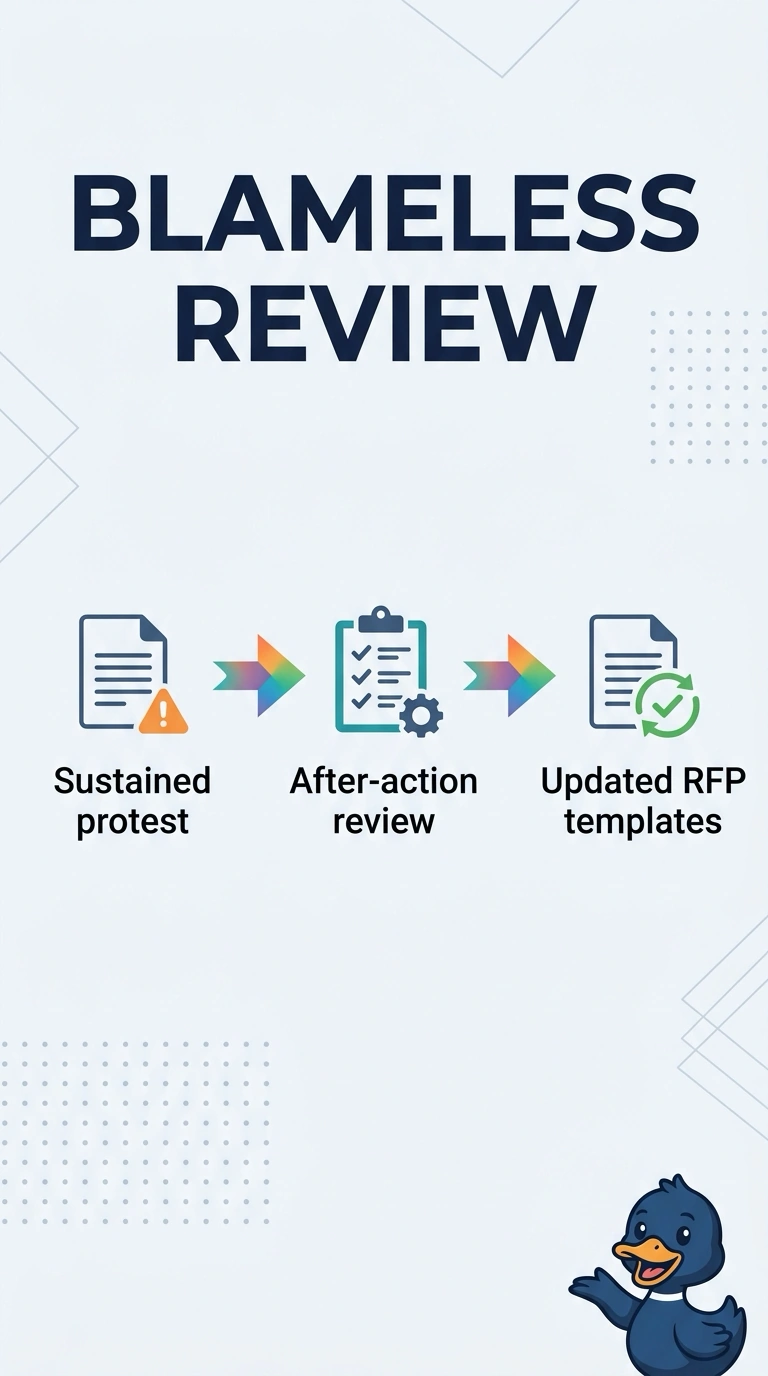
A sustained protest stings, but treating it as a courtroom trial against your own staff only guarantees people will hide mistakes next time. The trap is reacting with blame or hiding the outcome instead of fixing the ambiguous template that caused the problem. When you lead a blameless review, the whole team sharpens its craft.
Full Explanation
Sustained protests reveal systemic weaknesses in solicitation drafting and review workflows, so the leader should Facilitate a blameless after-action review with legal and program staff to update RFP templates. Bringing cross-functional reviewers together focuses energy on clarifying evaluation language and strengthening pre-release quality checks rather than assigning personal blame. Choosing to Issue a formal reprimand to the lead buyer and forbid future use of qualitative RFP criteria creates a punitive climate and eliminates valuable best-value evaluation tools when technical merit matters. Deciding to Keep the sustained protest decision confidential from staff to avoid lowering team morale deprives other buyers of critical lessons and increases the likelihood of repeating the same drafting mistake. Attempting to Delegate all future solicitation drafting exclusively to outside legal counsel to prevent errors is costly, slows procurement cycle times, and weakens internal procurement capability. As a caveat, an after-action review must still respect any active litigation holds or confidential legal advice while sharing practical process takeaways. Operationally, update the agency's RFP pre-release checklist to require an independent clarity check of every scored criterion before publication.
Prefer to study offline? Printable PDF study book + test engine ($7.50, unofficial). These questions stay free here.