
Several department heads at a mid-sized city view the purchasing division as a bottleneck that merely checks paperwork after technical decisions are already made. Which leadership action best shifts procurement toward a strategic advisory role?
Select an answer to reveal the explanation.
Short Explanation
If you only show up at the end of a race to hand out penalties, nobody invites you to plan the course. Your trap is thinking stricter gatekeeping earns respect, when true influence comes from sitting down early to help departments solve business problems.
Full Explanation
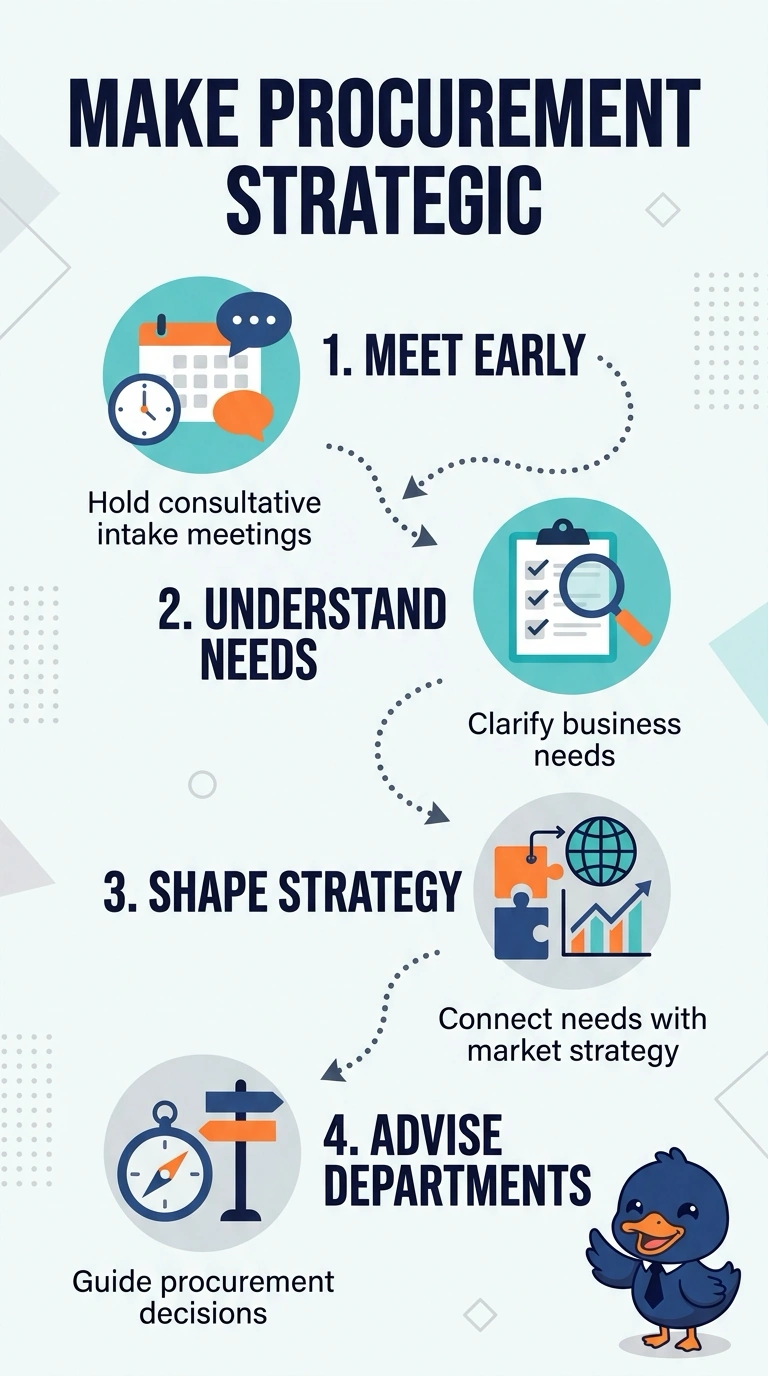
Choosing to Institute early consultative intake meetings to align business needs with market strategy positions buyers as proactive partners who shape specifications, identify cooperative options, and select the right contracting method before positions harden. Choosing to Require departments to submit fully written specifications before speaking with any buyer reinforces the transactional gatekeeper image and forces rework when draft specifications are restrictive or incomplete. Choosing to Delegate all solicitation drafting and vendor selection directly to operating departments abdicates procurement's oversight responsibility and increases compliance and protest risks. Choosing to Add an extra compliance signature step to enforce stricter control over late requisitions adds bureaucratic friction without addressing why departments bypass procurement early in the cycle. As a caveat, consultative intake must be paired with clear service-level expectations so early meetings accelerate rather than delay urgent projects. Operationally, schedule structured intake sessions for all planned purchases above the informal quote threshold to map timelines, market options, and evaluation criteria together.
Prefer to study offline? Printable PDF study book + test engine ($7.50, unofficial). These questions stay free here.