
Several department directors at a mid-sized city complain that central purchasing policies feel disconnected from field operations, yet each department has different needs and workflows. Which leadership initiative best builds ongoing alignment between procurement and internal stakeholders?
Select an answer to reveal the explanation.
Short Explanation
Good procurement leadership works like a two-way radio, not a loudspeaker broadcasting rules from headquarters. Your trap is treating stakeholder friction as a compliance battle you win with penalties, rather than creating a shared table where operational realities shape practical policy.
Full Explanation
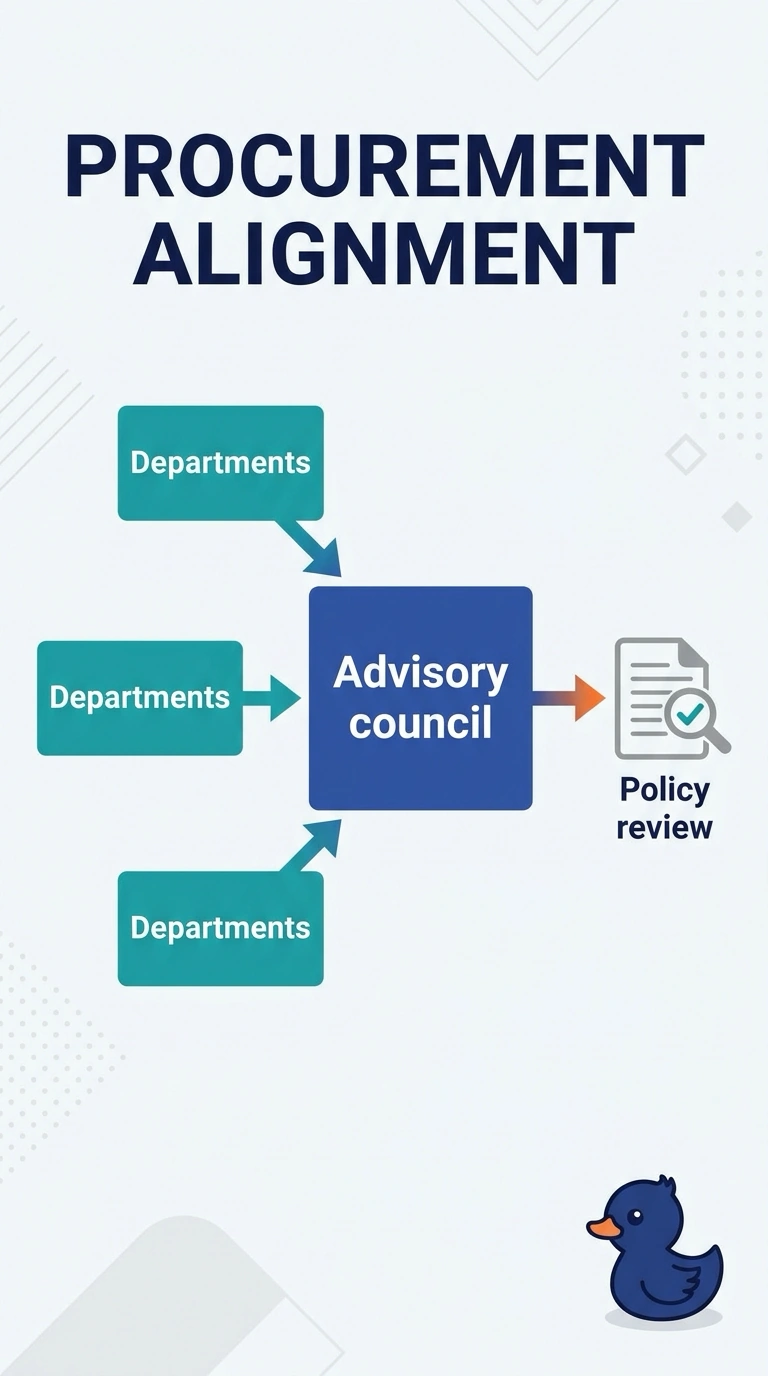
Building durable cross-agency alignment is best achieved by Establishing a cross-departmental procurement advisory council to review policy impacts. A standing council gives user departments a structured voice in shaping templates, thresholds, and service-level expectations while helping procurement explain statutory constraints and spot bottlenecks early. Relying on Issuing stricter policy reminders each time departments question the rules deepens adversarial silos and encourages staff to look for workarounds rather than solutions. Moving toward Allowing each department to write its own independent purchasing rules fragments legal compliance, weakens auditability, and forfeits citywide volume leverage. Choosing Outsourcing departmental purchasing decisions to external consultants on a contract basis abdicates core public-stewardship responsibilities and adds unnecessary cost without fixing internal communication. One caveat is that an advisory council recommends practical improvements without overriding statutory procurement authority. As an operational check, publish meeting action items and track whether policy revisions measurably reduce requisition rework across participating departments.
Prefer to study offline? Printable PDF study book + test engine ($7.50, unofficial). These questions stay free here.