
A county procurement buyer is asked to help prepare an annual briefing for the county board to demonstrate how the purchasing office adds strategic value beyond processing paperwork. Which metrics best support this message?
Select an answer to reveal the explanation.
Short Explanation
If you only count how many forms you stamped, leadership will see your office as an administrative bottleneck instead of a strategic partner. Show how your work saves tax dollars, speeds up delivery, and keeps the county audit-ready.
Full Explanation
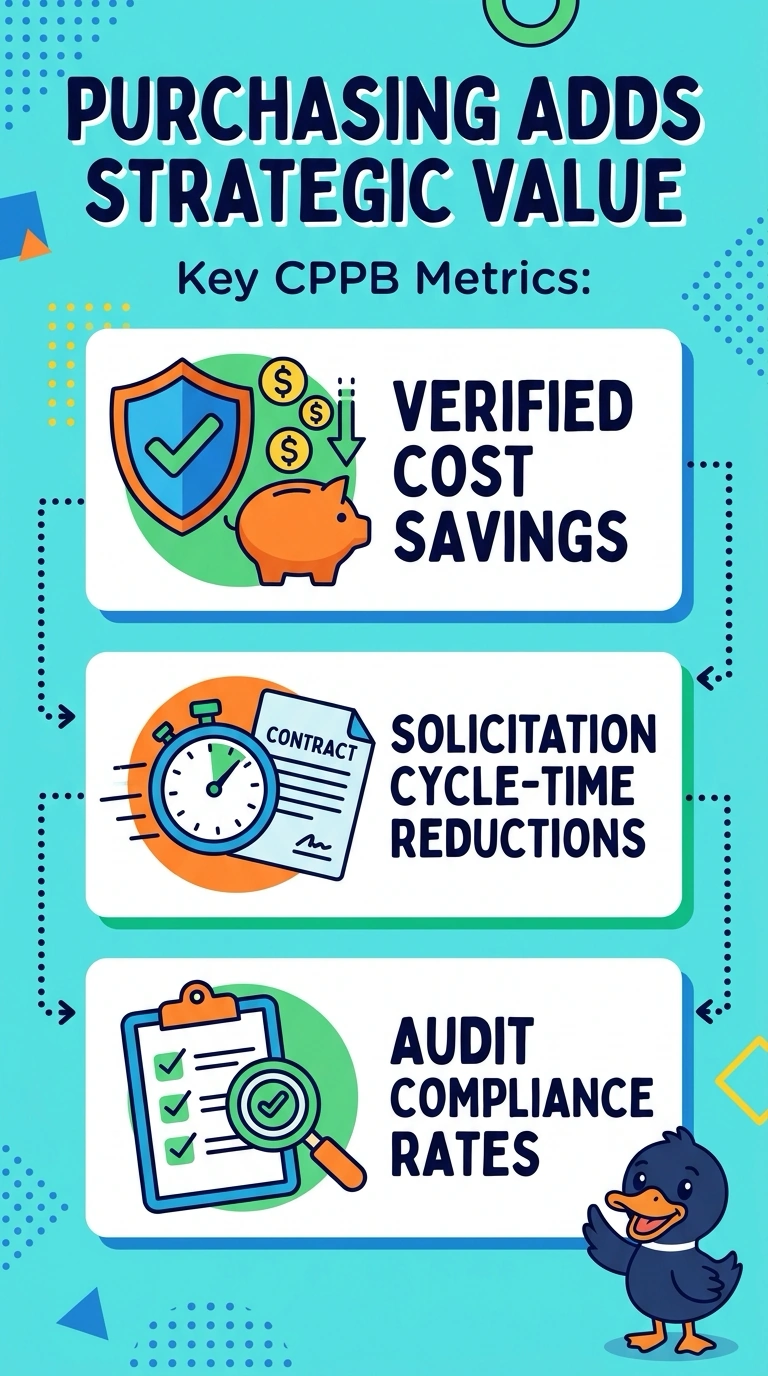
Advocating the value of public procurement requires connecting daily buying operations to measurable organizational outcomes that matter to elected officials and agency leaders. Reporting Verified cost savings, solicitation cycle-time reductions, and audit compliance rates demonstrates financial stewardship, operational responsiveness to user departments, and legal risk mitigation. By contrast, highlighting the Total number of paper requisitions stamped and filed by clerical staff during the fiscal year measures transactional volume rather than strategic impact or value delivered. Tracking the Number of vendor meetings department buyers hold with suppliers each quarter measures meeting activity rather than cost savings, cycle time, or audit compliance. Reporting the Share of invitations issued on the county's standard template with no added special conditions measures template use rather than cost savings, cycle time, or audit compliance. As a caveat, cost-savings and cost-avoidance figures must follow a consistent, transparent methodology—such as comparing awarded prices against independent estimates or prior-contract baselines—to remain credible. Operationally, compile quarterly dashboards from the e-procurement system, pair metrics with brief project examples, and align the briefing with the board's budget priorities.
Prefer to study offline? Printable PDF study book + test engine ($7.50, unofficial). These questions stay free here.