
After a county awards a competitive landscaping services contract, an unsuccessful proposer requests a meeting to understand why their proposal scored lower than expected. How should the buyer conduct this debriefing to strengthen future competition?
Select an answer to reveal the explanation.
Short Explanation
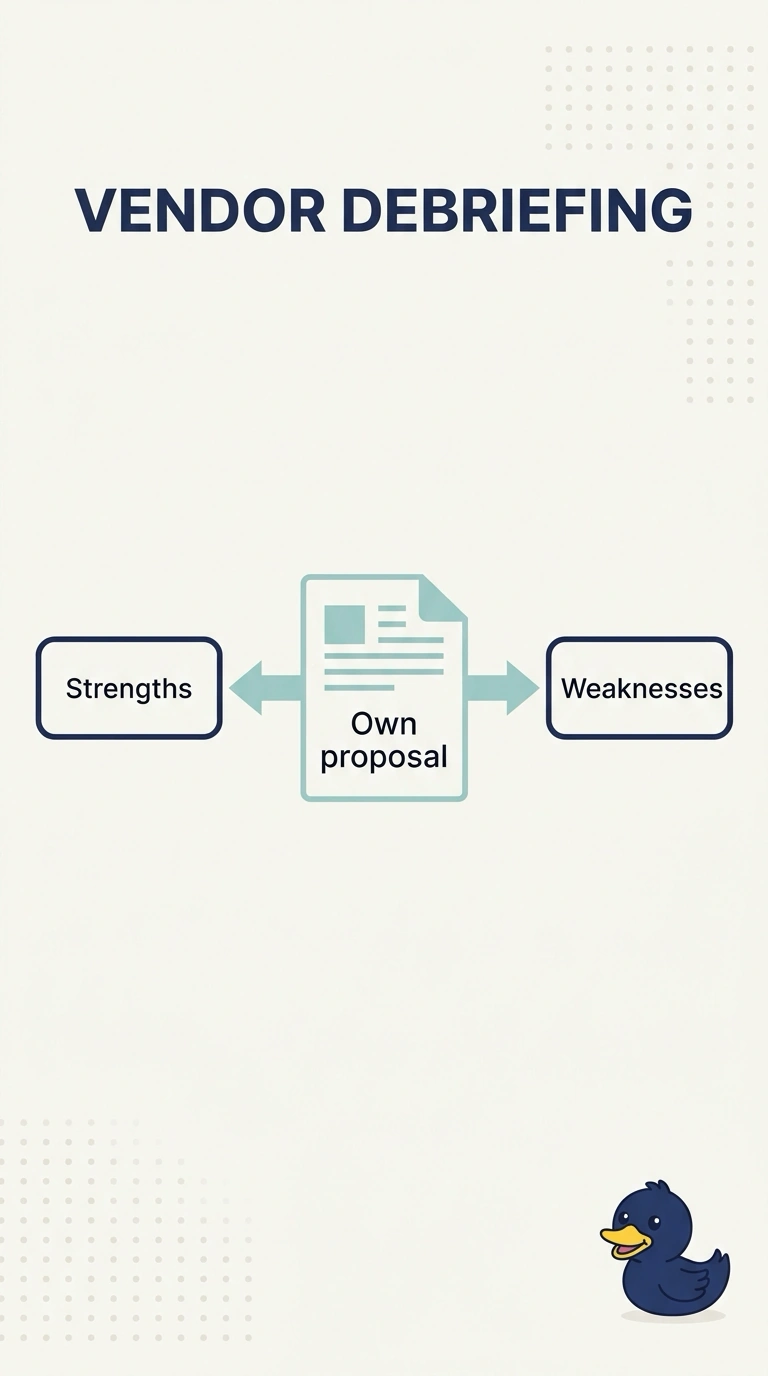
Think of a debriefing as helpful game film: you can show the vendor how its own proposal performed so it can compete more effectively next time. Sharing objective feedback on its strengths and weaknesses builds trust without exposing another proposer’s confidential information.
Full Explanation
Explain the strengths and weaknesses of the vendor’s own proposal because a constructive debriefing gives the unsuccessful proposer transparent feedback tied to the evaluation criteria. This helps the vendor prepare more competitive offers in future solicitations and demonstrates that the county applied a fair process. Giving the vendor a point-by-point comparison of its proposal against every other proposer's proposal goes beyond the proper scope because a debriefing is limited to the debriefed vendor's own evaluation and must not disclose other proposers' proprietary content. Declining the meeting to prevent a protest may have the opposite effect: frustrated suppliers may file formal protests when they cannot obtain information informally. Opening a short negotiation to see whether a lower price from this vendor would have changed the award improperly reopens a completed competition and violates equal treatment, since a debriefing is informational and cannot change the award decision. As an exam caveat, keep the discussion within documented evaluation findings; do not speculate about how another evaluator might have scored the proposal. As a practical check, prepare talking points from the evaluation committee’s consensus report and keep a brief summary of the debriefing in the solicitation file.
Prefer to study offline? Printable PDF study book + test engine ($7.50, unofficial). These questions stay free here.