
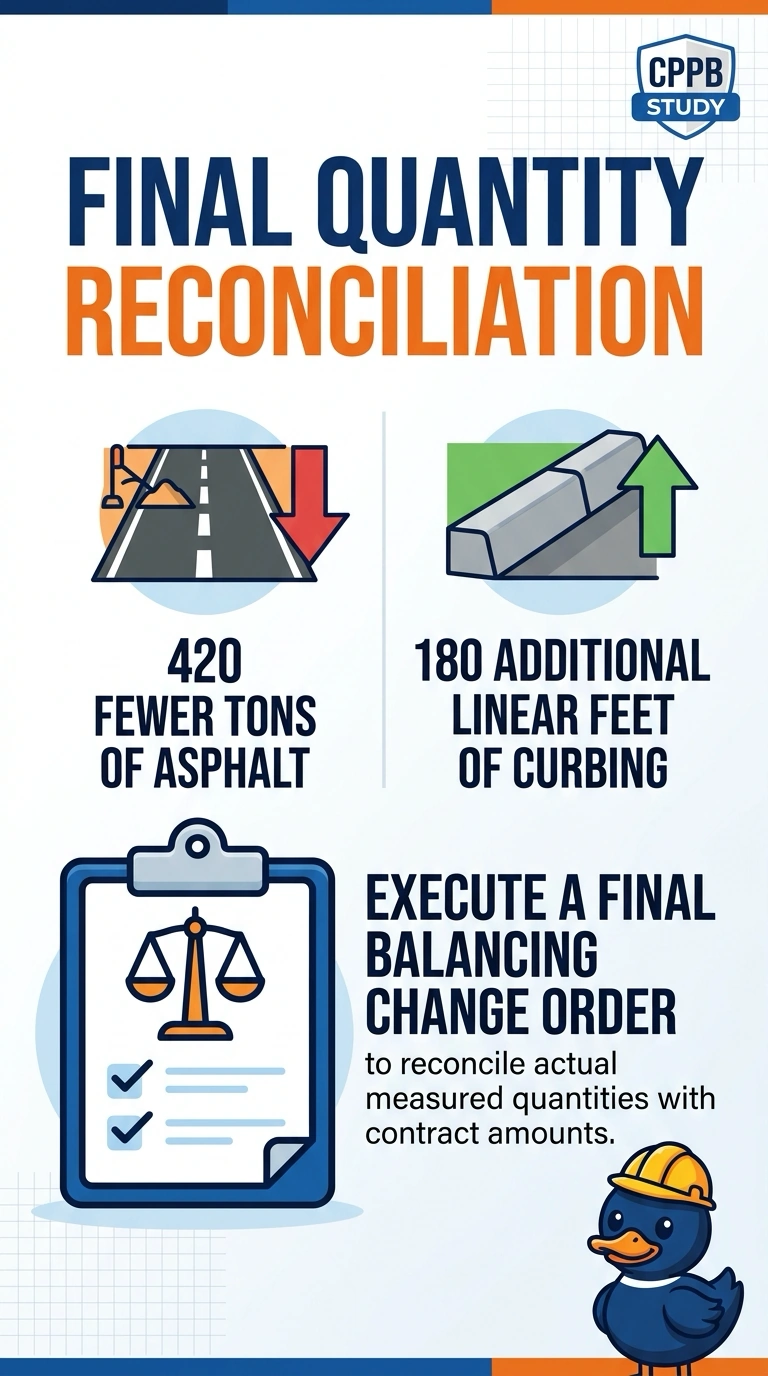
A county's unit-price road-resurfacing contract finishes with 420 fewer tons of asphalt and 180 additional linear feet of curbing than originally estimated, and all field measurements are verified. Which contract administration step should the buyer complete before final payment and closeout?
Select an answer to reveal the explanation.
Short Explanation
On a unit-price contract, estimates are just the starting blueprint—the final bill has to match what was actually built in the field. The trap is either paying the original estimate or leaving leftover funds dangling after work wraps up. You should execute a final balancing change order to true up measured quantities before closing the contract.
Full Explanation
Unit-price contracts pay for verified work in place rather than preliminary engineering estimates, so the buyer must Execute a final balancing change order reconciling actual measured quantities with contract amounts. Formalizing the net quantity adjustments aligns the authorized contract value, encumbrance records, and final invoice so finance can close the file cleanly. Choosing to Pay the original estimated quantities and postpone any quantity true-up until a warranty-period audit leaves final payment wrong and delays closeout, because true-up must occur before final payment while warranty review addresses defects, not measured quantities. Choosing to Ask the contractor to submit a separate new purchase order for the extra curbing outside the contract creates an unnecessary split transaction when the curbing item already exists within the executed contract's unit-price schedule. Choosing to Leave the unused asphalt funds encumbered on the closed project in case repairs are needed next fiscal year improperly keeps an expired project open to fund unrelated future work. As a caveat, if actual quantities vary beyond contractual variation-in-estimated-quantity thresholds, unit prices may require equitable adjustment. As an operational check, cross-check inspector field-measurement logs against the final pay application and confirm the balancing modification brings remaining encumbrance to zero.
Prefer to study offline? Printable PDF study book + test engine ($7.50, unofficial). These questions stay free here.