
Six months into a county courthouse renovation contract, the prime contractor asks to replace its listed electrical subcontractor with a new firm due to scheduling conflicts. What must the contract administrator do before approving this change?
Select an answer to reveal the explanation.
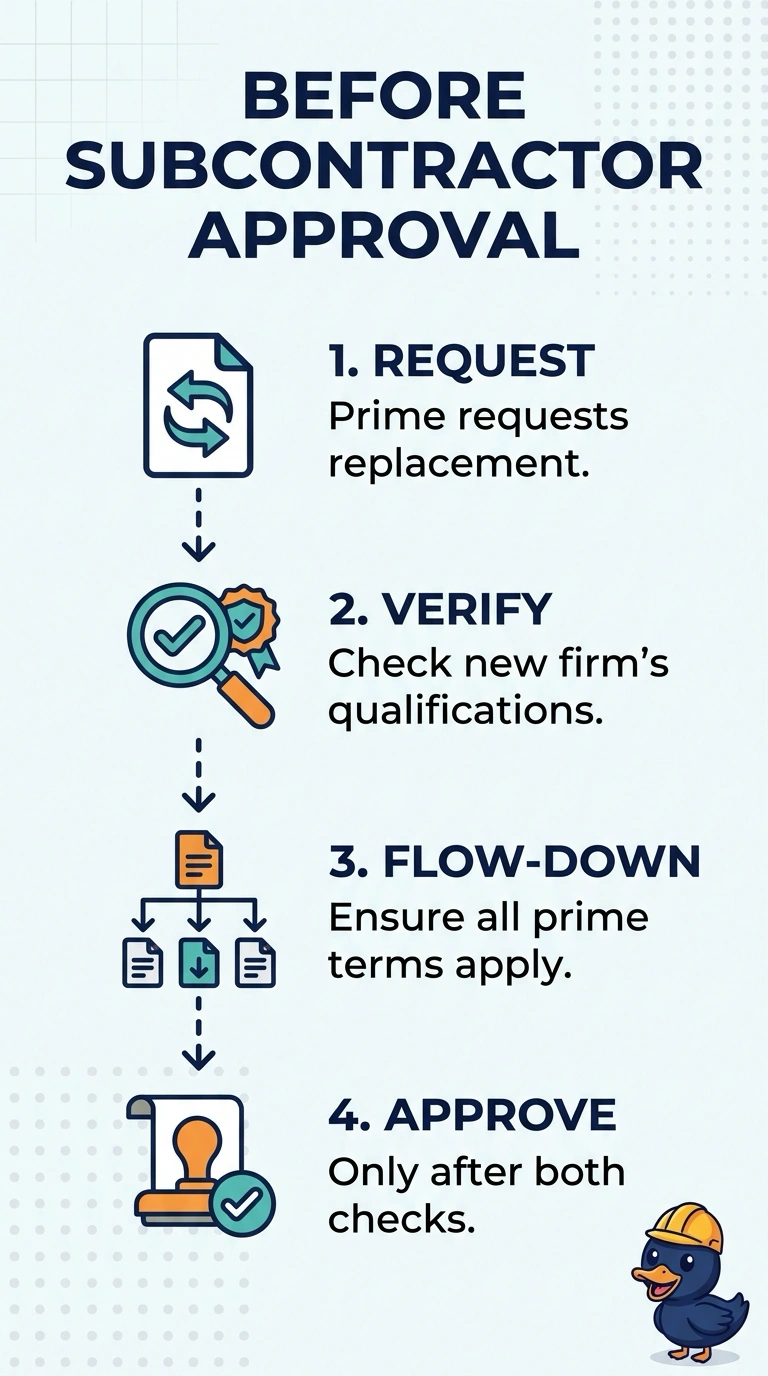
Short Explanation
Think of a prime contractor like a team captain who cannot swap in an unvetted player without the referee checking their eligibility. Your trap is assuming the prime holds all risk, so you skip review and accidentally let an uninsured or debarred firm onto your site.
Full Explanation
To protect the agency during contract performance, the administrator must Verify the replacement firm's qualifications and confirm all prime contract terms flow down. Public contracts typically require written agency consent for key subcontractor substitutions so the replacement meets the same licensing, insurance, debarment, and prevailing-wage standards as the original team while keeping the prime fully accountable. Choosing to Allow the prime contractor to manage the substitution without review abdicates oversight and exposes the county to unqualified labor, compliance violations, or unverified insurance coverage. Selecting Execute a separate direct contract with the replacement subcontractor breaks privity of contract, creates dual-management liability, and undermines the prime contractor's single-point responsibility. Deciding to Rebid the electrical portion of the project as a separate solicitation unnecessarily delays an active construction schedule and fragments warranty accountability. One caveat is that some contracts grant the agency a specific review window before consent is deemed given. As an operational check, review the subcontractor's debarment status, insurance certificates, and signed flow-down acknowledgment before issuing written approval.
Prefer to study offline? Printable PDF study book + test engine ($7.50, unofficial). These questions stay free here.