
A state university's facilities department inspects a newly installed campus emergency generator during commissioning tests and finds it fails to reach rated load capacity under the contract specifications. What contract administration action should the buyer take?
Select an answer to reveal the explanation.
Short Explanation
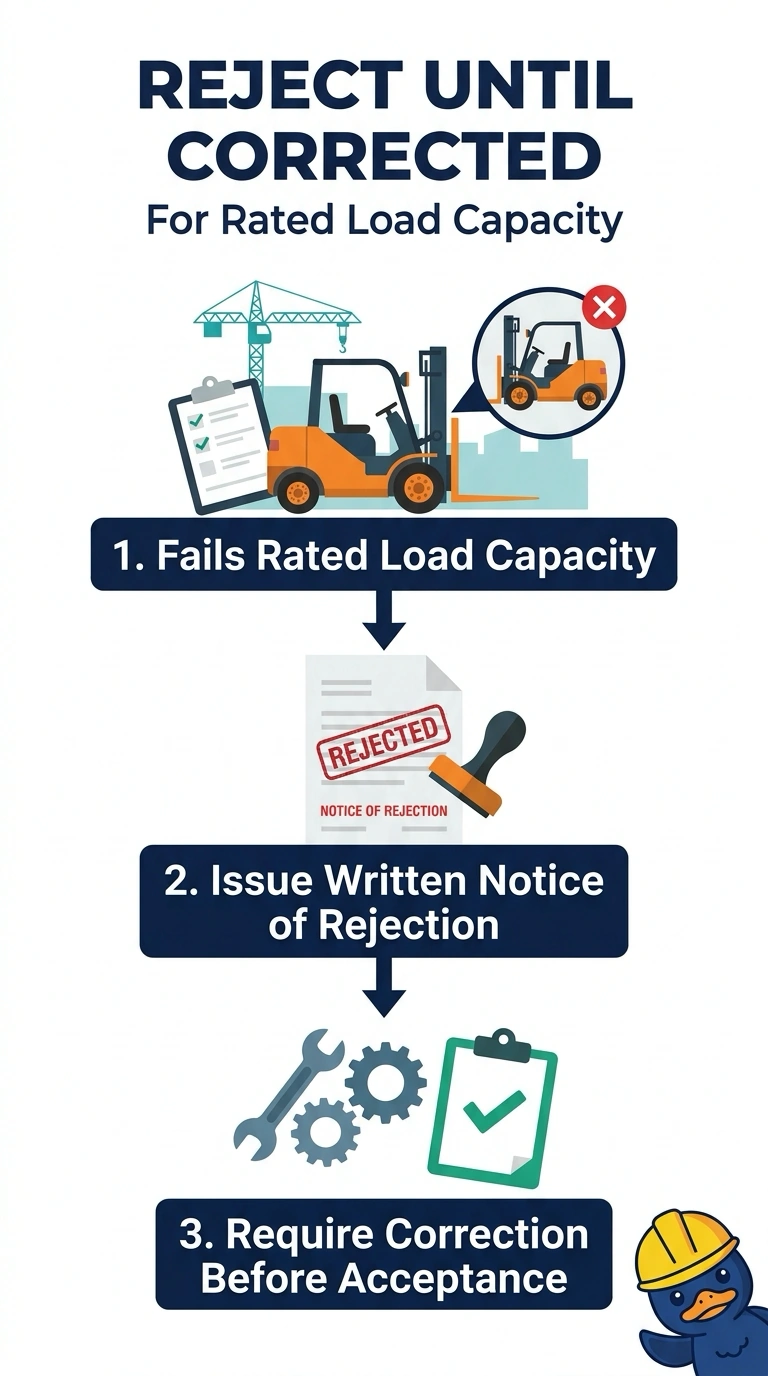
Signing off on equipment that flunks its commissioning test is like taking delivery of a new fire truck whose pump barely trickles. The trap is assuming you can fix performance shortfalls easily after formal acceptance, when acceptance actually shifts risk and payment leverage away from the agency. Hold the line by rejecting the nonconforming unit in writing before accepting it.
Full Explanation
The buyer should "Issue a written notice of rejection requiring correction before acceptance" so the contractor remains obligated to cure the performance defect at its own expense under the contract's inspection and acceptance terms. Formal acceptance typically triggers payment obligations and limits remedies to narrower warranty provisions, whereas timely rejection preserves full contractual leverage. Choosing to "Accept the generator conditionally and withhold only the final warranty fee" surrenders pre-acceptance leverage and may leave the university owning underperforming emergency equipment. Deciding to "Pay the full invoice immediately and open a new solicitation for repairs" wastes public funds by paying twice for performance already promised under the active contract. Attempting to "Modify the contract specifications downward to match the tested output" compromises campus life-safety reliability and gives the contractor a windfall by relaxing requirements without fair consideration. Caveat: check the contract's inspection clause for any mandatory notice timeframe so the rejection is not deemed untimely. As an operational check, attach the signed commissioning test log to the written rejection notice and set a firm deadline for retesting.
Prefer to study offline? Printable PDF study book + test engine ($7.50, unofficial). These questions stay free here.