
A contractor building a county library addition requests a thirty-day schedule extension and additional overhead compensation after a declared regional flood closes the only highway supplying structural steel to the site. Under standard public construction contract administration, how should the contract administrator respond?
Select an answer to reveal the explanation.
Short Explanation
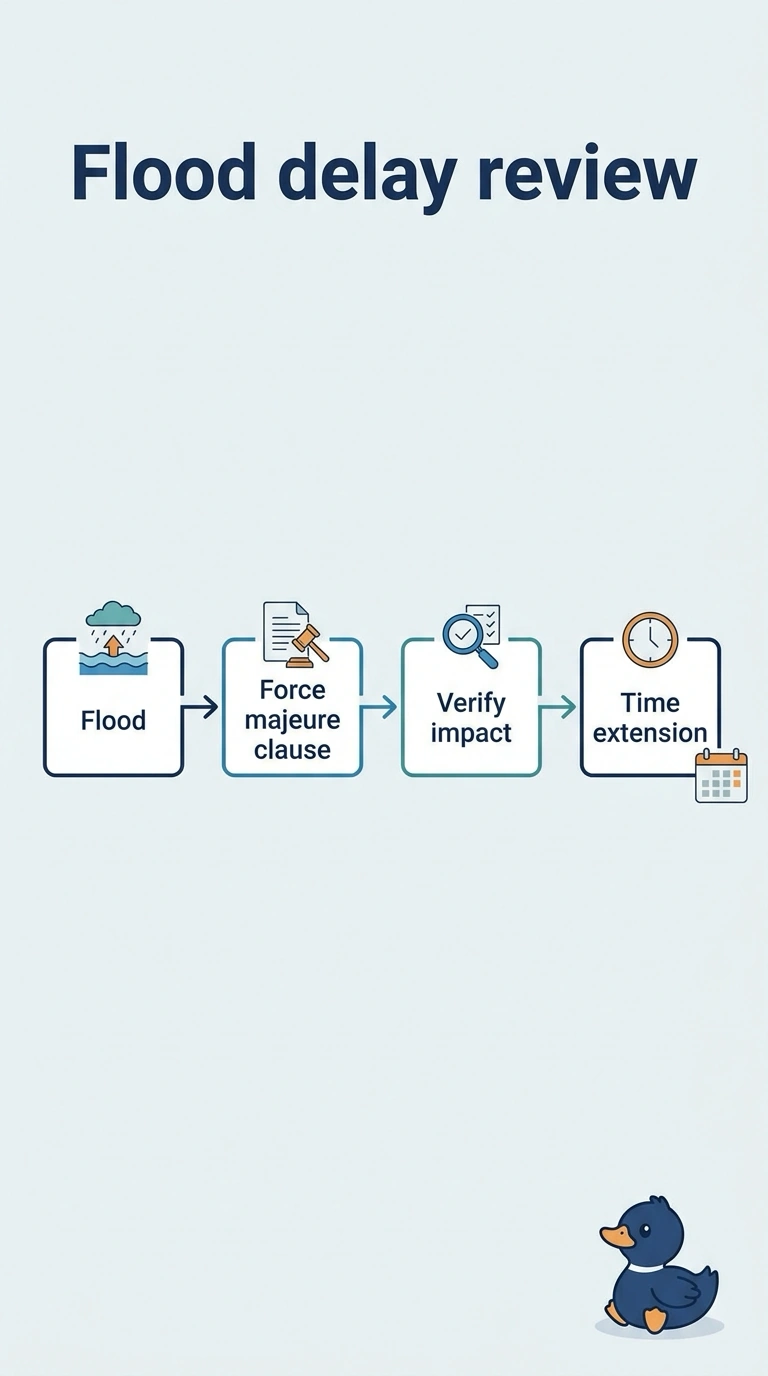
Mother Nature does not care about your construction schedule, and a declared regional flood is a textbook force majeure event. You should grant fair schedule relief when an unforeseeable event beyond the contractor's control blocks delivery, without paying extra overhead. The trap is either punishing the contractor with liquidated damages or handing over extra money for a neutral delay.
Full Explanation
Standard public construction contracts distinguish between excusable, non-compensable delays (such as force majeure events) and owner-caused compensable delays or contractor-caused inexcusable delays. Choosing to Verify the flood's impact against the force majeure clause and grant a non-compensable time extension if supported protects the contractor from unfair default or liquidated damages while protecting public funds from unwarranted delay-cost claims. Trying to Deny schedule relief and assess liquidated damages because the contractor should have ordered steel earlier ignores contractual excusable-delay provisions and invites costly claims litigation. Deciding to Approve the thirty-day extension and extended home-office overhead payment based on the contractor's request is improper because force majeure delays generally entitle the contractor to time, not additional compensation, unless the contract explicitly states otherwise. Attempting to Terminate the contract for default because the contractor failed to secure alternate supply routes is unsupported when a declared disaster closes the sole viable supply corridor. Note that contractors must still comply with contractual notice deadlines and mitigate delays where possible. As an operational check, review timely written delay notices, highway closure records, and critical-path schedule impacts before executing a bilateral time-extension modification.
Prefer to study offline? Printable PDF study book + test engine ($7.50, unofficial). These questions stay free here.