
A school district warehouse clerk unloads a shipment of 40 classroom smartboards and notices crushed corners on three cartons and two missing power cable boxes. What should the clerk do before signing the carrier's delivery receipt?
Select an answer to reveal the explanation.
Short Explanation
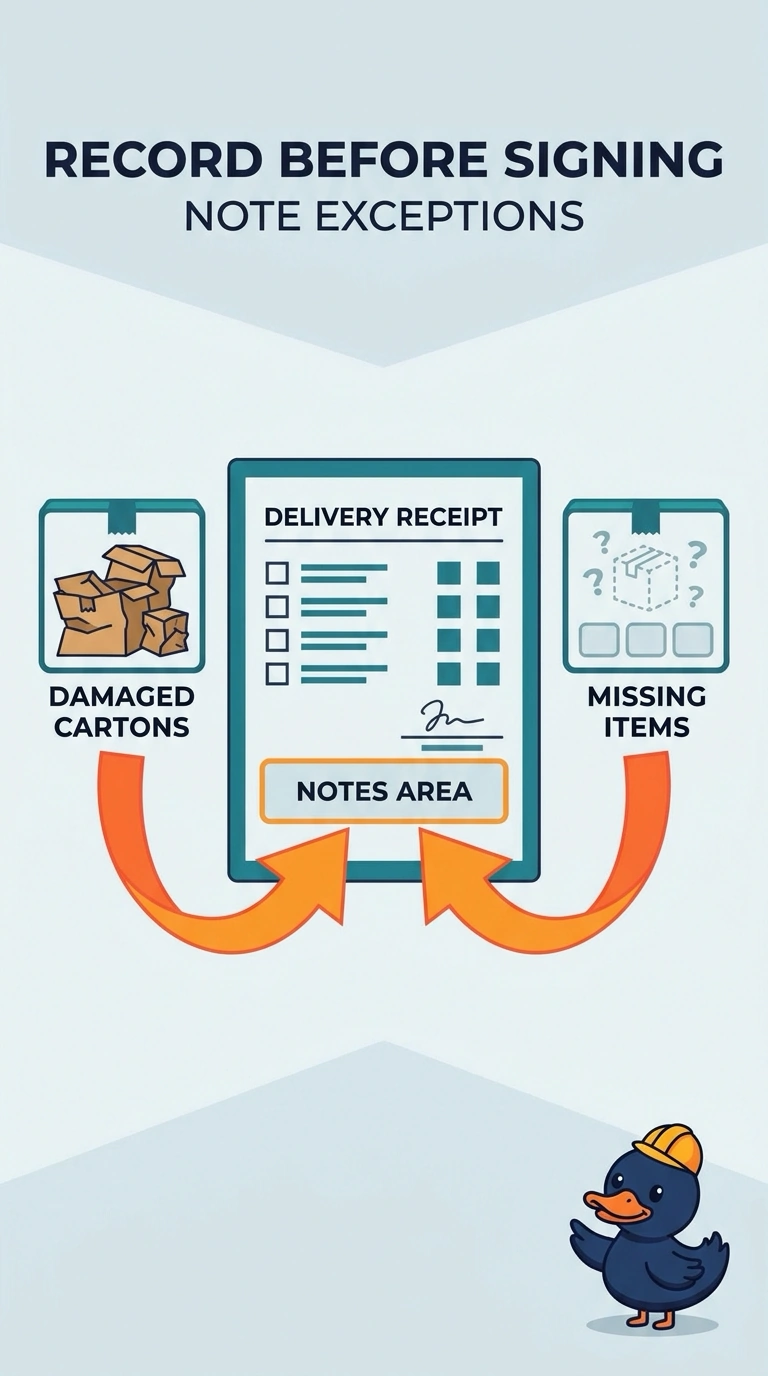
Signing a clean receipt is like handing over a blank check—once you sign without exceptions, proving carrier or vendor fault becomes an uphill battle. Always document damage and shortages on the spot so your district preserves its legal remedies.
Full Explanation
Proper receiving creates the legal record that transfers risk and triggers payment under a public contract. Choosing to Note the visible damage and missing items on the delivery receipt and receiving report protects the district's rights against both the carrier and the supplier while allowing undamaged units to be put into service. If the clerk were to Sign for the full shipment as received and file a warranty claim with the manufacturer later, the clean signature implies goods arrived in acceptable condition, and manufacturer warranties typically exclude transit damage. Choosing to Refuse the entire truckload and instruct the driver to return all 40 smartboards to the vendor is disproportionate when 37 units appear intact and would delay classroom installation unnecessarily. Simply deciding to Withhold payment on the vendor invoice and tell the vendor to resolve the carrier claim itself violates prompt-payment duties and leaves no contemporaneous evidence of how the loss occurred. As a caveat, concealed damage discovered after opening cartons still requires prompt written notice within the contract's inspection window. Operationally, photograph the damaged cartons, attach the annotated delivery receipt to the receiving report, and notify the buyer immediately to coordinate replacement.
Prefer to study offline? Printable PDF study book + test engine ($7.50, unofficial). These questions stay free here.