
A state agency's procurement director wants to measure operational performance across the purchasing division, but leadership currently tracks only negotiated price savings, causing buyers to delay urgent requisitions to chase minor discounts. Which measurement approach best supports continuous improvement?
Select an answer to reveal the explanation.
Short Explanation
What gets measured gets managed, so tracking only price savings pushes your team to slow down operations for tiny discounts. A balanced set of KPIs keeps you from trading away schedule reliability or compliance just to hit one number. Dropping metrics altogether or raising savings targets only trades one blind spot for another.
Full Explanation
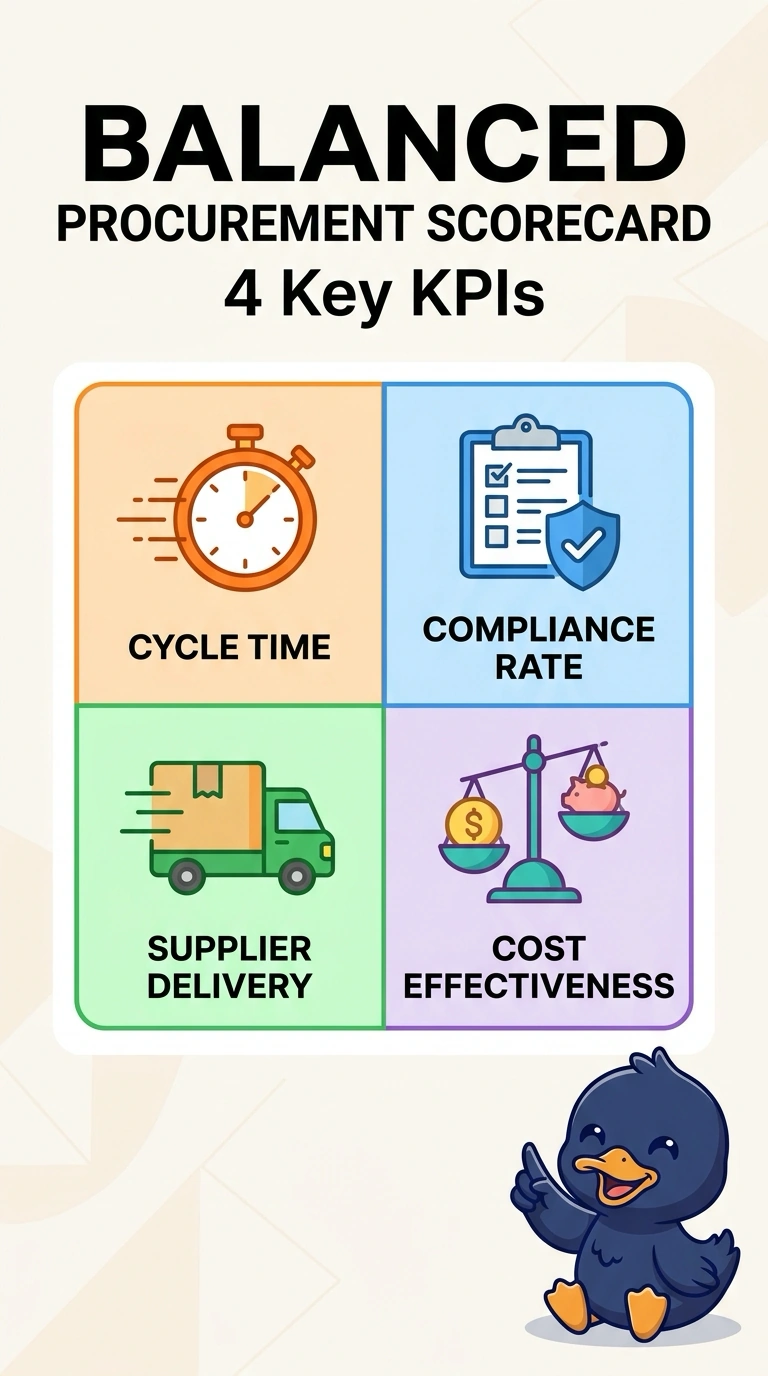
Sound procurement business principles rely on balanced performance measurement so efficiency, quality, and compliance reinforce one another. Choosing to Adopt a balanced scorecard of KPIs tracking cycle time, compliance rate, supplier delivery, and cost effectiveness aligns buyer behavior with total agency value, revealing bottlenecks without incentivizing harmful delays. By contrast, choosing to Replace price-savings tracking with a single metric counting requisitions processed per buyer per week rewards speed alone and removes visibility into defects, non-compliance, and rework. Choosing to Measure each buyer on the total dollar value of purchase orders issued during each fiscal quarter rewards high-volume spending rather than strategic consolidation or service quality. Meanwhile, choosing to Increase the annual negotiated savings target so buyers prioritize price reductions deepens the existing bottleneck and can drive internal clients toward maverick purchasing. One caveat is that KPIs must use consistent, clean data definitions across systems so comparisons remain credible over time. As an operational check, review quarterly KPI trends alongside internal stakeholder satisfaction feedback to confirm that faster cycle times are not eroding specification quality.
Prefer to study offline? Printable PDF study book + test engine ($7.50, unofficial). These questions stay free here.