
A state university is updating its IT procurement standards to advance circular-economy sustainability goals while reducing electronic waste across campus departments. Which procurement business practice best embeds these goals across the asset lifecycle?
Select an answer to reveal the explanation.
Short Explanation
Buying IT hardware without an exit plan is like adopting a fleet of vehicles with nowhere to retire them safely. Your procurement standards should build end-of-life responsibility right into the contract, because the trap is focusing only on purchase price while leaving data-security and disposal headaches behind.
Full Explanation
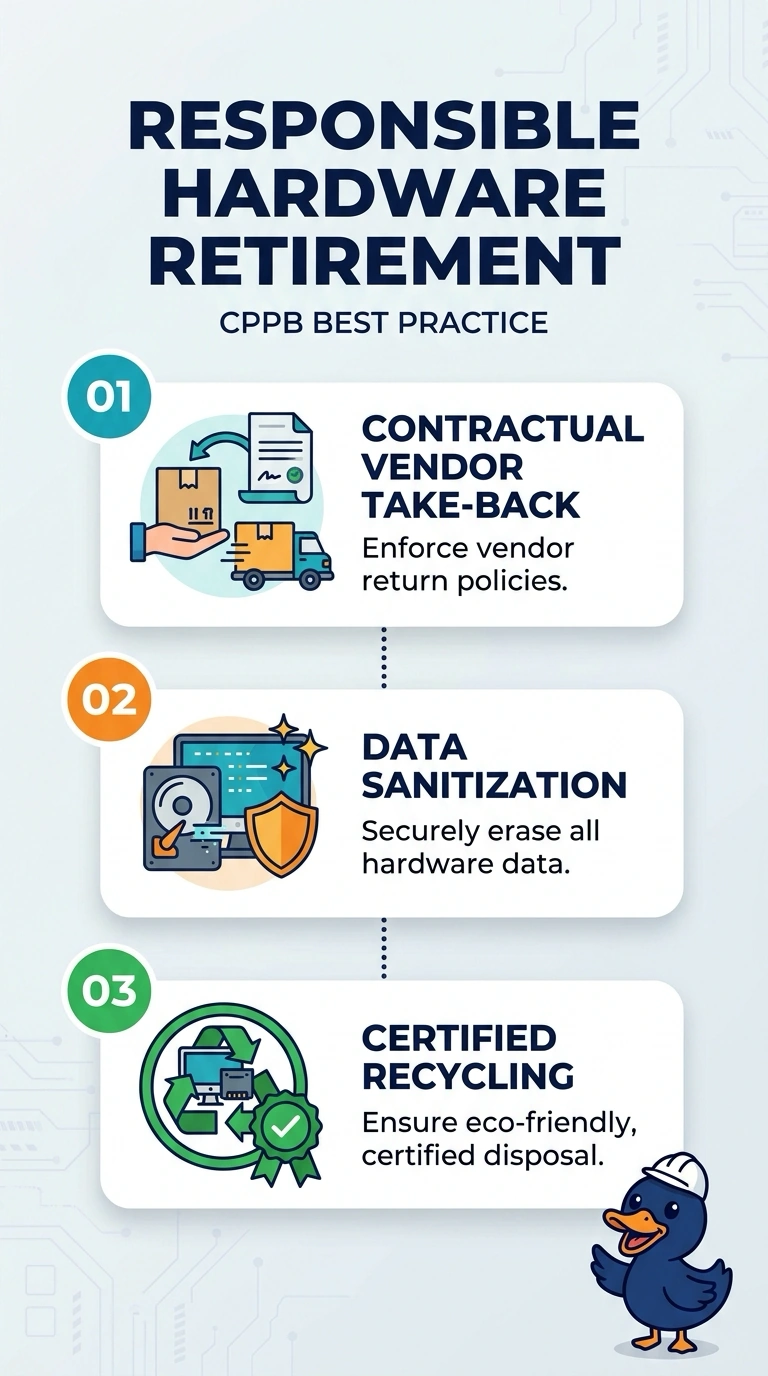
Circular-economy procurement looks beyond initial acquisition to ensure equipment is durable, repairable, and responsibly recovered when retired. Choosing to Include contractual vendor take-back, data-sanitization, and certified recycling obligations for retired hardware embeds sustainability and information security directly into supplier performance, preventing hazardous waste and protecting institutional data. Choosing to Keep retired devices in a locked IT cage until the next surplus auction, then sell them as-is through that sale merely delays final disposition and leaves data protection and environmental handling unaddressed in the contract. Choosing to Select hardware for all departments based on the lowest upfront purchase price ignores total lifecycle costs and often locks the university into short-lived, non-recyclable equipment. Choosing to Donate retired computers to local community groups to support community reuse moves usable machines out of the contract's take-back and certified-destruction duties and does not, by itself, set sanitization or chain-of-custody terms. As a caveat, vendor take-back programs must still comply with state surplus-property statutes and require documented chain-of-custody records. As an operational check, verify third-party recycling certifications and require written certificates of data destruction for every retired asset batch.
Prefer to study offline? Printable PDF study book + test engine ($7.50, unofficial). These questions stay free here.