
A state agency's procurement office wants to strengthen participation by small and disadvantaged businesses in its recurring facility maintenance contracts without compromising fair and open competition. Which business practice best supports this goal?
Select an answer to reveal the explanation.
Short Explanation
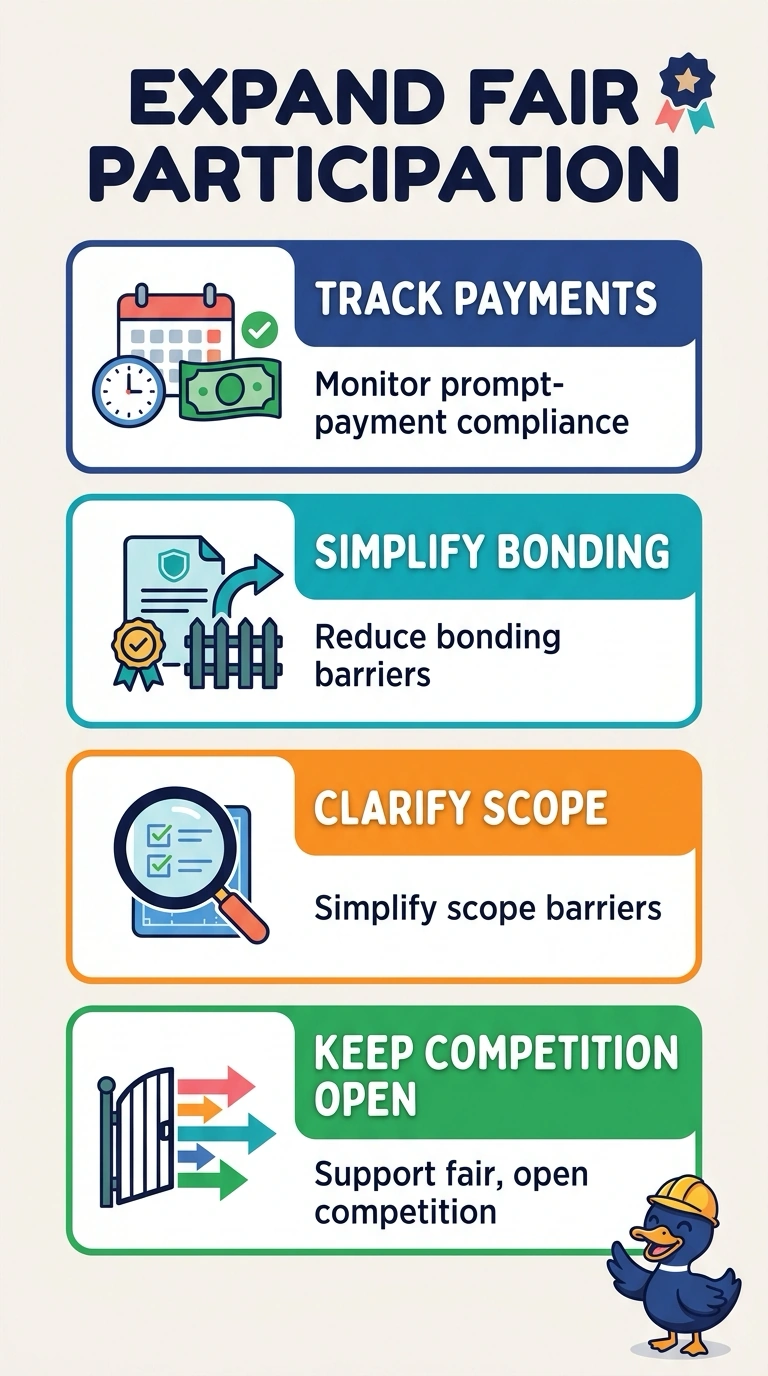
Small businesses rarely struggle because they lack skill; they struggle when slow payments and oversized contract scopes lock them out. The trap is assuming you have to suspend competition to help diverse suppliers participate. Focus on prompt-payment tracking and right-sized scopes so smaller firms can compete fairly on their merits.
Full Explanation
The most effective approach is to "Monitor prompt-payment compliance and simplify bonding or scope barriers" because cash-flow delays and unnecessarily large contract bundles disproportionately exclude smaller and disadvantaged suppliers. Tracking invoice turnaround times and right-sizing work packages or bonding thresholds within statutory limits expands the qualified bidder pool while preserving open competition. Choosing to "Eliminate competitive bidding requirements for local firms on recurring maintenance contracts" violates public procurement statutes and exposes the agency to non-competitive pricing and legal challenges. Deciding to "Rely on informal verbal invitations to reach diverse owners" fails to create an auditable solicitation record and misses qualified businesses outside staff's personal contacts. Awarding facility-maintenance contracts by rotation among registered small firms removes price and performance competition. Equitable distribution of true micro-purchases among qualified suppliers, which 2 CFR 200.320 allows, is not authority to rotate larger contracts among a closed list. Caveat: any bonding adjustment or subcontracting goal must align with governing statutes and funding-source rules. As an operational check, review prime-to-subcontractor payment reports quarterly and audit solicitation packages for unnecessary scope bundling before release.
Prefer to study offline? Printable PDF study book + test engine ($7.50, unofficial). These questions stay free here.