
A municipal finance audit reveals that several city employees used agency purchasing cards for unauthorized personal electronics and split single purchases to stay under card limits. Which business control framework best prevents future purchasing card abuse?
Select an answer to reveal the explanation.
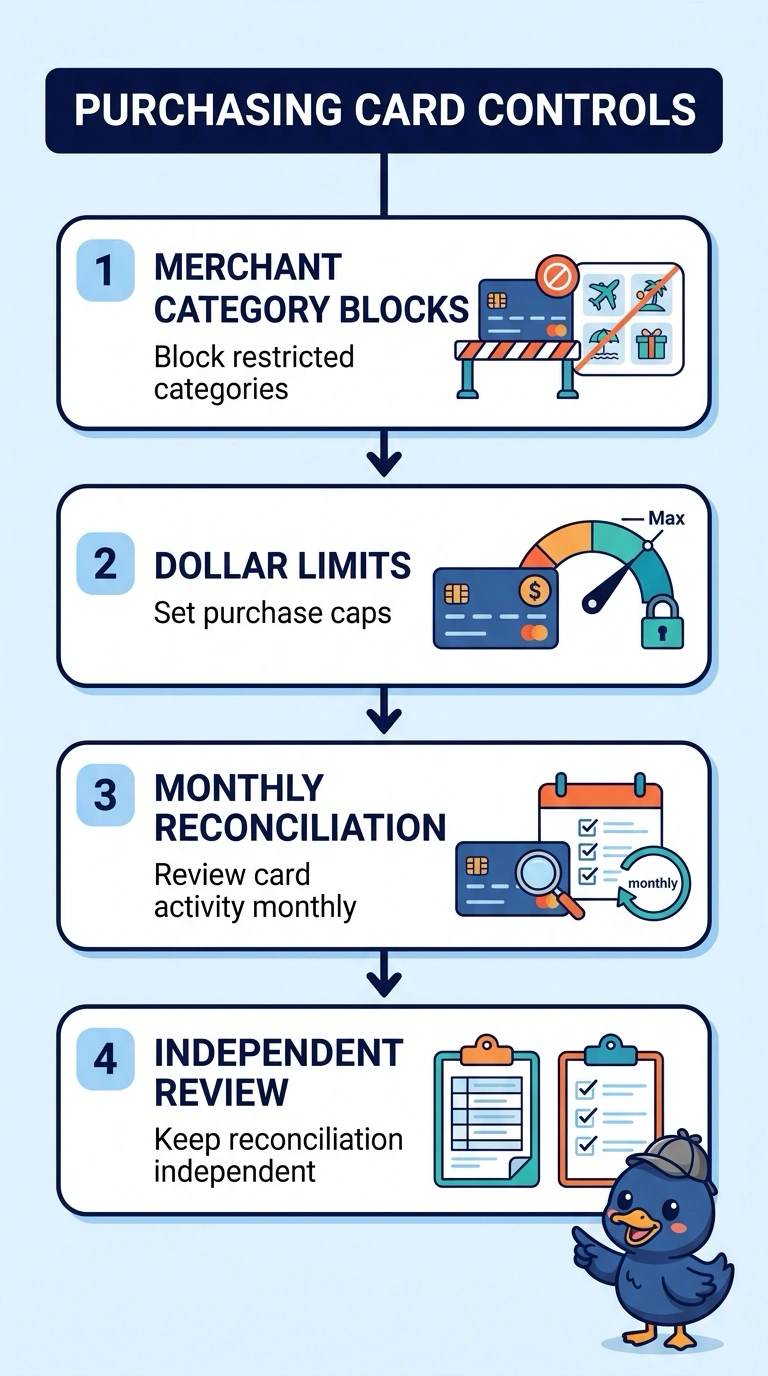
Short Explanation
Purchasing cards save your agency huge administrative time, but without guardrails they turn into an open tab. You should combine automated merchant blocks, transaction limits, and independent statement reviews instead of falling into the trap of either banning cards altogether or letting buyers approve their own receipts.
Full Explanation
Effective purchasing card governance requires layered preventive and detective controls, so the city should Enforce merchant category blocks, dollar limits, and independent monthly reconciliations. Blocking high-risk merchant codes stops unauthorized purchases at the point of sale, while independent supervisor review of itemized receipts catches split transactions and policy violations promptly. Choosing to Replace purchasing cards with formal requisitions for small supply purchases destroys administrative efficiency and drives transaction costs above the value of routine low-dollar buys. Deciding to Allow cardholders to approve their own monthly statements after attaching itemized receipts removes independent oversight and invites undetected misuse. Opting to Raise individual transaction limits so staff no longer need to split their card purchases weakens financial exposure controls without addressing unauthorized spending behavior. As a caveat, automated card blocks cannot catch every noncompliant purchase at mixed-merchandise retailers, making itemized receipt audits essential. For an operational check, run a monthly exception report comparing cardholder transactions to approved merchant categories and supervisor sign-offs.
Prefer to study offline? Printable PDF study book + test engine ($7.50, unofficial). These questions stay free here.