
A state agency's procurement analytics show thousands of duplicate supplier profiles and inconsistent free-text item descriptions across departmental purchase orders, obscuring total spend by category. Which business practice directly resolves this issue?
Select an answer to reveal the explanation.
Short Explanation
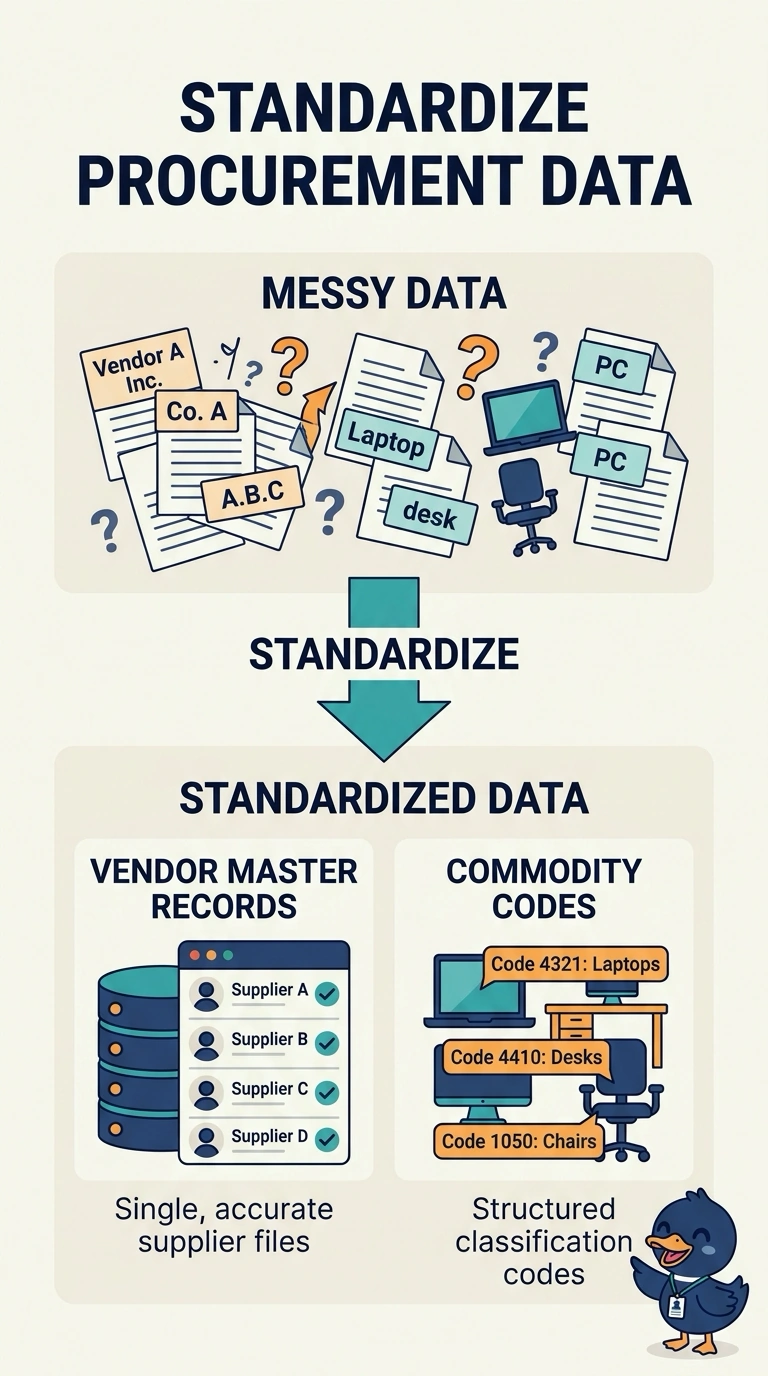
Clean spend data is like a well-labeled pantry: if every shelf uses different names for flour, you will keep buying what you already have. The trap is hiding small purchases, splitting vendor lists by department, or archiving messy records instead of fixing the underlying entries. Standardize vendor records and commodity codes so your spend reports tell the truth.
Full Explanation
Accurate procurement analytics depend on structured, consistent master data, so Standardizing vendor master records and commodity codes directly eliminates duplicate supplier entries and fragmented category reporting. Using a uniform taxonomy such as NIGP or UNSPSC codes alongside a single vetted vendor master file lets buyers aggregate enterprise spend, spot maverick buying, and negotiate volume discounts. Choosing Eliminating purchase orders for low-dollar departmental buys removes visibility rather than organizing it and weakens expenditure controls. Similarly, Requiring each department to maintain its own vendor list multiplies duplicate records, increases administrative overhead, and creates inconsistent tax and compliance profiles. Opting for Archiving historical transaction logs without data cleansing simply stores messy records out of sight while leaving current and future reporting unreliable. Even with standardized codes, data quality degrades quickly if new vendor onboarding and catalog updates lack governance rules. As an operational check, enforce mandatory commodity code selection on requisitions and run a quarterly duplicate-vendor merge report in the e-procurement system.
Prefer to study offline? Printable PDF study book + test engine ($7.50, unofficial). These questions stay free here.