
Department PIOs are in emergency-notification training. Lecture covers why the system exists; who-approves-before-send still needs application. How should the instructor match methods to those two objectives?
Select an answer to reveal the explanation.
Short Explanation
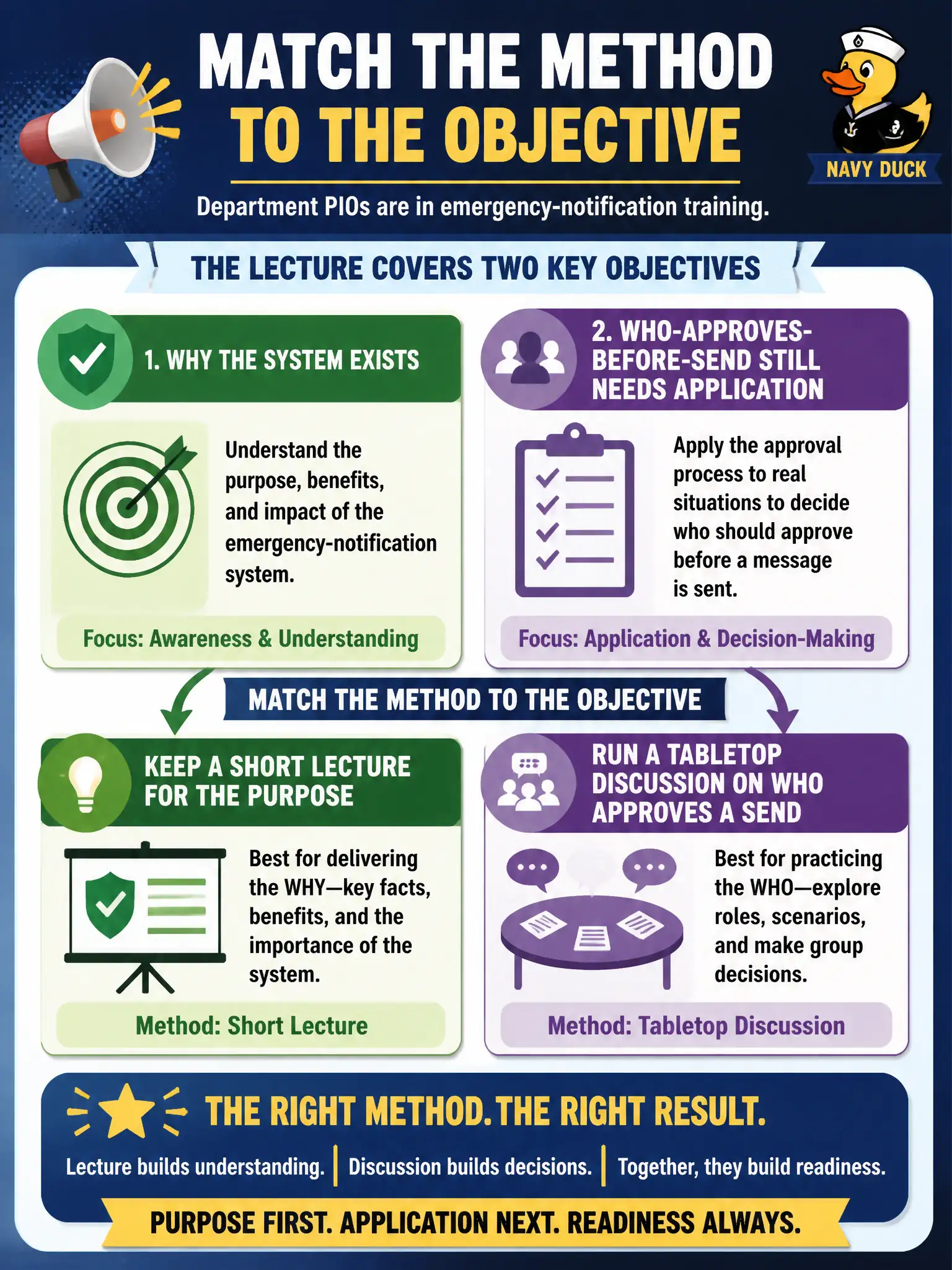
Two objectives, two tools. A short lecture can sell the why; a tabletop is how PIOs practice who clicks send. One method for everything is a Swiss Army knife that never quite cuts.
Full Explanation
Different objectives often need different methods in the same session. Department PIOs in emergency-notification training can keep a short lecture for why the system exists, then run a tabletop discussion on who approves a send when the approval workflow needs application. Using lecture for both purpose and approval because one method is “cleaner” under-serves the application objective. Dropping the purpose lecture for an icebreaker that never mentions approval abandons both outcomes. Assigning the approval question as optional reading after the session removes guided practice. Exam caveat: CTT+ method matching is objective-by-objective; awareness and application rarely share one method optimally. Operational check: lecture the purpose in a tight block, then tabletop an approval scenario with role cards, and assess whether PIOs can name the correct approver path. Purpose awareness and approval application are different objectives; lecture then tabletop matches each. One-method purity is not a CTT+ virtue when objectives diverge. Script the tabletop injects—who is on call, who can approve after hours—so PIO practice mirrors real emergency-notification governance. Maintain that civic standard in the session file so auditors and future instructors can see how design integrity was preserved under real municipal constraints.