
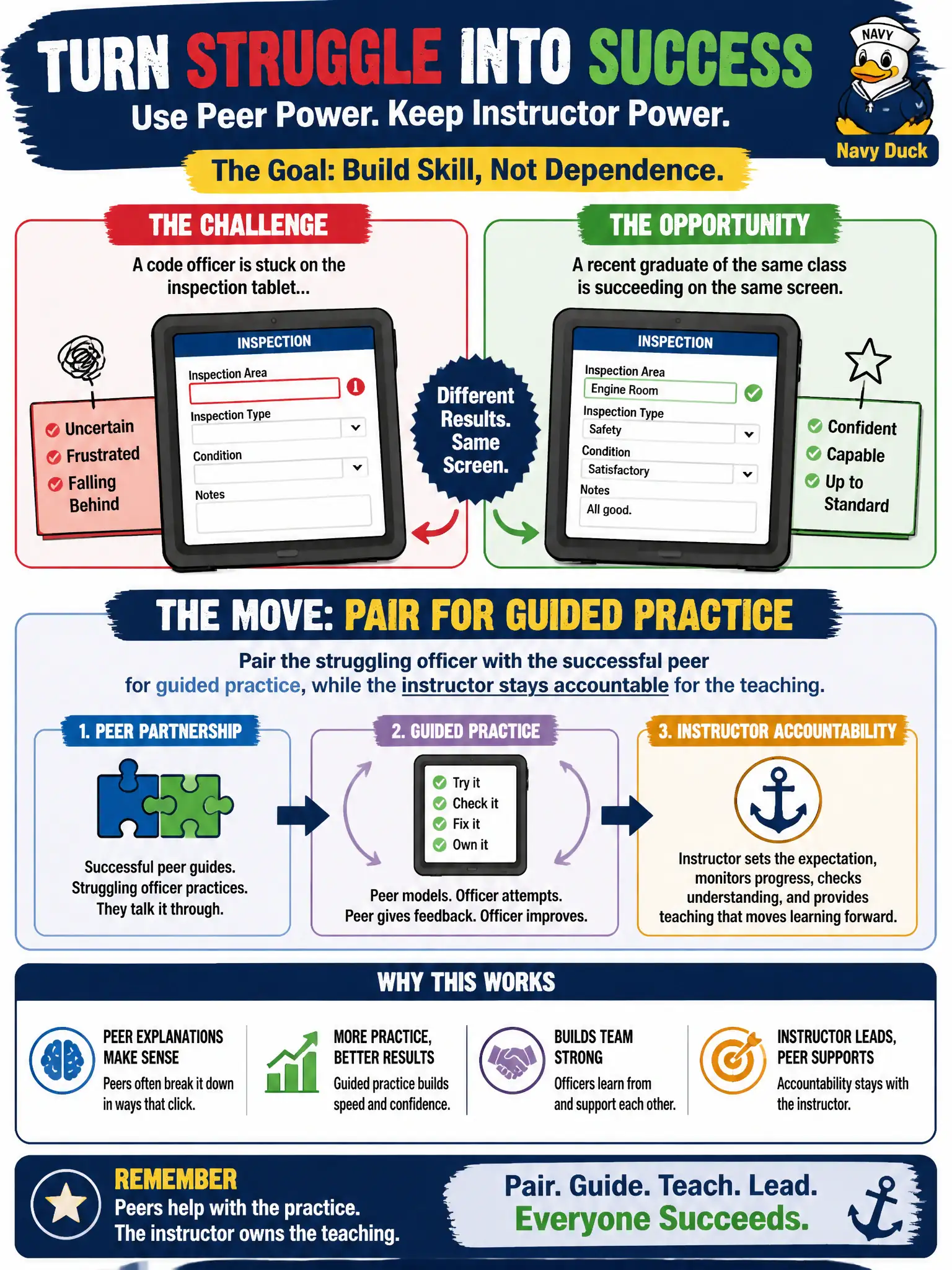
A code officer is stuck on the inspection tablet while a recent graduate of the same class is succeeding on the same screen. How should the instructor use that peer without dumping the teaching job?
Select an answer to reveal the explanation.
Short Explanation
A recent success is a great nearby model — like riding with a crew that just ran the same route. Pair them, then stay in the loop so the peer is a coach, not an unpaid instructor. Walking away is dumping the teaching job, not encouragement.
Full Explanation
When a code officer is stuck on the inspection tablet and a recent graduate of the same class is succeeding, the instructor should pair them for guided practice while remaining accountable for the teaching. Peer modeling motivates and supplies a nearby example without converting the successful officer into an unpaid instructor of record. Leaving the pair alone for the rest of the day fails instructional accountability by dumping the teaching job. Announcing the struggle and asking the successful officer to grade the other fails climate and misassigns evaluation authority. Moving the struggling officer to the back row and stopping checks fails both support and evaluation duties. Exam caveat: peers can coach under instructor oversight; oversight is not optional. Operational check: set a short paired tablet task, circulate to verify correct inspection entries, intervene on misconceptions, and confirm the struggling officer completes the screen to standard before releasing the pair to independent work. Code inspection tablets drive field enforcement quality; guided peer practice under instructor accountability accelerates skill without abandoning the struggling officer or misassigning the teaching role.