
The city scheduled occupancy training because field errors are driving bad certificates of occupancy. Practice cases are underway. How should the instructor use that organizational goal as motivation?
Select an answer to reveal the explanation.
Short Explanation
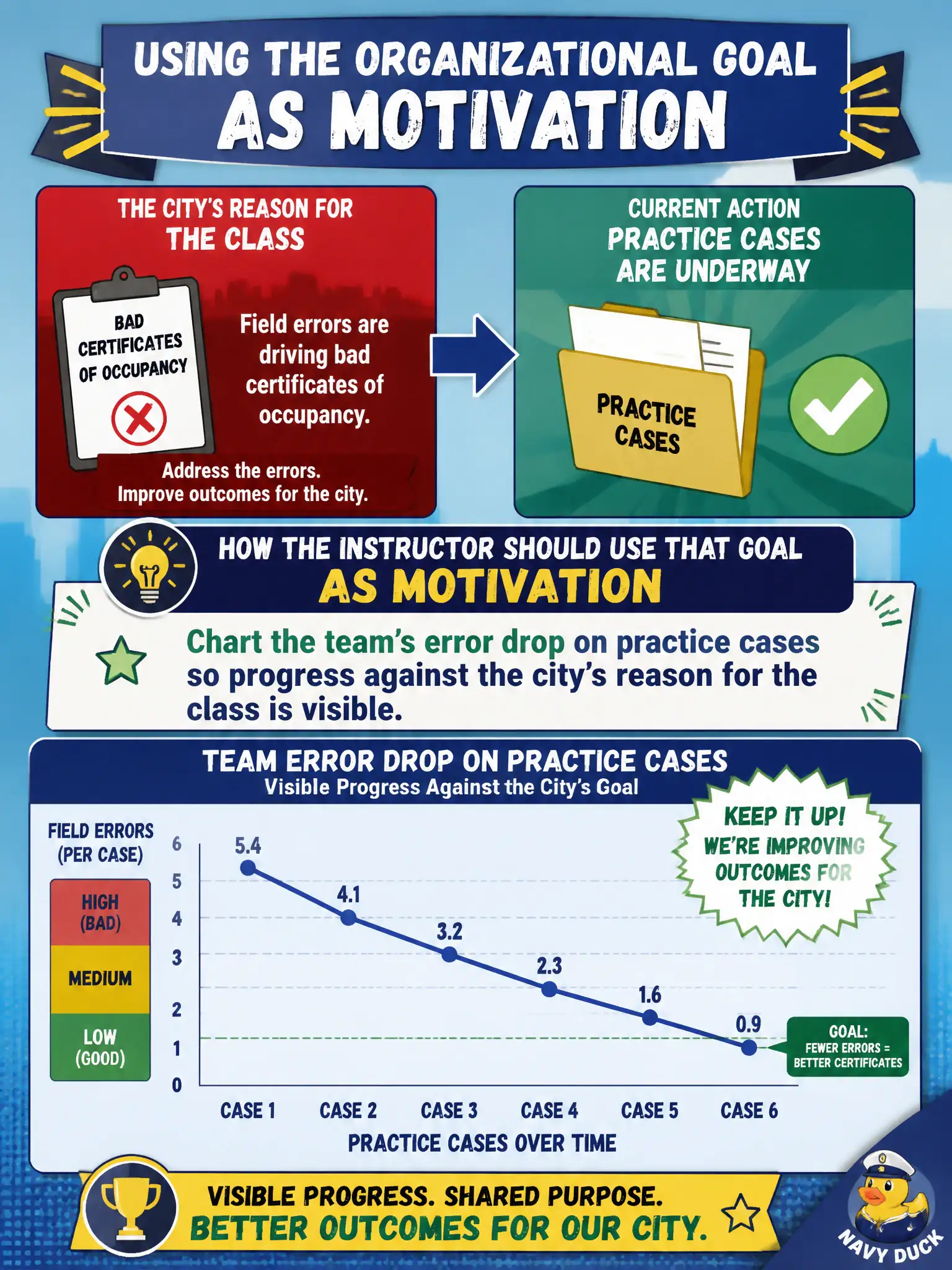
The city bought this class to cut occupancy errors, not to collect compliments. A simple chart of fewer misses on practice cases is a scoreboard people can see. Shame readings and a year-later audit are too late — or too mean — to pull the room forward today.
Full Explanation
When the city scheduled occupancy training because field errors drive bad certificates of occupancy, the instructor should chart the team's error drop on practice cases so progress against the city's reason for the class is visible. Organizational goals become motivating when learners can see movement on the problem that funded the event. Ignoring the city's error problem and relying on generic "great energy" comments fails the organizational-alignment concept: compliments without a civic scoreboard do not prove the class is working. Reading each specialist's worst miss aloud fails the climate concept by using shame instead of visible progress. Waiting for next year's audit before showing whether practice is working fails the timely-feedback concept and abandons mid-course motivation. Exam caveat: make the city's reason for training visible during practice; delayed audits and humiliation are not equivalent motivators. Operational check: post a simple practice-case error tally, update it after each round, celebrate measured drops, and coach remaining miss patterns without public humiliation—then confirm specialists watch the chart and adjust their next case. Occupancy certificates affect housing safety citywide, so a visible practice-error chart ties motivation to the civic problem that funded the class rather than to empty pep talk.