
A field inspector is discouraged after failing a complex GIS map and says the whole module is hopeless. How should the instructor encourage a win that still maps to the inspector’s goal?
Select an answer to reveal the explanation.
Short Explanation
A giant failed map feels like a wall. Shrink the next ask to one correct buffer. That is a real step toward field maps, not a consolation prize, and it gets the inspector moving again.
Full Explanation
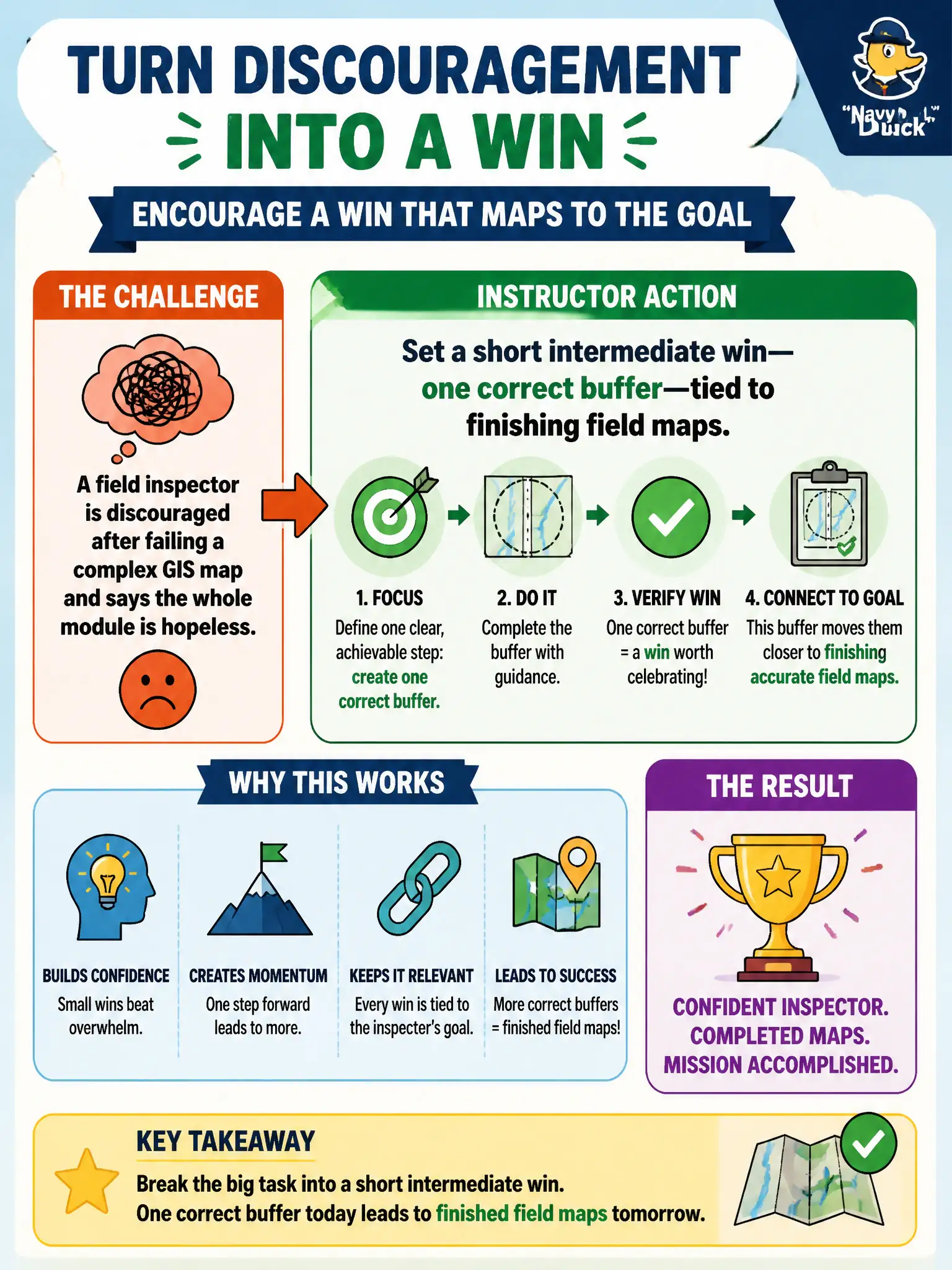
Field inspectors discouraged after a complex GIS failure still need progress toward maps that support public field decisions. Setting a short intermediate win—one correct buffer—tied to finishing field maps encourages a achievable success that still maps to their goal. Scaffolded wins restore efficacy without abandoning the objective.
Dropping GIS from the remaining agenda fails by concept: it trades temporary comfort for unfinished civic capability. Assigning the rest as unsupported overnight homework piles failure risk onto solo time. Comparing the inspector to a peer who succeeded first try damages confidence and models competition over coaching.
Exam caveat: when learners feel hopeless, shrink the next performance chunk, keep it criterion-real, and reconnect it to their goal—then build back to full complexity. Encouragement without a real task is empty; tasks without attainability deepen discouragement.
Operational check: redefine success for the next fifteen minutes as one correct buffer with units checked, celebrate that win specifically, then sequence the next map element toward the full field-map goal. Discouraged inspectors still owe the public usable field maps. Intermediate wins restore momentum without pretending the complex map is finished. Celebrate the correct buffer specifically, show how it ladders to the full map goal, and schedule the next chunk before hopelessness returns—keeping standards intact while pacing attainment.