
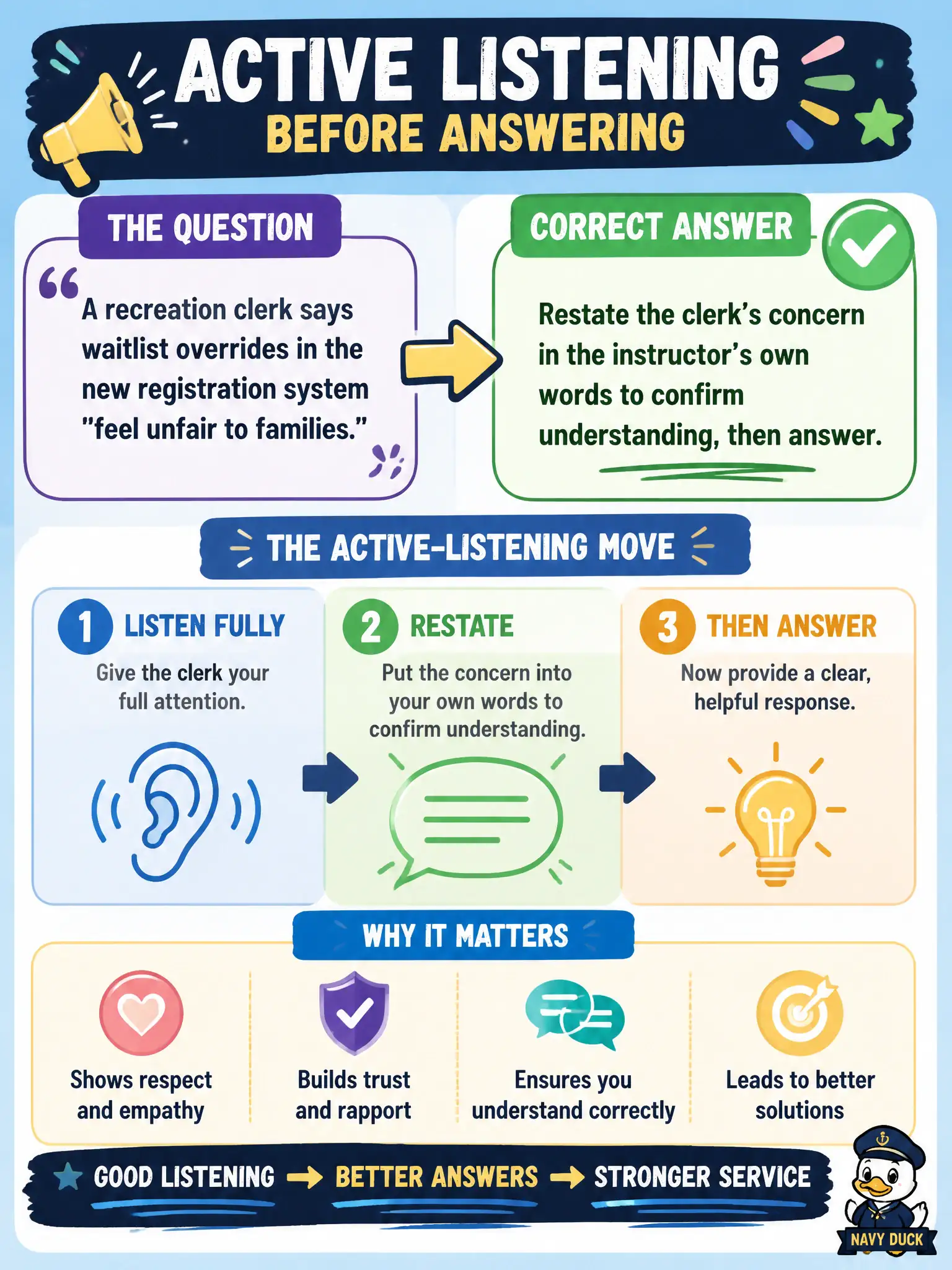
A recreation clerk says waitlist overrides in the new registration system "feel unfair to families." What active-listening move should the instructor make before answering?
Select an answer to reveal the explanation.
Short Explanation
A lunch-counter repeat-back—"so that's no onions, extra pickles"—is active listening in a paper hat. Repeat the waitlist worry in your own words so the clerk knows you heard it, then answer. Jumping to policy, shutting the comment down, or putting it to a vote skips that step.
Full Explanation
Recreation registration systems affect families' access to public programs; fairness concerns are civic, not merely emotional. Before answering, the instructor should restate the clerk's concern in the instructor's own words to confirm understanding—classic active listening—then respond. Restatement prevents answering a different problem than the one raised about waitlist overrides.
Answering immediately with a policy citation without confirmation fails by concept: you may refute a point the clerk did not mean and leave the fairness worry unresolved. Telling the clerk fairness is not on the agenda and cutting them off shuts down contribution and models disrespect for resident-impact concerns. Asking the class to vote on whether the clerk is right turns listening into a popularity contest instead of understanding.
Exam caveat: active listening includes attending, paraphrasing, and then responding; paraphrase alone is incomplete, but skipping paraphrase is a common exam trap. Policy answers come after shared understanding, not instead of it.
Operational check: paraphrase ('You're concerned overrides feel unfair to families on the waitlist—did I get that right?'), wait for confirmation, then give the policy or process answer. If the clerk corrects your paraphrase, revise before teaching.