
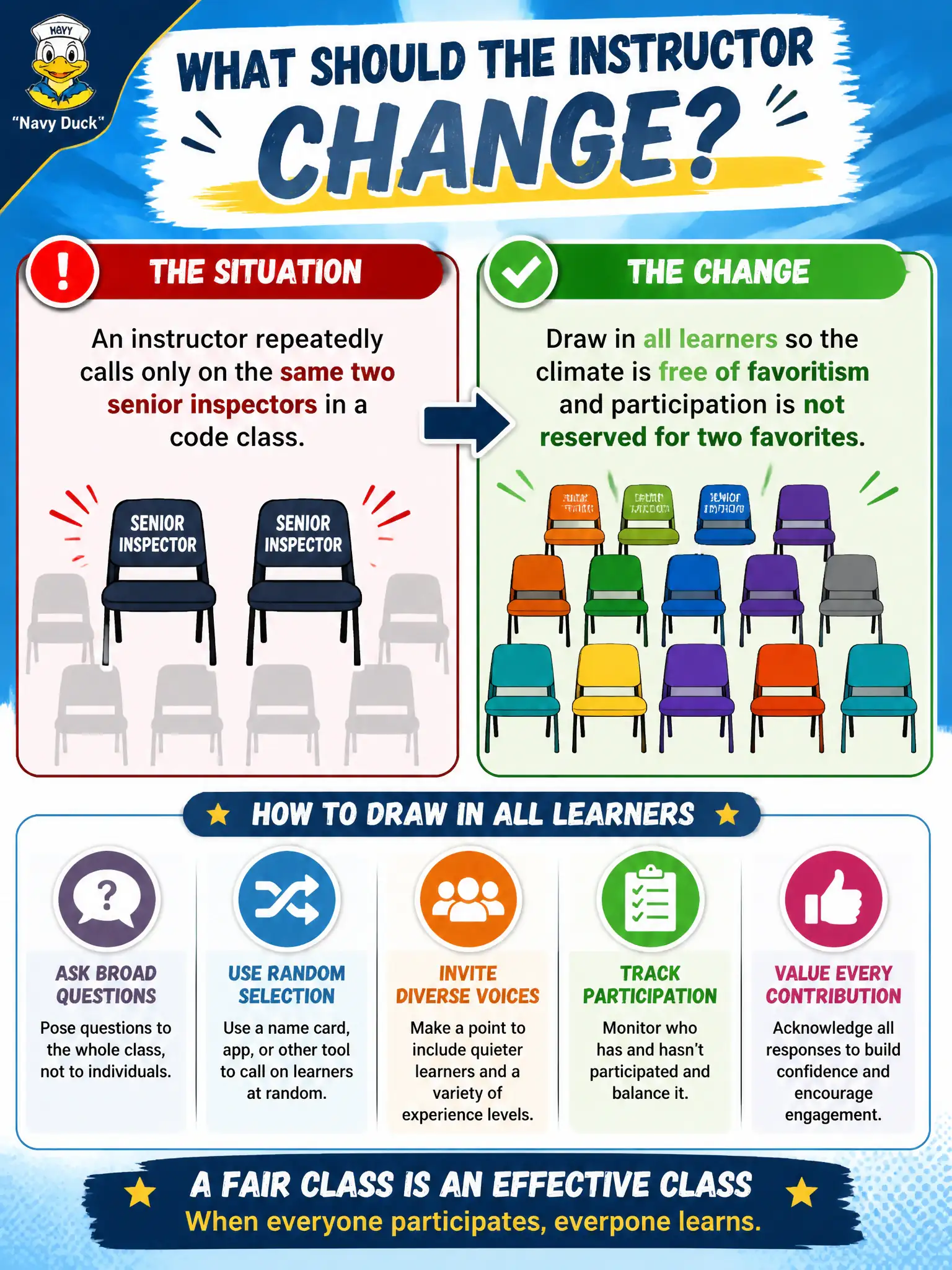
An instructor repeatedly calls only on the same two senior inspectors in a code class. What should the instructor change?
Select an answer to reveal the explanation.
Short Explanation
Two favorite inspectors are a VIP rope across the room. Drop the rope and call on the whole crew. Coverage on the slides is not the same as a climate without favoritism.
Full Explanation
A supportive climate is free of favoritism; instructors draw in all learners rather than repeatedly calling only favorites. In a code class, always calling the same two senior inspectors reserves participation and status for a clique and starves the instructor of evidence about newer inspectors’ understanding. Changing to broader invitation patterns so quieter and newer inspectors contribute keeps municipal learning equitable.
Keeping seniors first so newer inspectors “learn by watching experts” fails by concept when it permanently excludes practice and voice for others who must apply the code alone in the field. Accepting the pattern if content is covered by day’s end fails because coverage without broad participation is not an inclusive, criticism-free climate. Telling quieter inspectors to save questions for after-class email fails by pushing them out of the shared learning space.
Exam caveat: CTT+ favoritism items treat uneven cold-call patterns as climate failures, not as efficiency.
Operational check: use a rotation, name sticks, or chat prompts to invite quieter inspectors; track who has spoken across the module; do not let two seniors answer every code question in the room or monopolize demonstrations.