
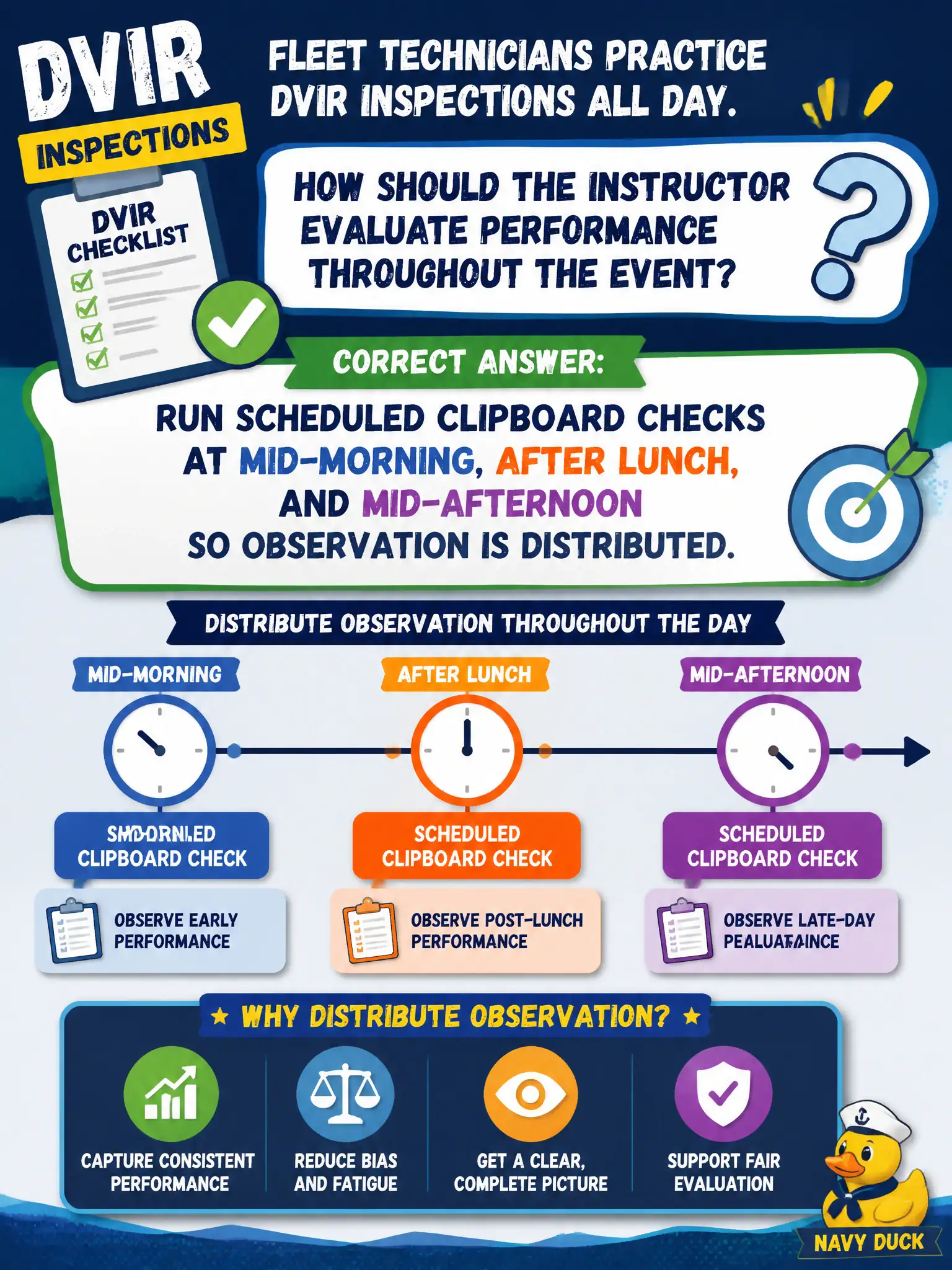
Fleet technicians practice DVIR inspections all day. How should the instructor evaluate performance throughout the event?
Select an answer to reveal the explanation.
Short Explanation
Throughout means more than a wave at quitting time. Check the clipboards a few times across the day. One late peek, or a rumor on Friday, is not a day of evaluation.
Full Explanation
Fleet technicians practicing DVIR inspections all day should be evaluated throughout the event with scheduled clipboard checks at mid-morning, after lunch, and mid-afternoon so observation is distributed. Spaced checks catch drift and satisfy multiple-observation expectations for each learner. Completing one clipboard check at dismissal only fails throughout-the-event monitoring. Watching only the first ten minutes and leaving the bay fails continuity. Asking the shop supervisor at week’s end who looked busy fails direct, timely performance evidence. Exam caveat: schedule distributed observations; end-loaded or rumor-based checks are insufficient. Operational check: put three named DVIR check slots on the agenda, score each technician on the clipboard rubric at each slot, coach between checks, and retain the three snapshots as the evaluation trail. DVIR inspections keep municipal fleets roadworthy; mid-morning, post-lunch, and mid-afternoon clipboard checks distribute observation so technicians are evaluated throughout the bay day rather than judged from a single late glance. Keep the civic standard visible on the rubric so every rater and learner sees what "met" means. File the evidence with the course record under the city’s retention schedule.