
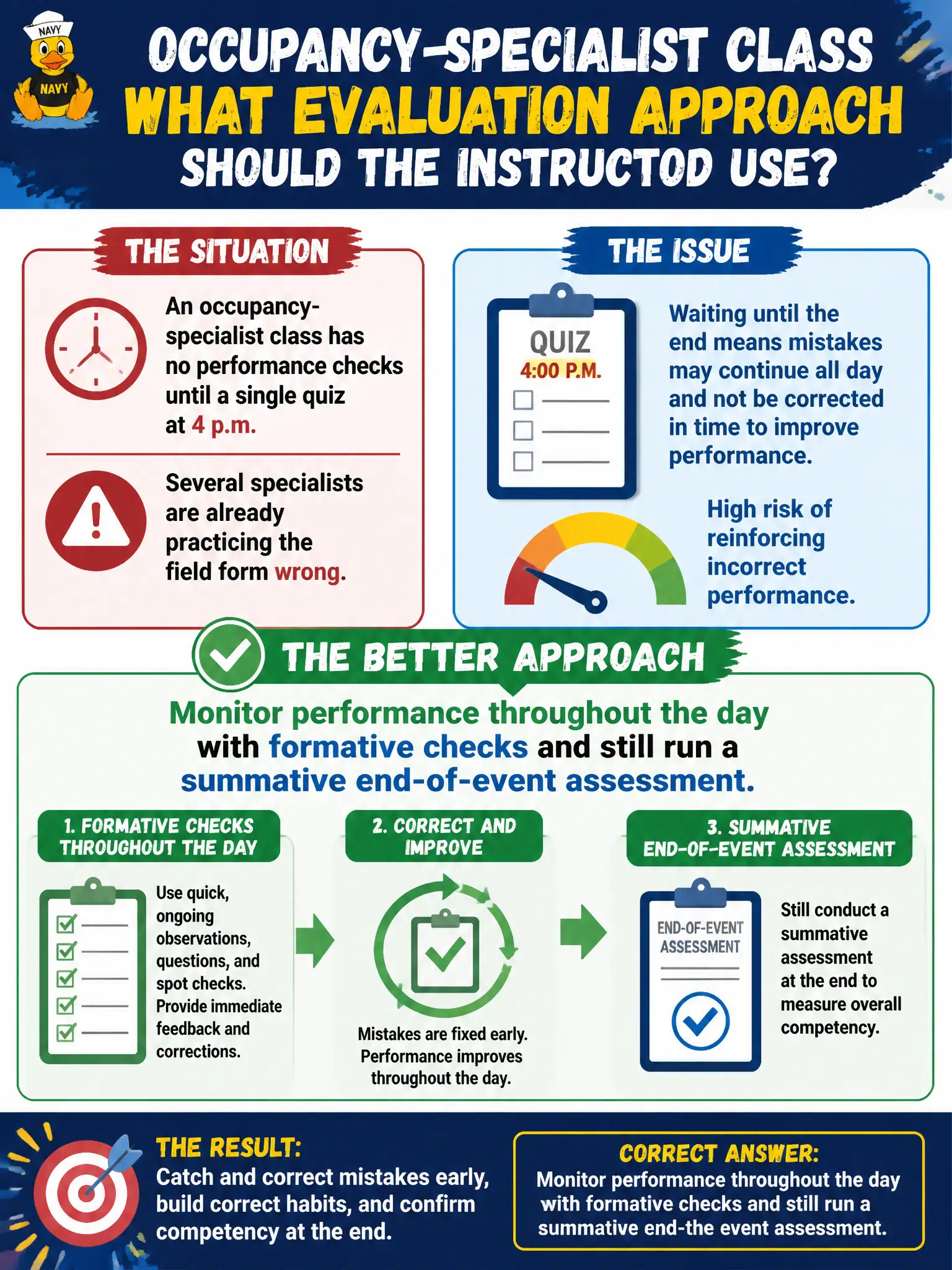
An occupancy-specialist class has no performance checks until a single quiz at 4 p.m. Several specialists are already practicing the field form wrong. What evaluation approach should the instructor use instead?
Select an answer to reveal the explanation.
Short Explanation
A single late-day quiz is an autopsy if people practiced the form wrong all morning. Watch and coach while they work — that is formative — then still give an end check so you know what stuck. Busy faces are not a score.
Full Explanation
An occupancy-specialist class with no performance checks until a single 4 p.m. quiz leaves specialists practicing the field form wrong all day; the instructor should monitor throughout with formative checks and still run a summative end-of-event assessment. CTT+ evaluation expects both ongoing formative correction and a summative judgment of achievement. Keeping only the late quiz for scoring simplicity fails formative duty and turns the exam into an autopsy of unrepaired errors. Skipping formal checks and judging by whether the room looked busy fails evidence standards; busyness is not performance. Canceling the end-of-day assessment because smiles prove mastery fails summative duty; affect is not skill evidence. Exam caveat: formative and summative are partners, not alternatives you pick for convenience. Operational check: schedule mid-morning and mid-afternoon form checks, correct shared errors immediately, then administer the end assessment against the published occupancy objective and record individual results. Occupancy field forms feed certificates that affect life safety; formative checks during the day stop wrong practice from hardening, while a summative still documents whether specialists met the objective.