
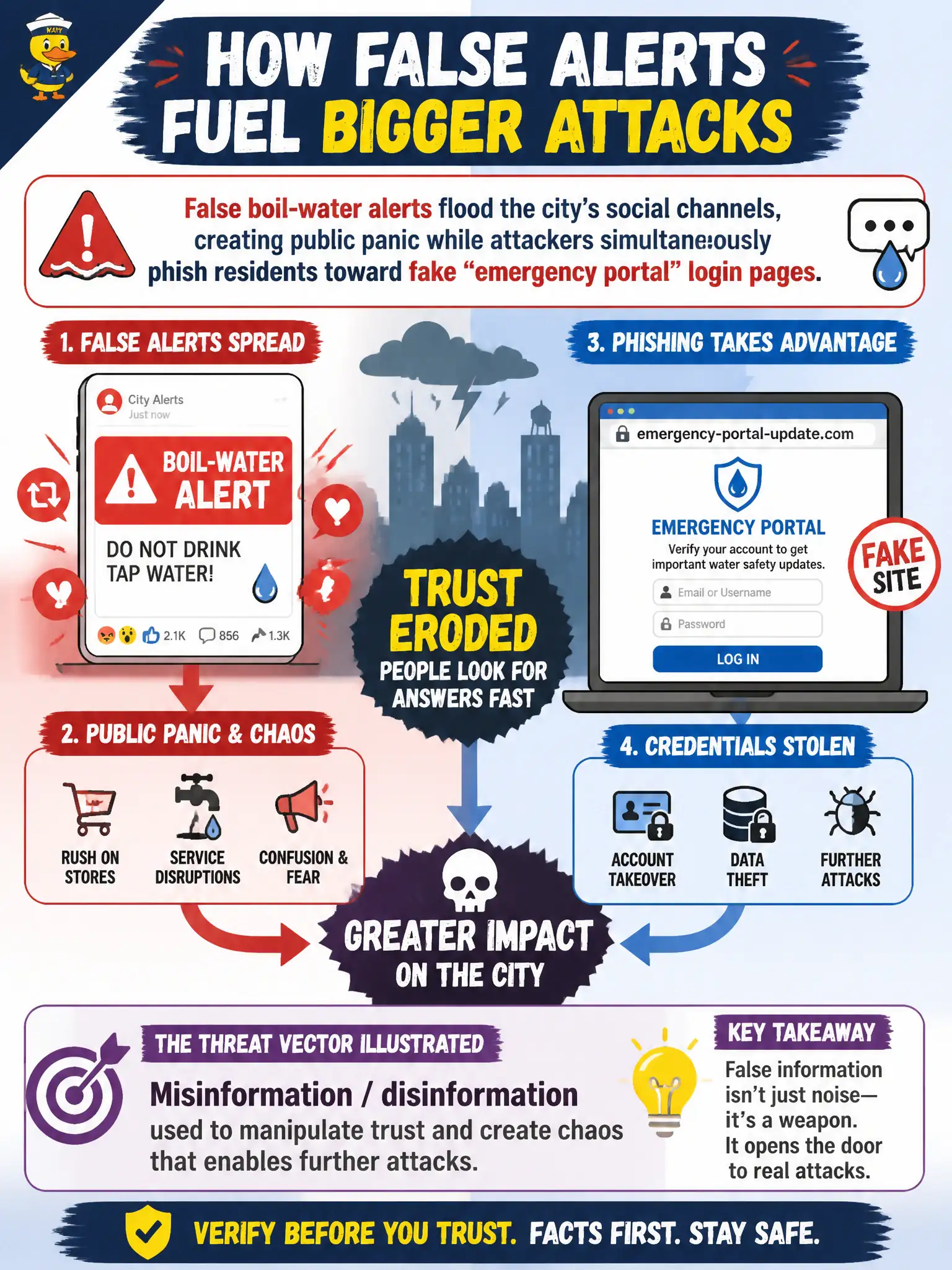
False boil-water alerts flood the city’s social channels, creating public panic while attackers simultaneously phish residents toward fake "emergency portal" login pages. Which threat vector is primarily illustrated by the false alerts?
Select an answer to reveal the explanation.
Short Explanation
Fake boil-water chaos is disinformation — poison the public narrative so people click the "emergency portal" trap. The lie itself is the vector that softens trust, separate from EOL firewalls or sideloaded apps. Pair public communications verification with phishing defenses during civic crises.
Full Explanation
Misinformation and disinformation manipulate trust and create chaos that enables follow-on attacks. False boil-water alerts on the city’s social channels trigger panic and urgency; residents then become more likely to click "emergency portal" phishing pages that mimic official crisis communications. The lie itself is the primary vector called out by the question—the narrative attack softens skepticism before credential harvesting begins.
Default credentials on a public-facing RDP jump host are an exposure/credential hygiene issue. They do not explain false public alerts flooding social media.
An end-of-life firewall that no longer receives patches is a legacy/unpatchable appliance concern, unrelated to fabricated emergency messaging.
Sideloading unapproved apps onto MDM-managed tablets is a mobile control bypass. It does not create citywide public panic or fake emergency portals.
Exam caveat: Security+ includes influence campaigns and misinformation/disinformation as threat vectors, especially where public-sector trust is leveraged. Distinguish the false narrative (mis/disinformation) from the secondary phishing sites it enables. Also distinguish honest error (misinformation) from intentional deception (disinformation); exams may use either term for the chaos-enabling theme.
Operational check: pre-stage verified crisis communication channels, watermark or cryptographically indicate official posts, coordinate with public information officers before amplifying alerts, and publish how residents should validate emergency instructions. During viral false alerts, pair rapid official corrections with phishing defenses, brand monitoring for fake portals, and help-desk scripts for panicked callers.