
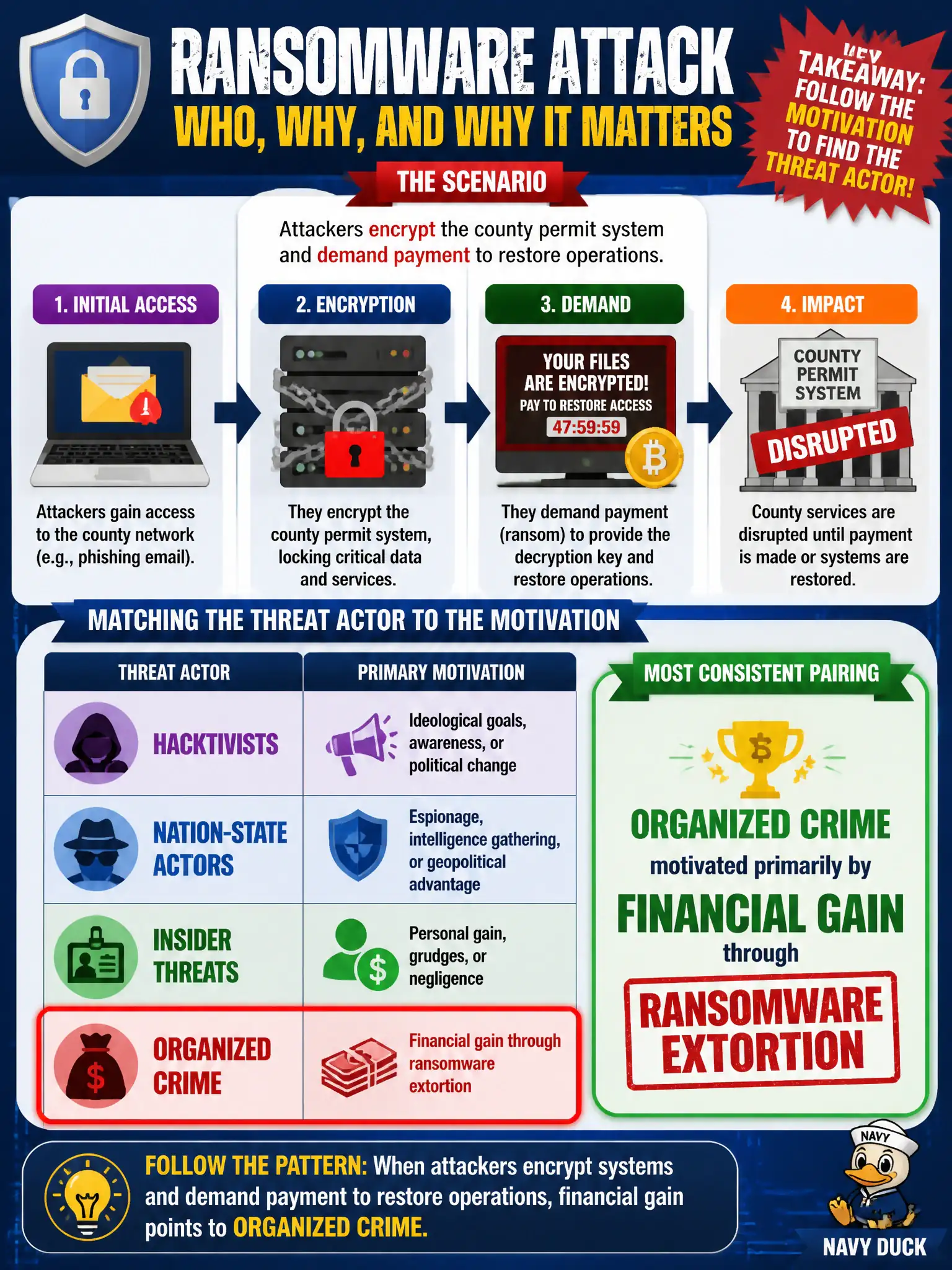
Attackers encrypt the county permit system and demand payment to restore operations. Which threat-actor motivation pairing is most consistent with this pattern?
Select an answer to reveal the explanation.
Short Explanation
Encrypt the permits, send the ransom note, chase the payout—that is organized crime's financial playbook. Espionage wants secrets without the billboard; hacktivists want a message, not a wire transfer.
Full Explanation
Encrypting the county permit system and demanding payment to restore operations is the classic financially motivated ransomware pattern associated with organized crime. The primary objective is illicit profit through extortion against availability and business continuity. Noise, encryption of business data, and a payment demand are consistent with crime-syndicate playbooks rather than quiet collection or symbolic protest alone.
Nation-state espionage focused only on quietly stealing design documents emphasizes stealthy intelligence gathering, not billboard-style extortion that announces itself with ransom notes. Hacktivists seeking only symbolic website graffiti prioritize messaging over operational encryption-for-payment. Ethical researchers following coordinated vulnerability disclosure notify owners through approved channels and do not encrypt production permit systems for money.
Exam caveat: ransomware-plus-payment-demand maps to financial organized crime motivation on the exam's actor taxonomy. Operational check: maintain offline immutable backups for municipal permit systems, segment admin interfaces, test restore under time pressure, refuse payment per policy and legal guidance, and hunt for initial access paths (phishing, exposed RDP, vulnerable VPN) that crime affiliates commonly reuse.