
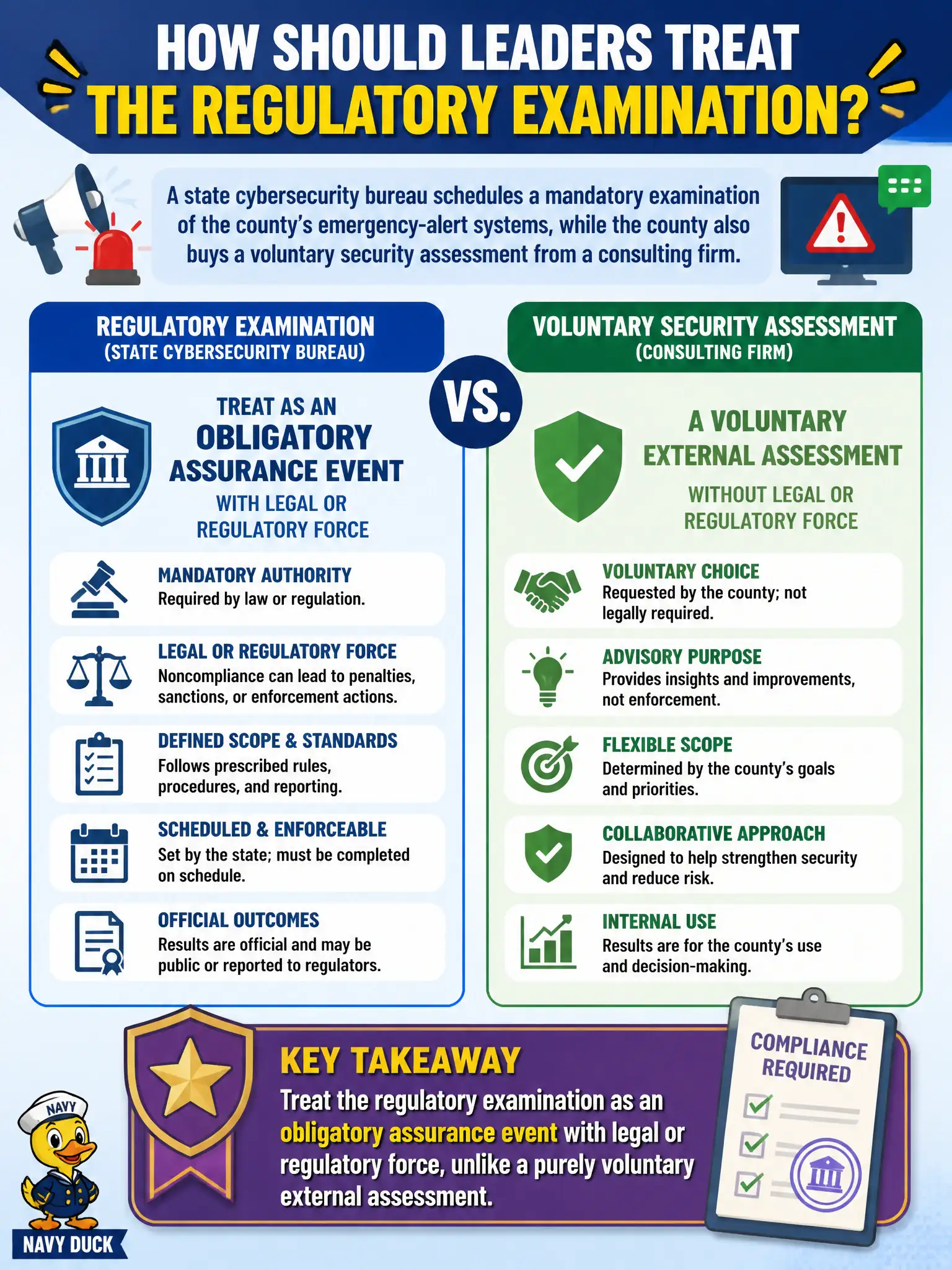
A state cybersecurity bureau schedules a mandatory examination of the county’s emergency-alert systems, while the county also buys a voluntary security assessment from a consulting firm. How should leaders treat the regulatory examination?
Select an answer to reveal the explanation.
Short Explanation
When the state shows up with a must-do exam, that’s not a spa day you can cancel. Voluntary assessments are helpful; regulatory examinations carry outside muscle.
Full Explanation
A state cybersecurity bureau’s mandatory examination of emergency-alert systems is an obligatory assurance event with legal or regulatory force. Leaders should treat it as compulsory participation with potential sanctions for non-cooperation or unresolved findings. A voluntary consulting assessment remains useful for improvement but can be scheduled, scoped, or declined within procurement discretion—unlike the regulator’s exam.
Treating the regulatory examination as optional marketing content that can be declined without consequence underestimates enforcement authority. Equating it to any unpaid intern code review erases its special status and risk. Viewing it as a replacement for all internal policies so local standards become unnecessary is backwards; external exams evaluate against requirements—they do not erase the need for city policies and continuous control operation.
Exam caveat: Distinguish mandatory regulatory examinations from voluntary external assessments. Obligation and outside authority are the keywords.
Operational check: assign a single regulatory liaison, freeze risky changes during fieldwork when appropriate, prepare evidence binders early, track examiner requests, and brief executives on likely findings with remediation owners and dates before the exit conference.