
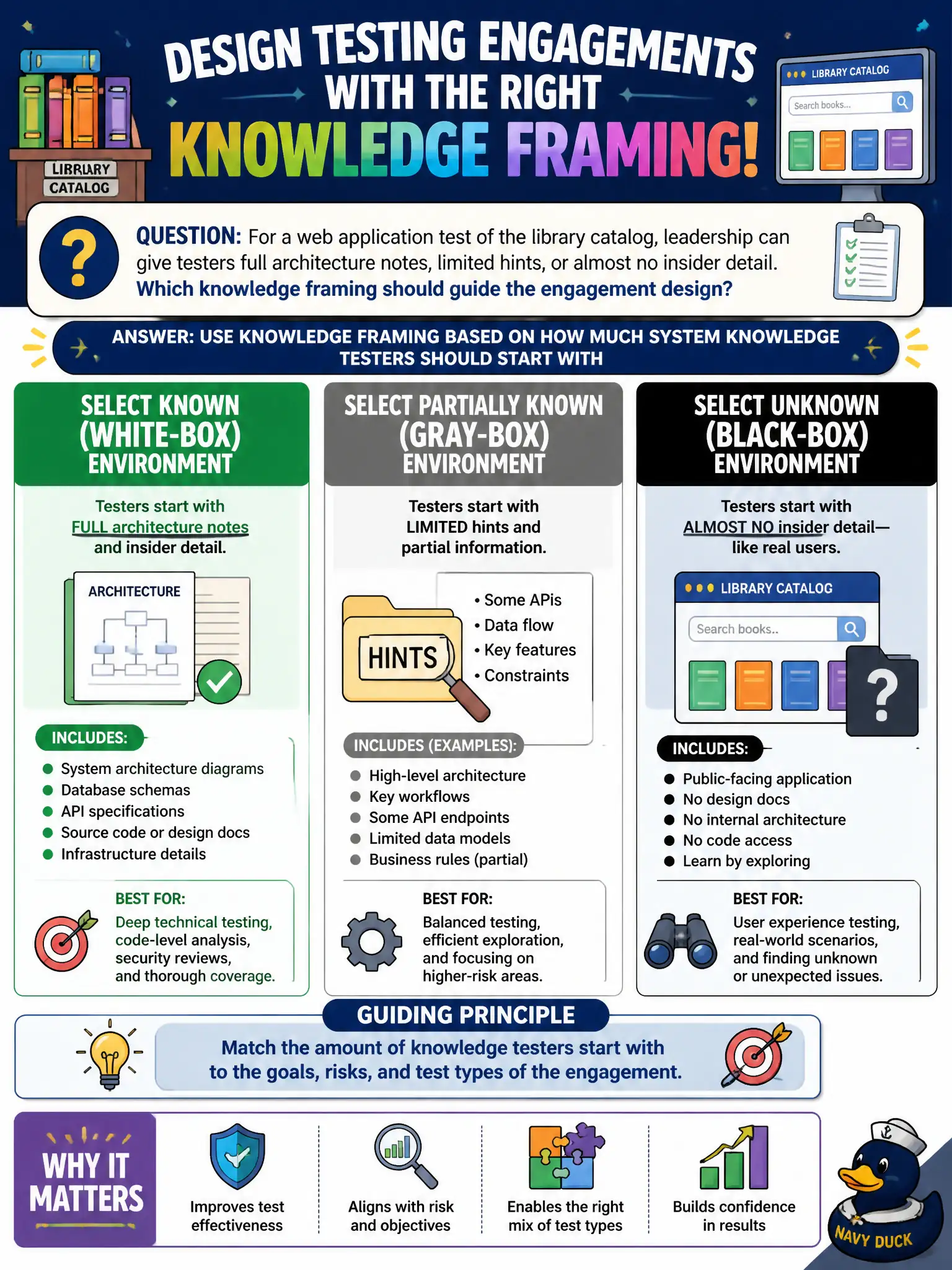
For a web application test of the library catalog, leadership can give testers full architecture notes, limited hints, or almost no insider detail. Which knowledge framing should guide the engagement design?
Select an answer to reveal the explanation.
Short Explanation
How much of the treasure map do the testers get—full map, torn scrap, or blank parchment? That’s known, partially known, or unknown environment design.
Full Explanation
Web application engagement design for a library catalog should start from how much system knowledge testers receive. Known-environment (white-box) testing supplies architecture notes, code, or credentials for deep coverage. Partially known (gray-box) provides limited hints typical of an authenticated user or partial documentation. Unknown (black-box) starts with little insider detail to approximate external attackers. Selecting known, partially known, or unknown environments based on desired starting knowledge is the correct framing.
Declaring unknown-environment testing illegal whenever a library website is involved is false; black-box tests are common and lawful when authorized. Claiming those knowledge models are obsolete and replaced by a single mandatory black-box rule ignores standard scoping practice. Requiring production database admin passwords before any web test begins over-prescribes white-box access and may be inappropriate for the chosen model or risk appetite.
Exam caveat: SY0-701 uses known / partially known / unknown (white / gray / black) to describe tester starting knowledge. Match the model to objectives; do not invent legality bans or mandatory admin password handovers.
Operational check: document the chosen knowledge level in the statement of work, provide only the artifacts that model requires, use non-production or carefully controlled production windows, and ensure credentials for white/gray tests are temporary, logged, and revoked after the engagement.