
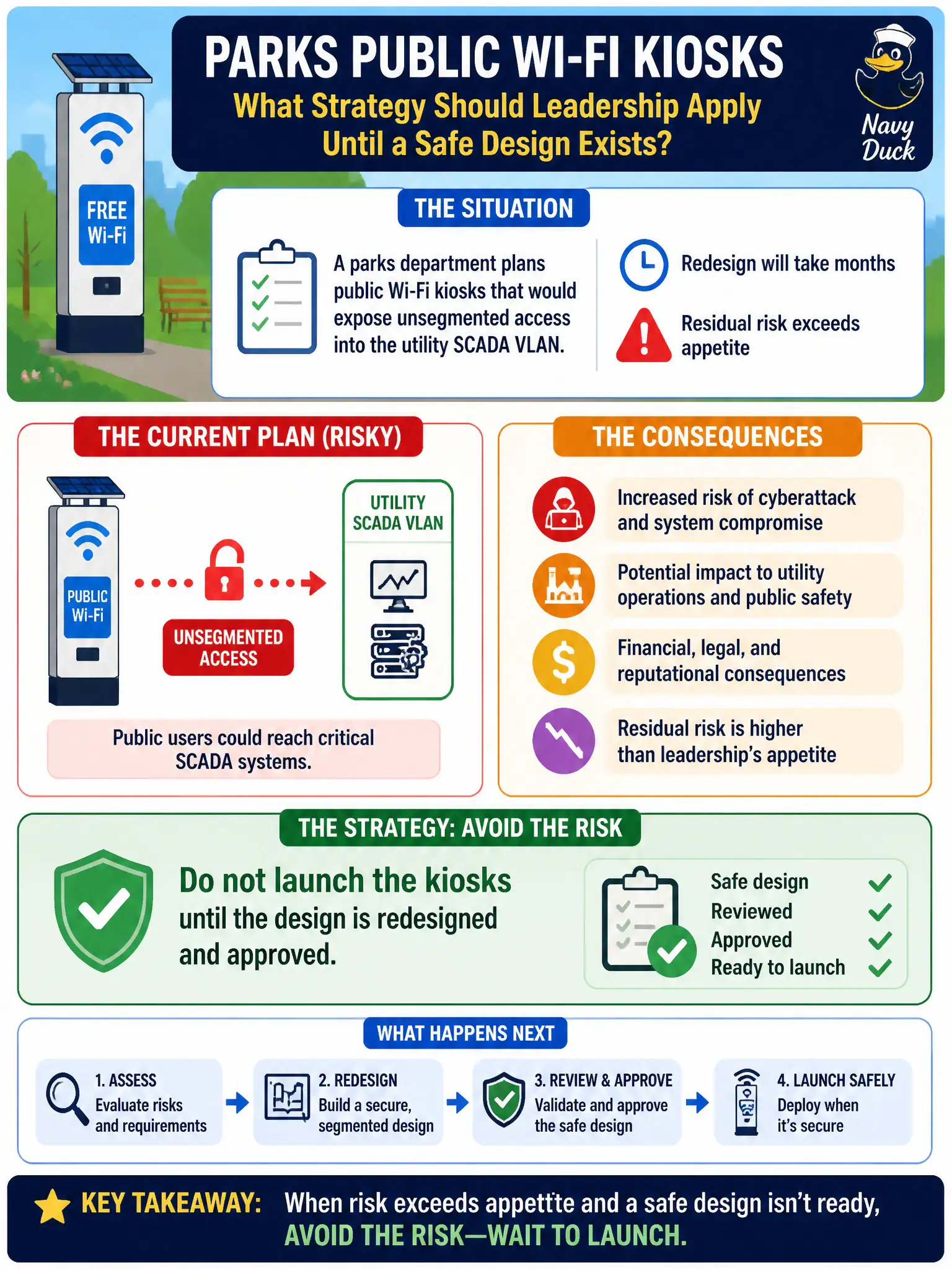
A parks department plans public Wi-Fi kiosks that would expose unsegmented access into the utility SCADA VLAN. Redesign will take months and residual risk exceeds appetite. What strategy should leadership apply until a safe design exists?
Select an answer to reveal the explanation.
Short Explanation
If the ride isn't safe yet, you don't open the fairground gate—you avoid running it until the rails are fixed. Skipping the unsafe kiosk launch is avoidance, not a sticker-and-hope plan.
Full Explanation
Risk avoidance eliminates or postpones the activity that creates unacceptable risk when mitigation cannot bring residual risk within appetite in time. Public Wi-Fi kiosks that would open unsegmented access into a utility SCADA VLAN present an unacceptable path into operational technology. Until redesign isolates guest Wi-Fi from SCADA, leadership should not launch the kiosks—that delay or cancellation is avoidance, preserving citizen convenience goals for later when architecture is safe. Transfer by emailing the vendor a thank-you note does nothing contractual or financial to shift consequences. Courtesy messages are not risk transfer instruments like insurance or indemnity clauses. Accepting without review because citizens like kiosks ignores residual risk that already exceeds appetite. Popularity does not authorize undocumented acceptance of OT exposure, and acceptance requires deliberate governance when used at all. Mitigation solely by adding a colorful sticker that says secure is cosmetic theater. Stickers do not segment networks, enforce access control, or reduce likelihood or impact of SCADA compromise from guest Wi-Fi paths. Exam caveat: When residual risk exceeds appetite and effective controls are not yet available, the correct strategy is often avoidance—do not start the risky activity—until redesign brings risk into tolerance. Operational check: Block kiosk go-live in change control, require a redesigned architecture with segmentation and review, and only then revisit launch; record avoidance as the interim treatment on the risk register.