
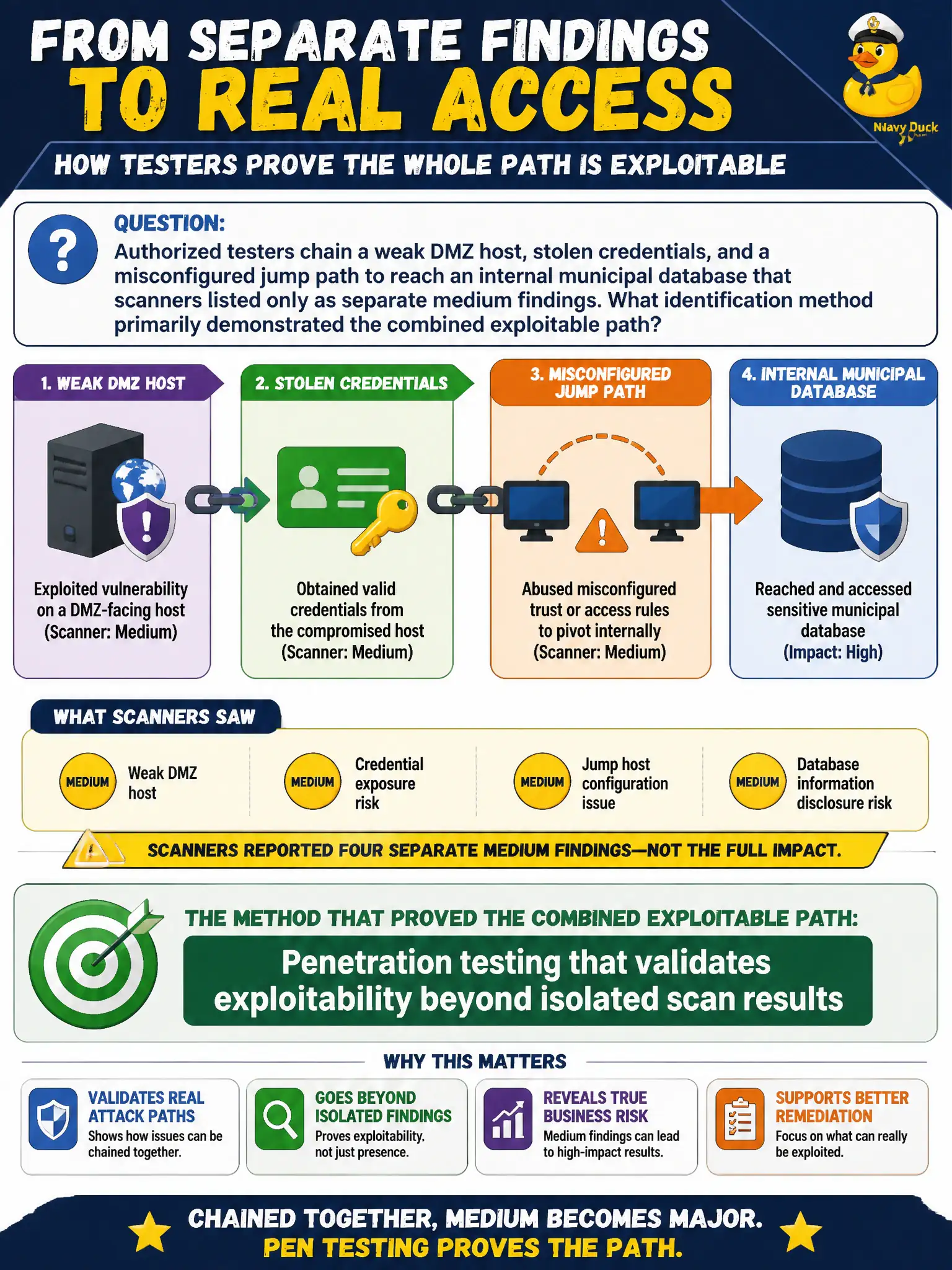
Authorized testers chain a weak DMZ host, stolen credentials, and a misconfigured jump path to reach an internal municipal database that scanners listed only as separate medium findings. What identification method primarily demonstrated the combined exploitable path?
Select an answer to reveal the explanation.
Short Explanation
Scanners hand you a grocery list of mediums; a pentest shows how those items become a recipe into the database. Authorized chaining on the DMZ is identification of real attack paths, not unauthorized password spraying or deleting findings.
Full Explanation
Penetration testing is the authorized identification method that proves whether isolated medium findings combine into a real attack path. In this municipal DMZ scenario, testers chained a weak edge host, stolen credentials, and a misconfigured jump path to reach an internal database—demonstrating exploitability and business impact that siloed vulnerability scans listed only as separate mediums. That end-to-end validation elevates prioritization far beyond any single CVSS row.
An unauthorized password spray against every citizen email account is illegal and unethical testing, not a sanctioned identification method. Deleting medium findings so they “cannot be chained” destroys signal instead of understanding attack paths. Antivirus signature counts measure one host control, not network path exploitability into municipal databases.
Exam caveat: pentests require rules of engagement, written authorization, and scoped targets; they complement scanning rather than replace continuous vulnerability management. Medium findings can still be severe in combination—exams reward recognizing chaining and exploit validation.
Operational check: schedule authorized pentests after major DMZ changes, map chained paths back to specific tickets, raise severity for path-enabling weaknesses, remediate, and retest the path—not only the individual CVE IDs.