
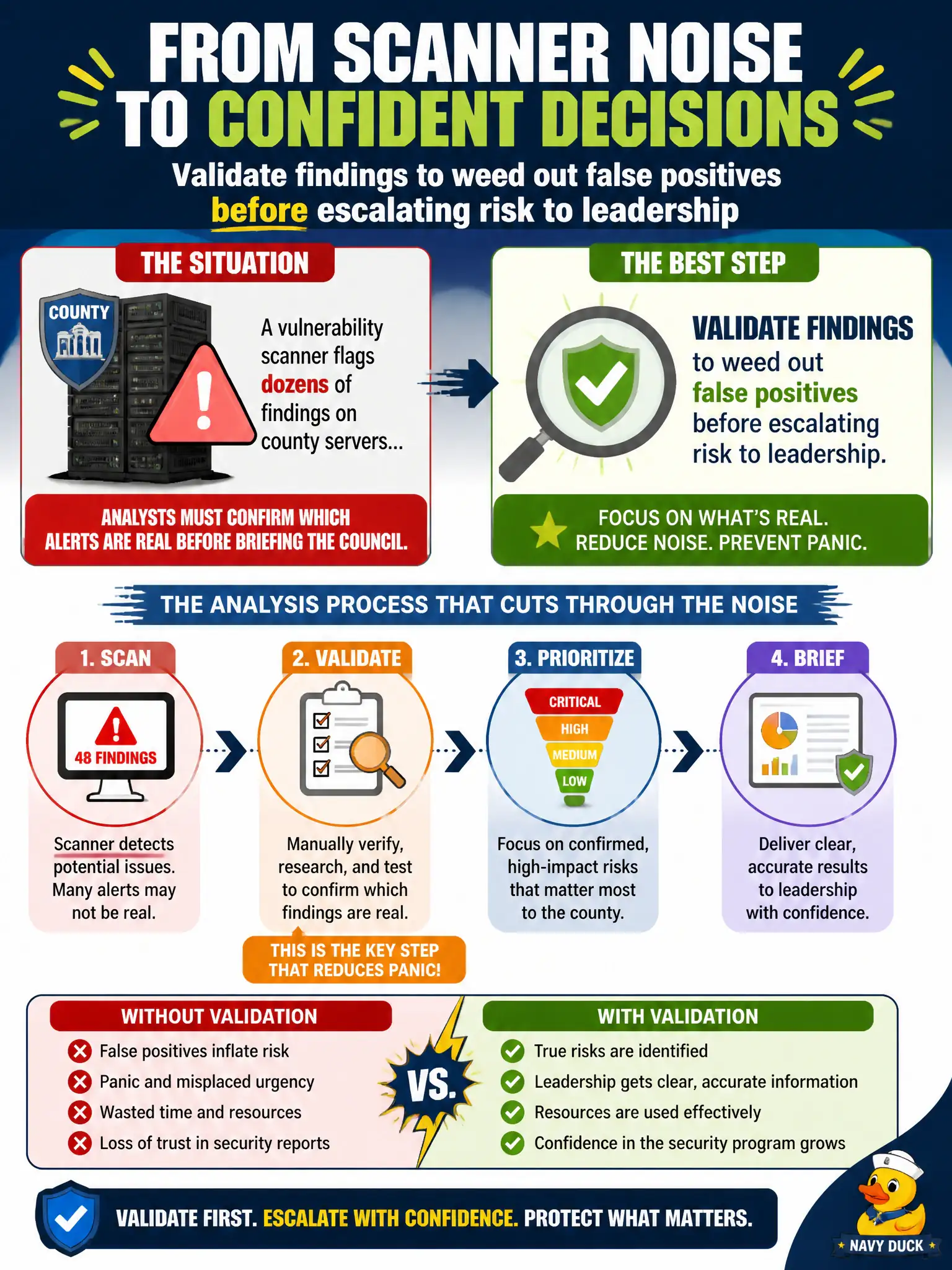
A vulnerability scanner flags dozens of findings on county servers, but analysts must confirm which alerts are real before briefing the council. Which analysis step best reduces panic from inaccurate scanner noise?
Select an answer to reveal the explanation.
Short Explanation
Scanners cry wolf sometimes—confirm the hits so you do not march into council with a false alarm. Validating findings separates real vulns from false positives; burying results or assuming silence means safety are the opposite of analysis.
Full Explanation
Validation of scanner findings is the analysis gate that keeps municipal risk reporting honest. Automated tools flag many candidates; analysts confirm exploitability or presence, weed out false positives, and only then escalate accurate residual risk to council or department leadership. That step protects credibility, focuses remediation labor on real weaknesses, and prevents leadership panic driven by duplicate signatures, wrong OS fingerprints, or mitigated issues the scanner still lists.
Reporting every raw hit without review floods decision makers with noise and trains them to ignore later true crises. Deleting all scan results so “nothing can be wrong” destroys evidence and leaves citizens exposed while creating a false clean slate. Treating unconfirmed misses—or an empty report—as proof that no vulnerabilities exist confuses absence of validated findings with absence of risk, especially when scan coverage or credentials were incomplete.
Exam caveat: analysis sits between identification and remediation/reporting in the vulnerability-management process. Validation is not optional theater; exams distinguish false positives from true positives and expect confirmation before executive escalation.
Operational check: sample critical and high findings with secondary tools or manual checks, tag false positives with rationale in the tracker, brief leadership with validated counts and business impact, and re-scan after fixes so the next council packet reflects reality.