
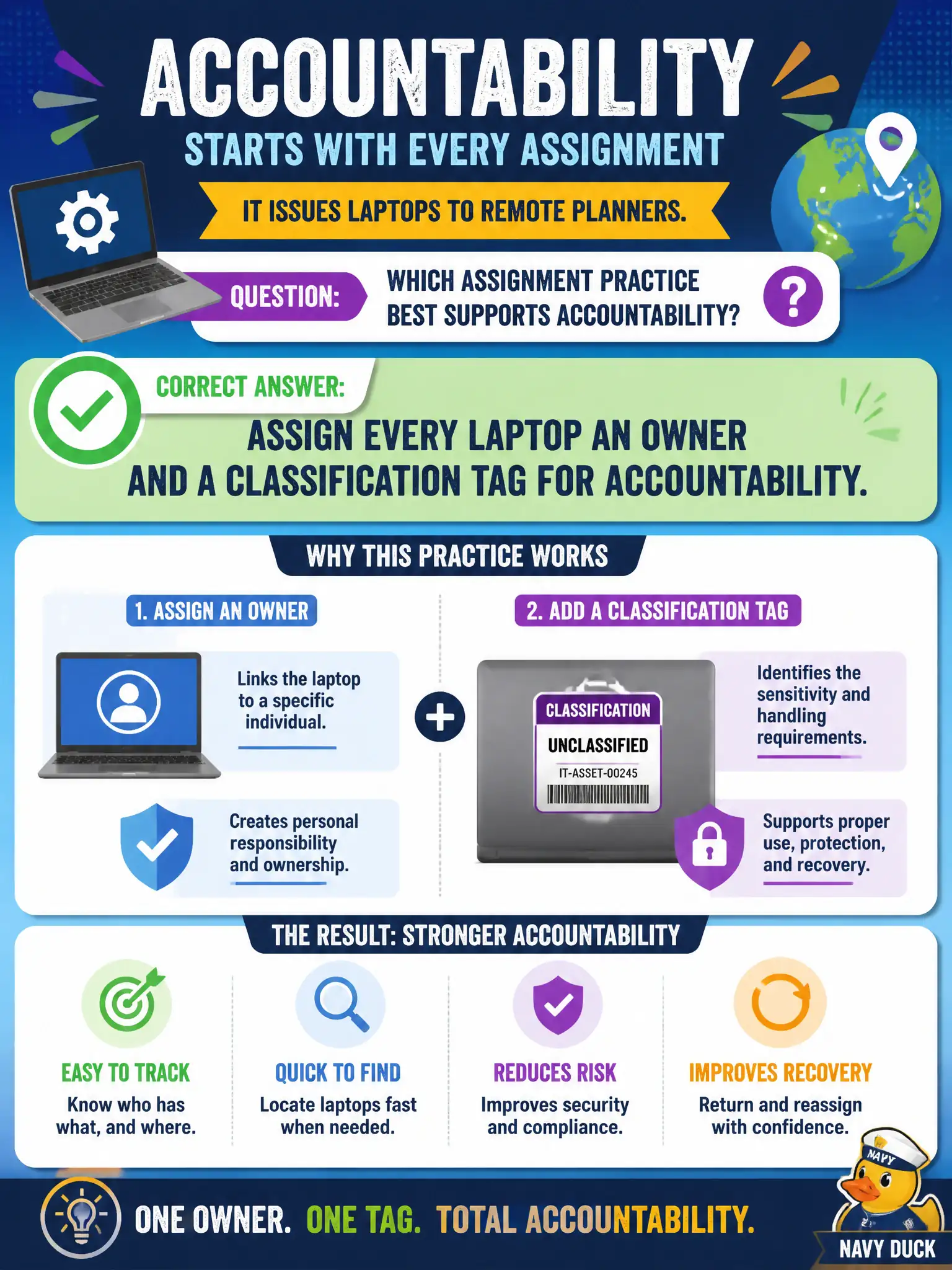
IT issues laptops to remote planners. Which assignment practice best supports accountability?
Select an answer to reveal the explanation.
Short Explanation
Every laptop needs a name on it—who owns it and how sensitive the data is. Unmarked shared mystery machines and chat-thread 'records' that vanish weekly make accountability impossible when something walks off.
Full Explanation
Accountability for planner laptops starts with assignment and classification. Every device needs a named owner (or custodial role) and a data classification tag so support, audits, and incident response know who is responsible and how sensitive the contents are. Ownership enables recovery of the asset and enforcement of controls; classification drives encryption expectations, storage rules, and handling during travel or surplus. Unmarked shared mystery machines break both chains. Handing out unmarked laptops with no owner record or classification tag leaves custody and sensitivity undefined when a device is lost or subpoenaed. Sharing one login image for all planners without individual custody destroys attribution and weakens least privilege. Storing ownership only in an unofficial chat thread deleted weekly is not a durable system of record and fails audit or investigation needs. Exam caveat: assignment and accounting questions stress durable ownership plus classification—not informal tracking. Operational check: register each laptop in the asset system with owner and classification before issuance, reconcile inventory quarterly, and block surplus or reassignment until tags and custody fields are current.