
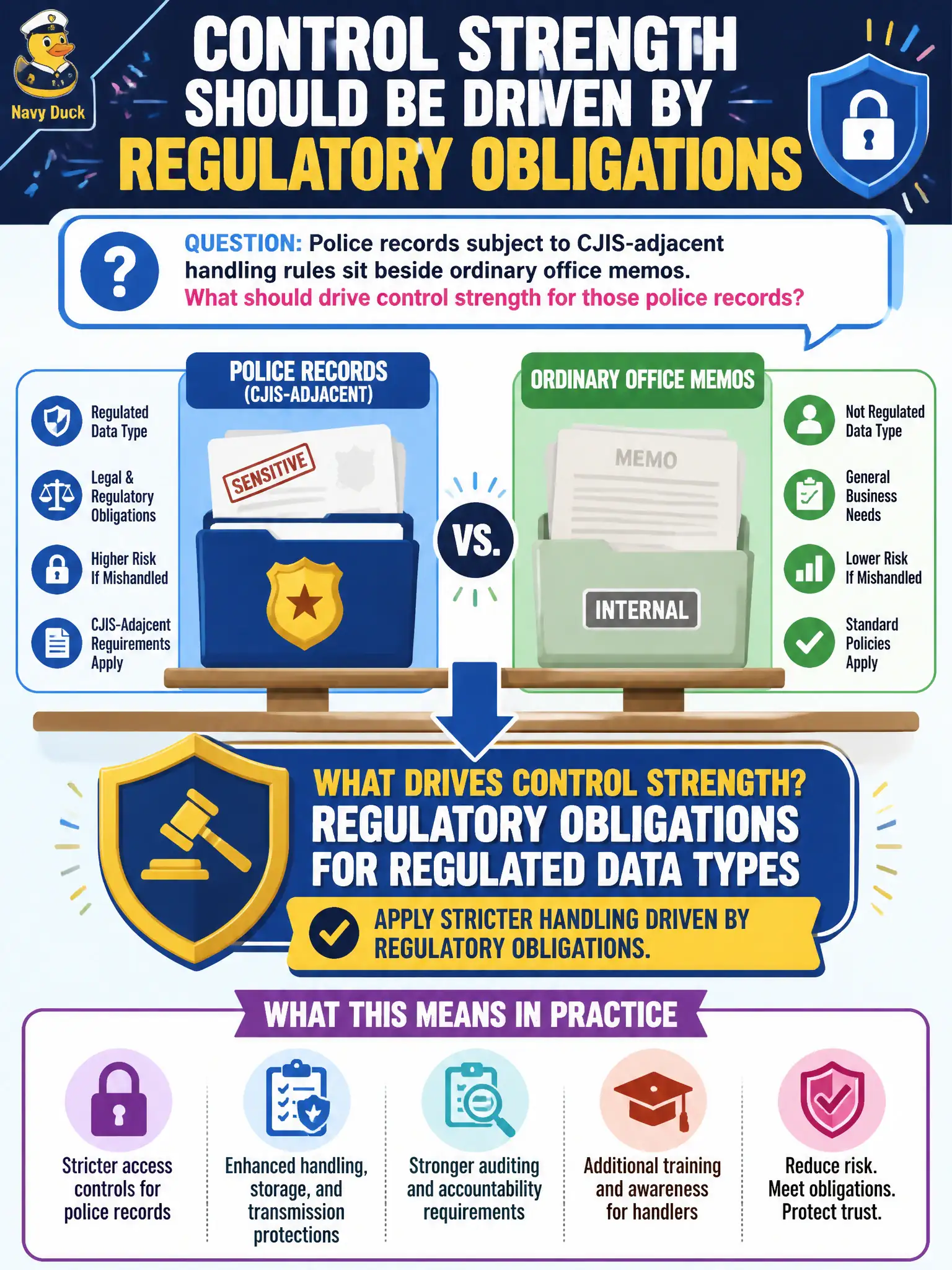
Police records subject to CJIS-adjacent handling rules sit beside ordinary office memos. What should drive control strength for those police records?
Select an answer to reveal the explanation.
Short Explanation
Regulated police records don’t get the same casual treatment as lunch memos—the rulebook (think CJIS-class obligations) sets a higher bar. Age alone doesn’t erase those duties. Syncing them to every personal phone is asking for trouble.
Full Explanation
Regulated data types such as criminal justice or investigative records carry external obligations—access control, auditing, encryption, media handling, and sometimes CJIS-aligned requirements—that exceed ordinary municipal document handling. Stricter procedures follow from those obligations, not from informal notions of convenience.
Treating regulated police records identically to cafeteria menus ignores legal and accreditation risk. Allowing unrestricted personal-device sync for investigators may feel efficient yet bypasses enterprise encryption, MDM, and evidence-handling controls. Downgrading protections solely because files aged past thirty days can violate retention and ongoing sensitivity rules; age alone does not erase regulation.
Exam caveat: regulation and contractual standards set the floor. Internal “it’s old” or “it’s inconvenient” arguments do not override mandated handling. Differentiated controls by data type are expected on the exam.
Operational check: tag regulated repositories, enforce MDM and prohibited sync paths, require audited access for investigative shares, align retention with legal holds, and train staff that lunch menus and case files never share the same casual handling culture.