
Wastewater SCADA prioritizes plant uptime and safety, and some controllers cannot be patched on desktop-like schedules. Which implication best reflects ICS/SCADA security architecture?
Select an answer to reveal the explanation.
Short Explanation
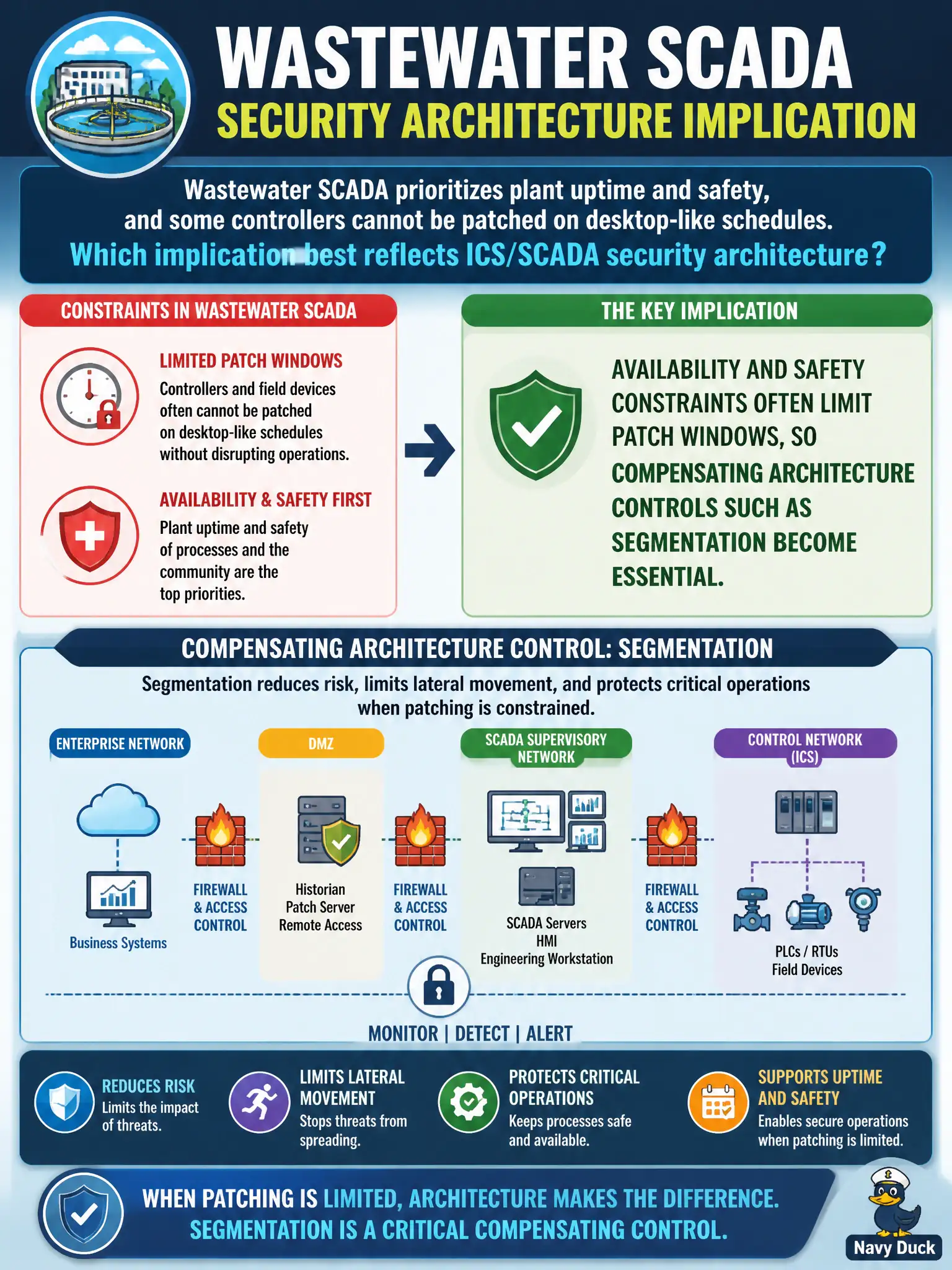
You cannot treat a wastewater plant like a laptop refresh night—safety and uptime rewrite the calendar. When patching is scarce, segmentation and careful architecture carry more weight. Internet-facing PLCs are not a shortcut.
Full Explanation
ICS/SCADA environments such as wastewater plants prioritize availability and human/environmental safety, which often constrains how and when controllers can be patched or rebooted. Security architecture therefore relies heavily on compensating controls—zones and conduits, unidirectional gateways where appropriate, jump hosts, strict engineering workstation hygiene, and monitoring—rather than copying the aggressive weekly reboot-and-patch cadence of office PCs. Security+ expects candidates to recognize that industrial constraints change the control mix: when preventive patching is scarce, segmentation and access control carry more of the risk-reduction load.
Applying the same aggressive desktop patch/reboot schedule without safety review can interrupt processes and create physical hazards. Connecting every PLC directly to the Internet for instant vendor updates expands remote attack surface against fragile controllers. Ignoring network segmentation because "process networks never face cyber risk" contradicts decades of ICS incident history and Purdue-model guidance.
Exam caveat: SCADA items punish Internet-facing PLCs and "patch like Windows" thinking; reward availability/safety-aware architecture with segmentation. Operationally, maintain an OT asset inventory, enforce allow-listed engineering access, separate corporate IT from process networks with controlled conduits, test patches in a lab when possible, and document compensating controls for controllers that cannot be updated on IT timelines.