
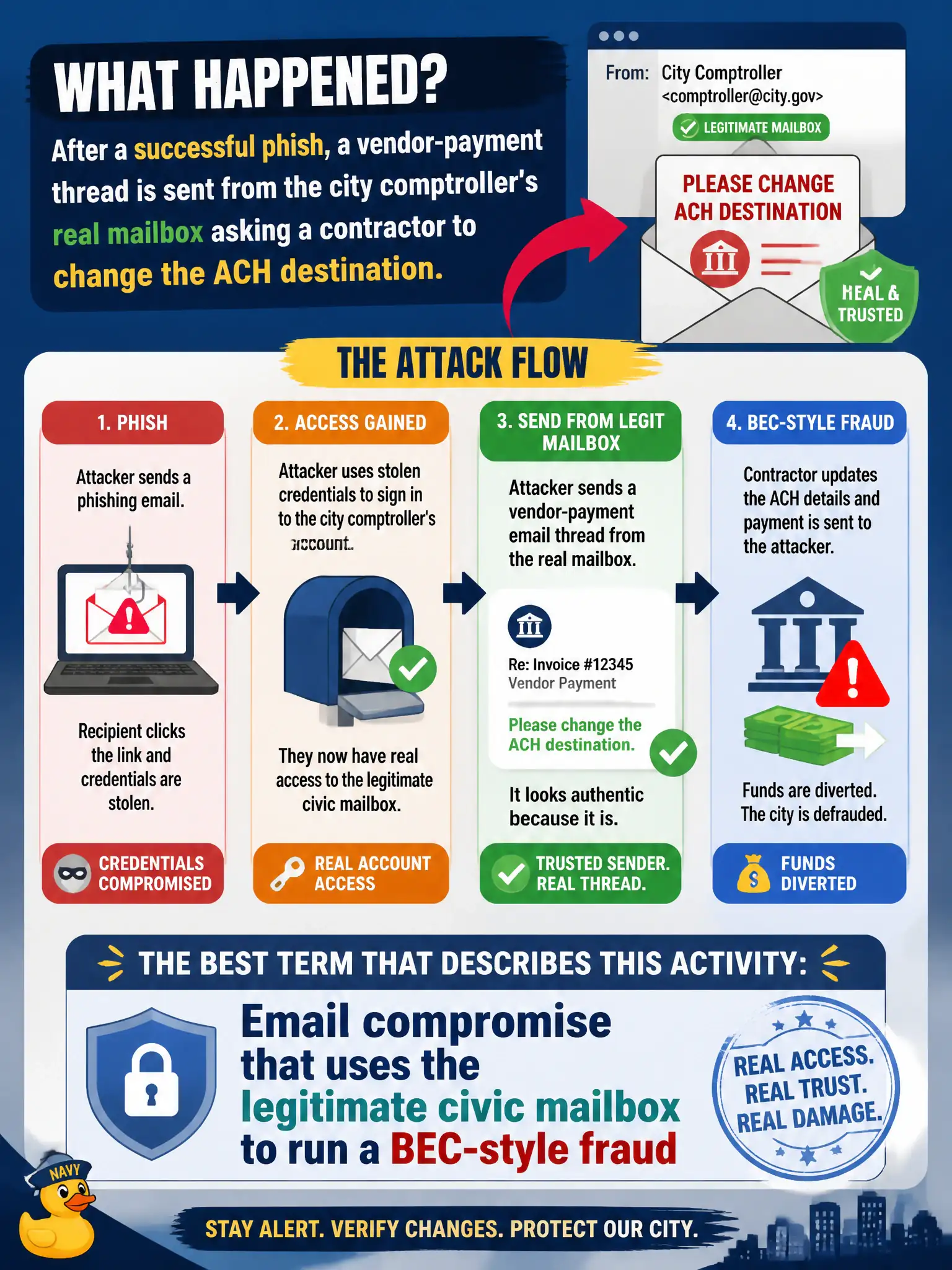
After a successful phish, a vendor-payment thread is sent from the city comptroller's real mailbox asking a contractor to change the ACH destination. Which term best describes this activity?
Select an answer to reveal the explanation.
Short Explanation
The invoice looks official because it is the comptroller's mailbox — hijacked, not a brand-new encryptor. Email compromise is the attacker sitting in a real civic inbox and steering money, classic BEC-style abuse. Do not invent ransomware or a kiosk botnet to explain a fraudulent thread.
Full Explanation
After a successful phish, a vendor-payment thread is sent from the city comptroller's real mailbox asking a contractor to change the ACH destination. The best term is email compromise that uses the legitimate civic mailbox to run a BEC-style fraud. Civic framing matters because comptroller mail is trusted by vendors; fraudulent ACH change requests from a real municipal mailbox are business email compromise abuse, not a new malware family invented to explain the thread.
Calling it a new ransomware family encrypting the comptroller's workstation fails by concept: ransomware is destructive encryption for extortion, and the described activity is fraudulent payment diversion from a live mailbox. Labeling it a botnet of licensing kiosks flooding the payment portal fails by concept: a botnet flood is many compromised hosts attacking availability, not a single authentic mailbox steering ACH. Calling it a denial-of-service against the city's outbound mail gateway fails by concept: DoS would impair sending capacity, whereas the fraud depends on successful delivery of the malicious thread.
Exam caveat: SPLK-5001 expects email compromise / BEC-style abuse when the attacker uses a real civic mailbox for fraud—do not invent ransomware, botnets, or mail-gateway DoS when the evidence is a fraudulent payment thread from a compromised inbox.
Operational check: Confirm the thread originated from the comptroller mailbox after phish, freeze related ACH changes with finance, remove malicious rules and sessions, warn the contractor on out-of-band channels, and classify the incident as email compromise enabling BEC-style fraud.