
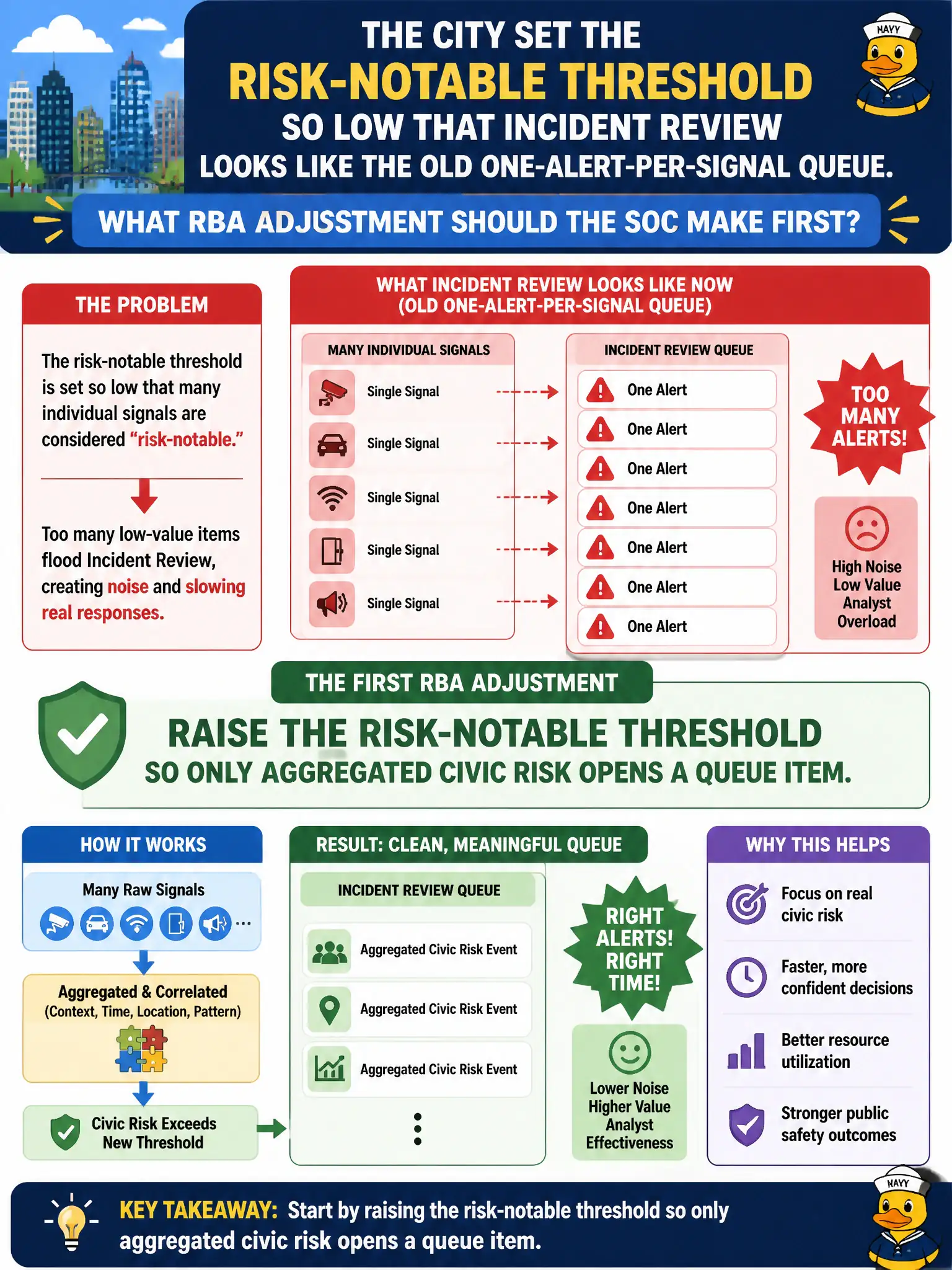
The city set the risk-notable threshold so low that Incident Review looks like the old one-alert-per-signal queue. What RBA adjustment should the SOC make first?
Select an answer to reveal the explanation.
Short Explanation
If the fire bell rings for every match, the bell is set too sensitive. Turn the risk-notable threshold up so only a real pile of civic chips opens a ticket. Do not throw the RBA stack in the trash.
Full Explanation
In Splunk Enterprise Security for a municipal SOC, risk notables open on Incident Review when aggregated score on a risk object exceeds a configured threshold. If that threshold is set so low that every weak civic chip opens a queue item, the city has recreated the old one-alert-per-signal flood and defeated the purpose of Risk-Based Alerting. The first adjustment is to raise the risk-notable threshold so only meaningfully aggregated civic risk opens a queue item while contributing events continue to write. Deleting the risk index and returning every correlation search to notable-only adaptive responses fails by concept because it abandons aggregation entirely instead of calibrating volume. Lowering every individual risk-rule score to zero so nothing can ever cross a threshold fails by concept because it disables detection rather than tuning the gate between risk events and notables. Moving threshold configuration into a new raw syslog index that analysts scan manually fails by concept because thresholds live in the RBA/ES configuration, not in a side index. Exam caveat: SPLK-5001 treats threshold tuning as core RBA practice for municipal queue hygiene—raise the bar for notables without throwing away contributing events. Operational check: document current threshold and daily risk-notable volume, raise the threshold in a controlled change, compare Incident Review volume and false-positive rate for utilities and finance risk objects over several days, and confirm weak signals still appear as contributing events under the risk object.