
Leadership wants one county-wide MTTR target for both 911 CAD and a library kiosk. How should the analyst set expectations?
Select an answer to reveal the explanation.
Short Explanation
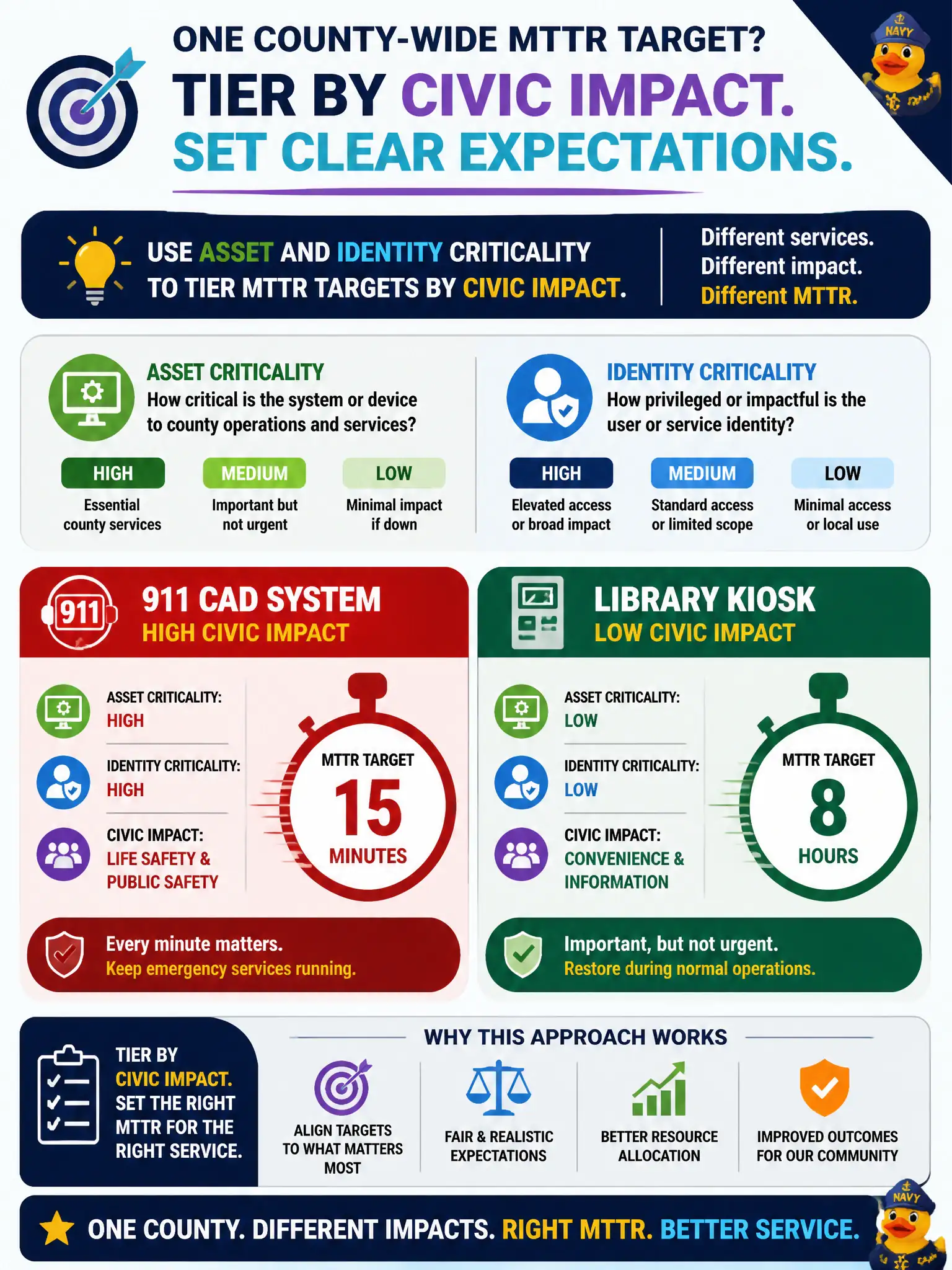
A 911 outage and a quiet library kiosk are not the same fire. Use Asset and Identity criticality to tier MTTR: public safety gets a tiny target, the kiosk does not. One county-wide number pretends those assets are equal.
Full Explanation
Metric targets for civic response should be tiered by impact using Asset and Identity criticality: 911 CAD needs a much tighter MTTR than a library kiosk because public-safety availability and life safety differ sharply from convenience systems. One county-wide MTTR number treats unequal assets as identical clocks and either over-commits operations on low-impact hosts or under-protects CAD. Using one number for the whole county so the library and 911 share the same clock fails by concept because equal targets ignore civic impact and force a false uniformity. Giving the library kiosk a tighter MTTR than 911 because kiosks are more numerous fails by concept because asset count does not outrank life-safety criticality. Dropping Asset and Identity priority so every host is scored the same fails by concept because it removes the enrichment that enables tiered urgency, ownership, and response. Exam caveat: SPLK-5001-aligned practice uses urgency and A&I criticality to differentiate response expectations across municipal systems rather than a single flat MTTR. Operational check: classify 911 CAD versus library kiosk in Asset and Identity with appropriate priority, publish tiered MTTR targets for leadership, and verify Analyst Queue urgency and playbooks reflect those tiers in tabletop drills.