
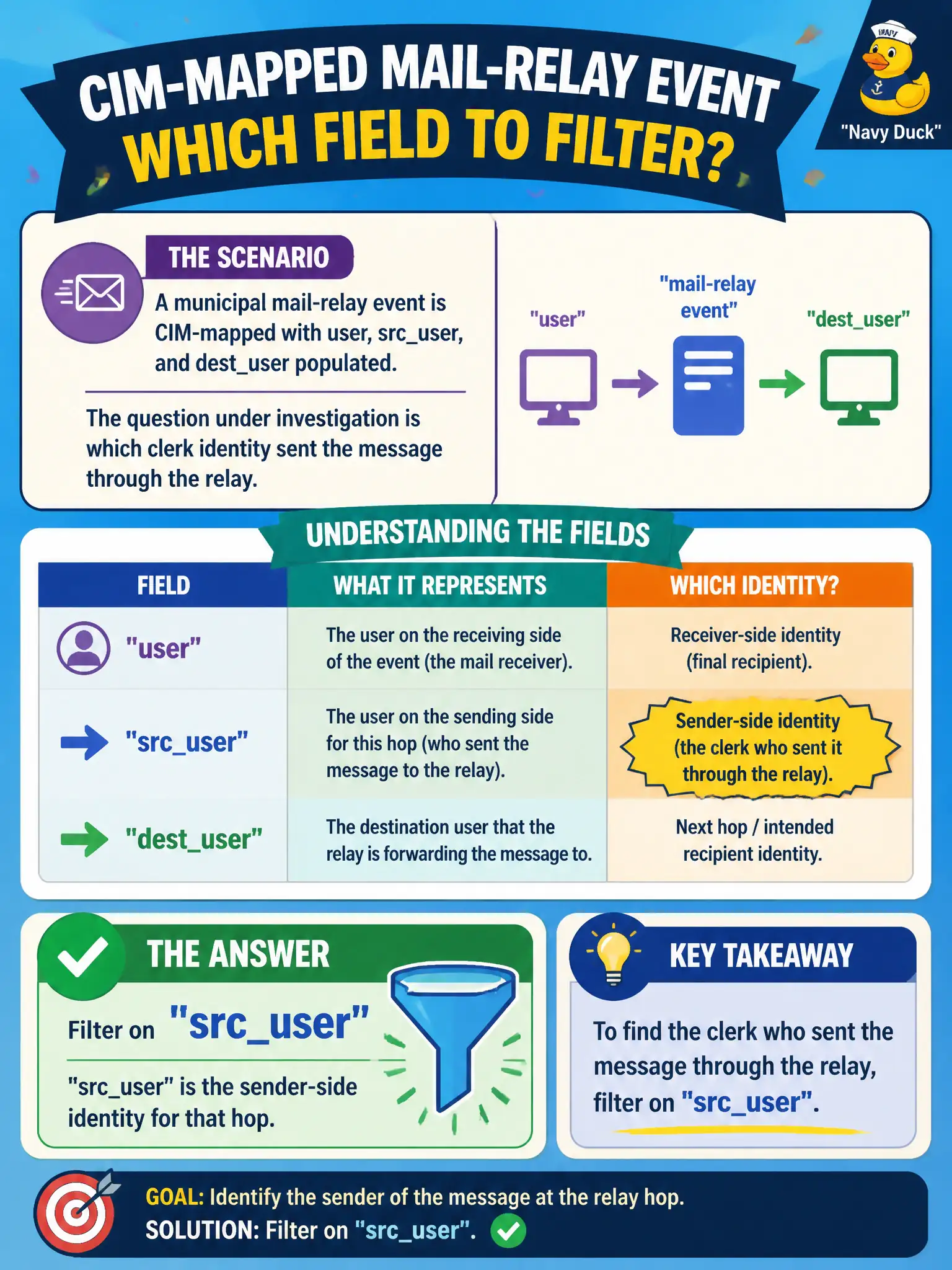
A municipal mail-relay event is CIM-mapped with user, src_user, and dest_user populated. The question under investigation is which clerk identity sent the message through the relay. Which field should the analyst filter on?
Select an answer to reveal the explanation.
Short Explanation
Mail hops can wear three nametags. If the question is who sent through the relay, filter the sender-side tag, src_user. Recipients, URLs, and malware signatures answer different hops.
Full Explanation
On a CIM-mapped municipal mail-relay event with user, src_user, and dest_user populated, the clerk identity that sent the message through the relay is src_user—the sender-side identity for that hop. dest_user is the recipient side; filtering there answers who received, not who sent through the civic relay. Correct field selection keeps mail investigations aligned with CIM semantics used by Enterprise Security content and shared saved searches.
Filtering dest_user as if recipients were the sending identity fails by direction and misattributes the clerk who relayed the message. Filtering url because mail relays supposedly store senders on the Web data model fails—mail hops are not Web-model URL questions and will miss sender identity. Filtering signature as if mail hops were Malware-model events mis-models relay telemetry and points analysts at the wrong data model entirely.
Exam caveat: know CIM identity directions—src_user versus dest_user versus user—especially on mail and proxy events for civic investigations.
Operational check: for the relay investigation, filter src_user to the clerk, corroborate with mail-gateway headers or Microsoft 365 message trace, and reserve dest_user for recipient-scope questions in the same case notes.