
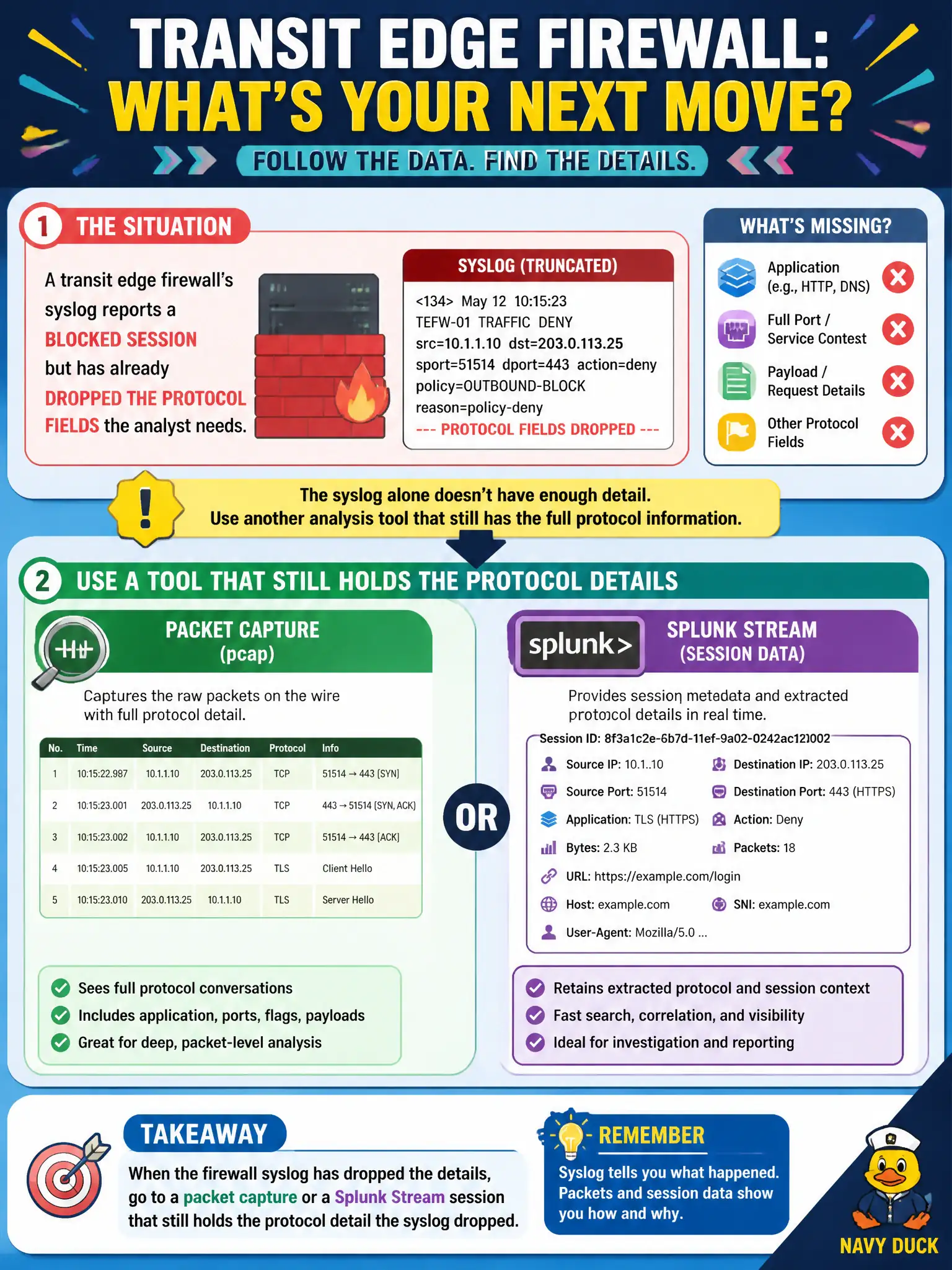
A transit edge firewall's syslog reports a blocked session but has already dropped the protocol fields the analyst needs. Which analysis tool should the analyst use next?
Select an answer to reveal the explanation.
Short Explanation
Syslog is the postcard; the packet is the letter inside the envelope. When the postcard already tore off the protocol details, you need Stream or a PCAP, not a second look at the same thin log. DHCP and proxy lists answer other questions.
Full Explanation
When a transit edge firewall's syslog reports a blocked session but has already dropped the protocol fields the analyst needs, the next tool should preserve richer detail: a packet capture or Splunk Stream session that still holds application and protocol fields syslog discarded. Syslog summaries are lossy by design; PCAPs and stream metadata recover headers and payloads within policy that explain why the block mattered for transit safety systems.
Re-searching the same syslog under a different index name cannot restore stripped payload—indexes store what was ingested, not fields the device never sent. Using the DHCP lease table substitutes address assignment for application-layer fields and does not recover protocol detail. Using only the web-proxy URL list fails when the session never hit the proxy; that path never saw the blocked flow.
Exam caveat: if syslog is incomplete, move to PCAP or Stream (or equivalent full-fidelity capture), not index renaming or unrelated DHCP and proxy sources.
Operational check: for a repeatable transit flow, enable targeted Stream or PCAP on the edge path, compare fields present versus syslog, and update onboarding so critical protocol fields are retained in future firewall logs where the platform allows.