
New city engineers finish a benefits orientation and receive badges, then sit idle for two weeks waiting for design software. What should the CHRO redesign onboarding to optimize?
Select an answer to reveal the explanation.
Short Explanation
A badge and a bagel is a welcome, not a job. If the software is still "coming," onboarding failed—the real score is how fast they can do real work.
Full Explanation
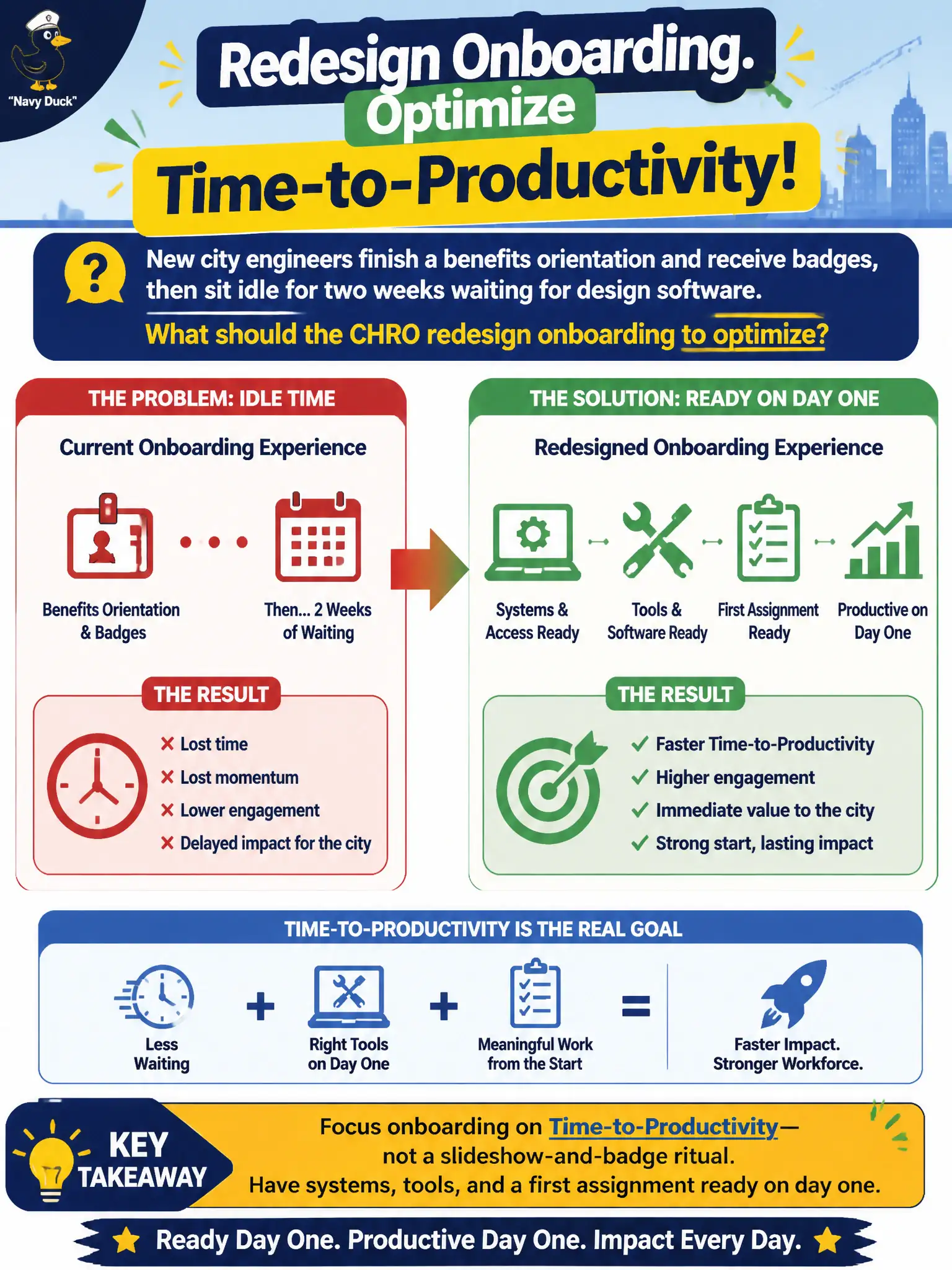
Onboarding should optimize time-to-productivity: systems, tools, and a first assignment ready on day one—not a slideshow-and-badge ritual. When new city engineers finish benefits orientation, receive badges, and then sit idle for two weeks waiting for design software, the welcome failed as workforce strategy. A badge and a bagel are hospitality; the ability to do real engineering work is the outcome metric residents indirectly fund.
Tracking only orientation-slideshow completion rates celebrates attendance, not capability. Lengthening the welcome breakfast confuses culture theater with enablement. Stuffing more policy PDFs into the new-hire packet increases clutter without unlocking the software that makes the role real.
Exam caveat: time-to-productivity metrics should not pressure unsafe shortcuts around access controls, security training, or professional prerequisites. The concept is readiness for real work as the onboarding north star.
Operational check: make software provisioning a pre-day-one checklist jointly owned with IT; assign a first project brief in week one; measure days-to-first-deliverable; and report provisioning lag beside orientation completion to the CHRO and public-works director.