
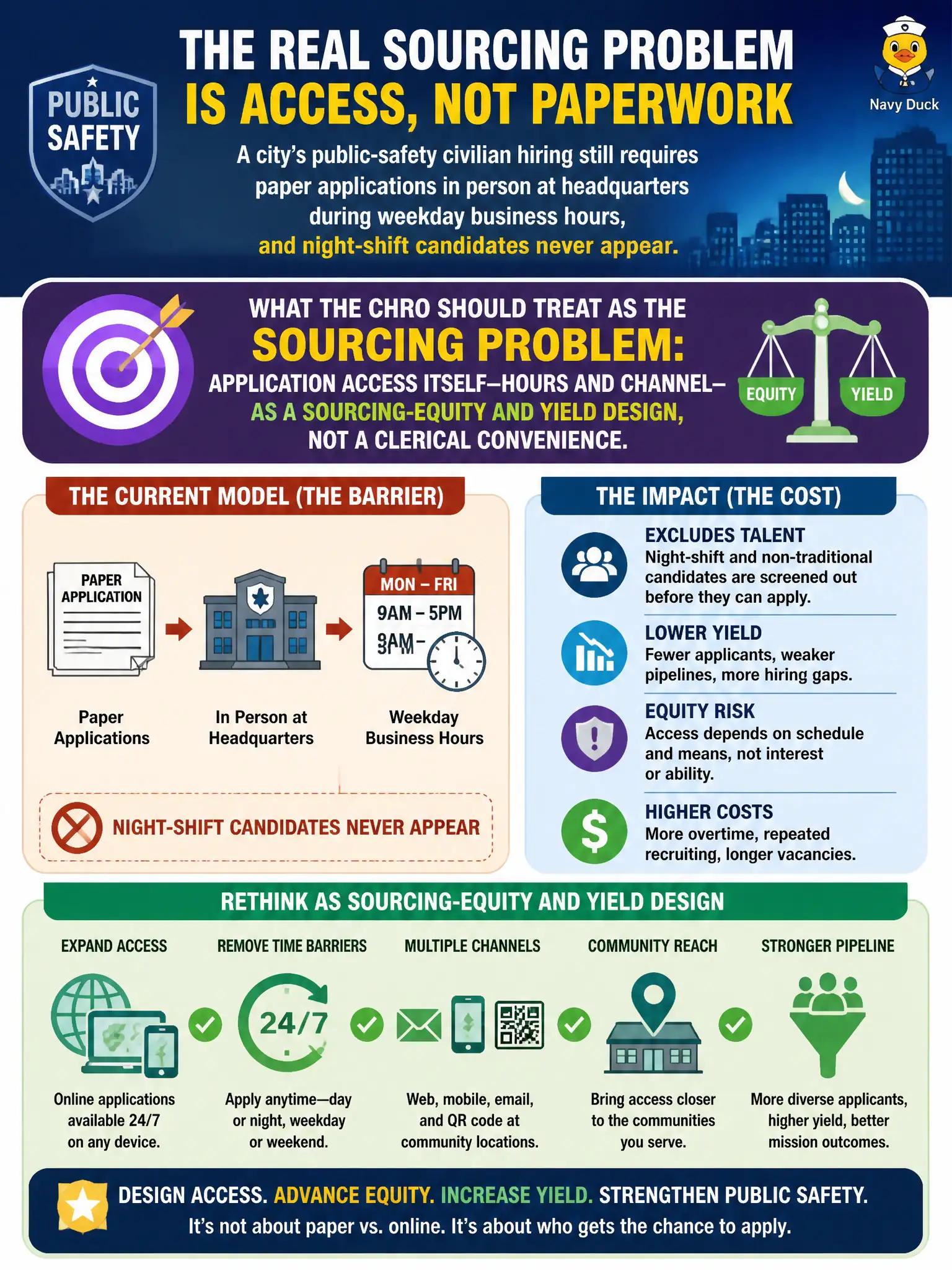
A city's public-safety civilian hiring still requires paper applications in person at headquarters during weekday business hours, and night-shift candidates never appear. What should the CHRO treat as the sourcing problem?
Select an answer to reveal the explanation.
Short Explanation
If the only door is open while the best candidates are at their other job, that was never a sourcing strategy—it was office hours. Opening the door online and after hours is the equity move, not another flyer.
Full Explanation
Requiring paper applications in person at headquarters only during weekday business hours is a sourcing-equity and yield design problem when night-shift candidates never appear. The CHRO should treat application access—hours and channel—as recruiting strategy, not clerical convenience. If the only door is open while the best public-safety civilian candidates are at their other job, the city designed them out of the pool before any exam scored a point.
Blaming the written exam's reading level ignores access hours as a primary pool filter. Claiming that only a residency bonus will draw shift workers misdiagnoses the barrier as pure pay. Pointing at the background vendor's turnaround leaves intake hours unaddressed and preserves the weekday-only door.
Exam caveat: expanding access must still preserve identity verification, fraud controls, and exam security where civil-service rules require them; online intake is not a waiver of standards. The concept is access design as equity and yield strategy.
Operational check: enable secure online applications and after-hours or evening intake options; track applicant current-shift status and source; compare pools before and after access changes; and report access metrics beside traditional recruiting KPIs to executives.