
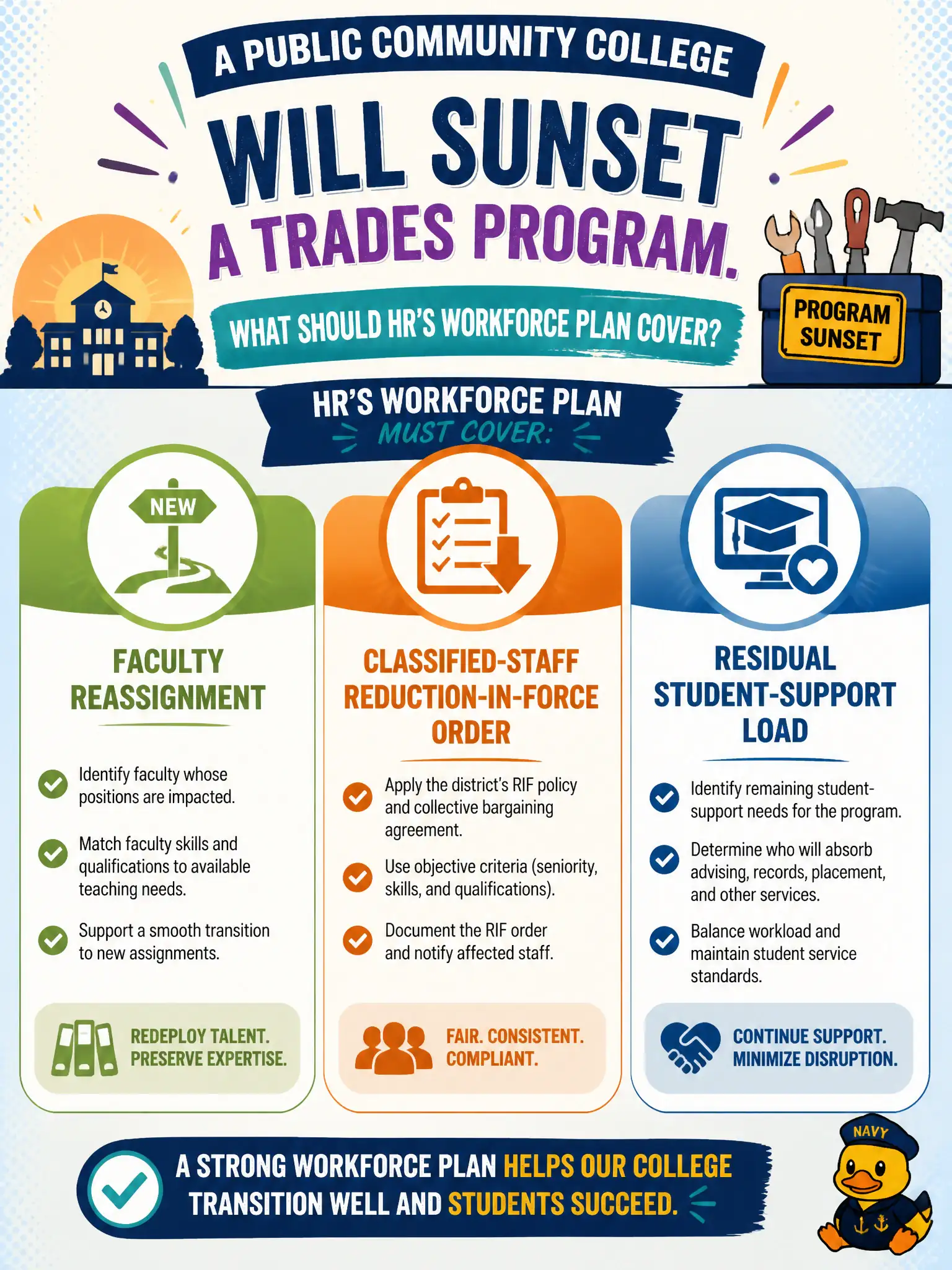
A public community college will sunset a trades program. What should HR's workforce plan cover?
Select an answer to reveal the explanation.
Short Explanation
Killing a program is not just pulling it from the catalog. Faculty may reassign, classified staff may RIF, and students still need support through teach-out. Write the people plan or the last cohort inherits the chaos.
Full Explanation
Sunsetting a community-college trades program is a people plan covering faculty reassignment, classified-staff reduction-in-force order, and residual student-support load through teach-out—not only an academic-catalog change. Faculty may move under reassignment rules; classified staff may face reduction; students still need advising and support until the last cohort finishes. Without that workforce plan, the sunset dumps chaos on the final students and on whoever remains to pick up the pieces.
Leaving staffing to each dean after the last cohort postpones obligatory workforce design until grievances force it. Immediately laying off everyone who ever taught or supported the program ignores reassignment rights and residual teach-out need. A college-wide instructional hiring freeze until sunset completes over-punishes unrelated programs and does not design the affected unit's paths.
Exam caveat: exact reassignment and RIF rules depend on policy, tenure status, and bargaining agreements. The SPHR concept is planning those paths as part of program-closure strategy before the catalog change is final.
Operational check: inventory faculty reassignment options and classified bumping; size teach-out support FTE; timeline notices with counsel; brief affected employees with written paths; and gate the catalog sunset on an approved workforce plan.