
Contractors sitting beside city permitting staff ask why they get no holiday pay, and managers shrug. What should HR do?
Select an answer to reveal the explanation.
Short Explanation
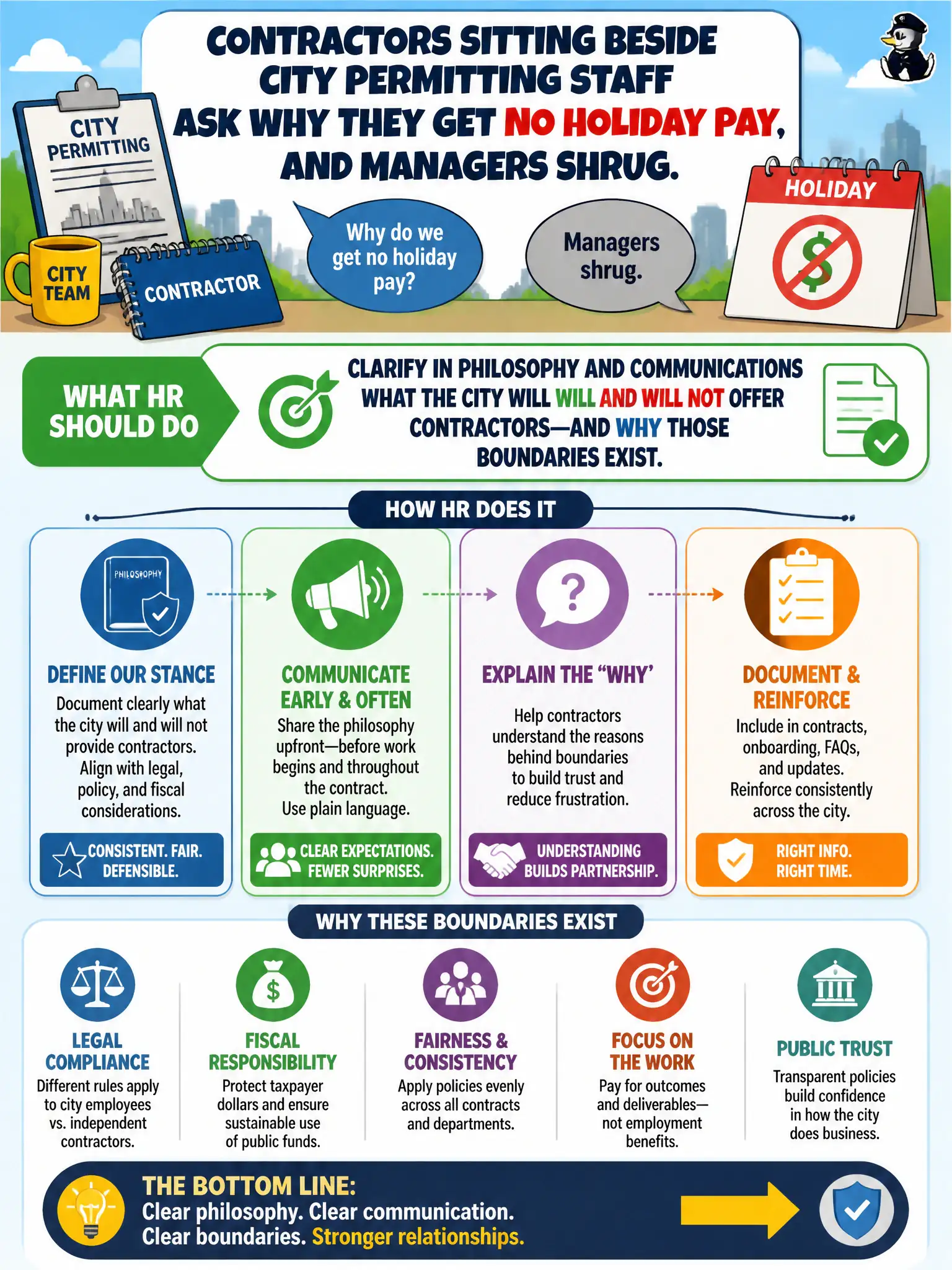
Side-by-side work makes the holiday-pay question inevitable. The answer is a clear boundary, not a shrug or a secret extra check. Say what contractors get, what they don't, and why—before someone treats them like staff on paper.
Full Explanation
Contractors sitting beside city permitting staff who ask why they get no holiday pay while managers shrug need clarity in philosophy and communications about what the city will and will not offer contractors—and why. Side-by-side work makes the question inevitable; civic misclassification risk rises when shrugs sound like 'you're basically employees.' Boundaries stated aloud protect both stewardship and law.
Quietly adding holiday pay to contractor invoices without changing philosophy fails by concept: secret pay practices create equity and classification evidence problems. Telling managers to say contractors are basically employees fails by admitting the wrong legal frame. Converting every contractor to employee the same week fails as a panic reclassification without workforce planning.
Exam caveat: contractor vs employee status turns on legal tests; rewards boundaries should match actual status and procurement terms. Operational check: publish contractor rewards boundaries, train managers on the script, and review any informal extras already paid. Public employers should record the chosen control and rejected options in the talent or labor file so future leaders understand how the decision protects continuity of resident services.