
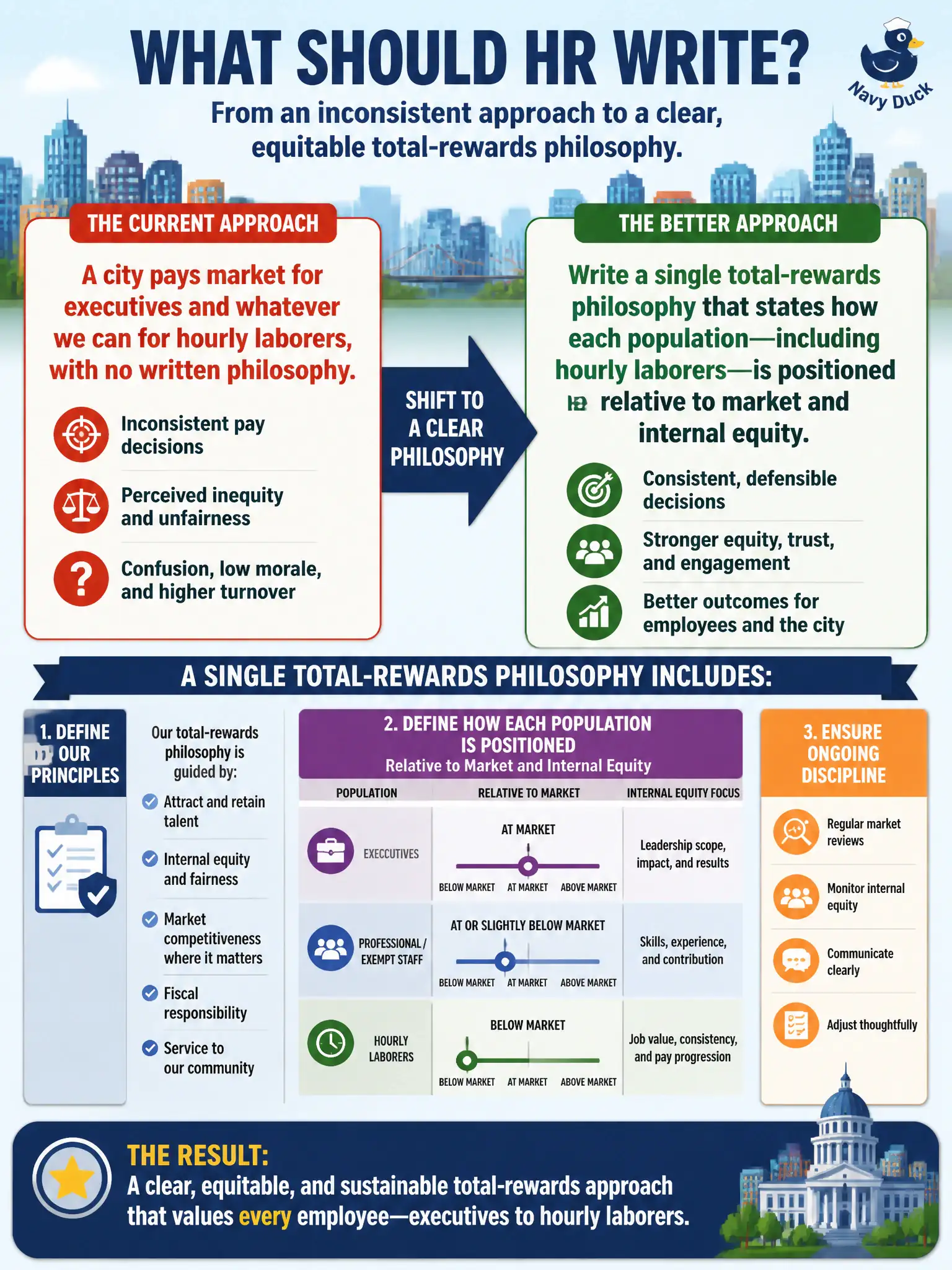
A city pays market for executives and whatever we can for hourly laborers, with no written philosophy. What should HR write?
Select an answer to reveal the explanation.
Short Explanation
If the philosophy only talks about executives, it is not a philosophy—it is a VIP list. Hourly crews need to see how the city positions their pay too, union or not. One written story for every population beats whatever we can.
Full Explanation
A city that pays market for executives and 'whatever we can' for hourly laborers with no written philosophy needs a single total-rewards philosophy stating how each population—including hourly laborers—is positioned relative to market and internal equity. An executive-only story is a VIP list, not a philosophy. Civic pay governance should be explainable to every workforce segment that keeps the city running.
An executive-only philosophy that leaves laborers unstated because they have a union fails by concept: unions bargain inside or against a stated employer philosophy; silence is still a choice. A verbal city-manager promise for good years fails durability and transparency. Freezing any published philosophy so departments keep one-off deals fails enterprise consistency.
Exam caveat: philosophy guides bargaining and market decisions; it does not unilaterally set CBA rates. Operational check: draft positioning statements by segment, socialize with finance and labor relations, publish the philosophy, and use it in the next pay and bargaining cycle. Public employers should record the chosen control and rejected options in the talent or labor file so future leaders understand how the decision protects continuity of resident services.