
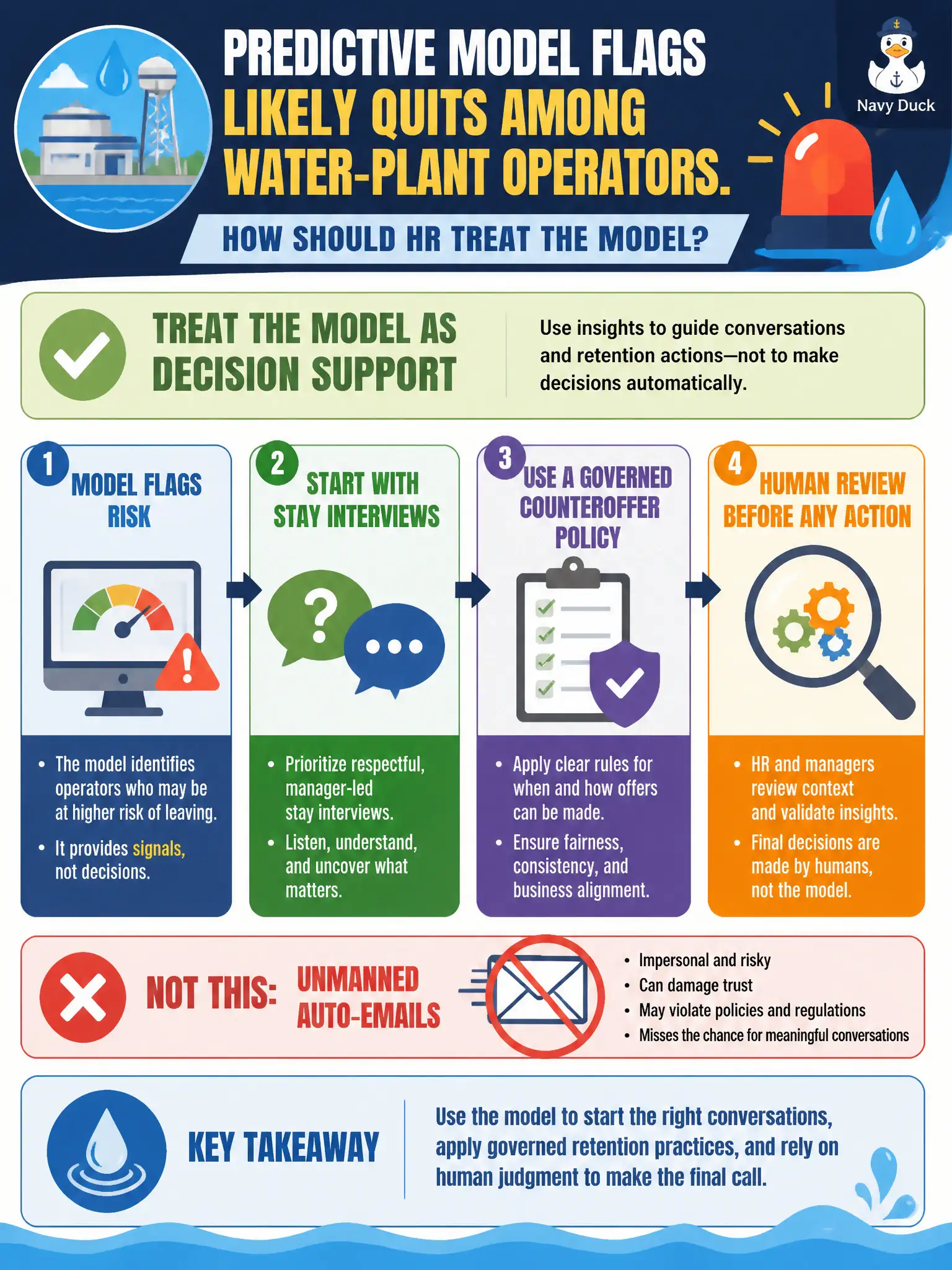
A predictive model flags likely quits among water-plant operators. How should HR treat the model?
Select an answer to reveal the explanation.
Short Explanation
A quit-risk score is a weather alert, not an autopilot. Use it to cue stay interviews and a thought-out counteroffer policy, with a human looking at the file. Do not email people that the algorithm thinks they are leaving.
Full Explanation
Treating a predictive quit model for water-plant operators as decision support for stay interviews and a governed counteroffer policy with human review—not unmanned auto-emails, preemptive terminations, or model-only action—is correct. A quit-risk score is a weather alert, not an autopilot. Auto-emails that tell flagged employees they have been identified as flight risks can accelerate exits and destroy trust. Using scores to terminate people before they resign weaponizes analytics. Ignoring supervisor judgment to act only on model scores discards local knowledge about certifications, overtime load, and plant risk. Exam caveat: SPHR predictive analytics require governance, human review, and defined uses before action. Operational check: define allowed uses, require supervisor and HR review before stay conversations or counteroffers, ban automated flight-risk labels, log decisions, and audit adverse impact on operators who keep civic water treatment running. Predictive models around scarce licensed operators affect water safety continuity. Governed stay interviews and counteroffer policy with human review can reduce quits; unlabeled automation, punitive misuse, or blind obedience to scores convert analytics into harm.