
A township strategic plan scores facilities and millage but lists no people outcomes. The CHRO wants service continuity and critical-role coverage treated as plan-level measures rather than HR-department scorecard items. What should the CHRO propose to the township board?
Select an answer to reveal the explanation.
Short Explanation
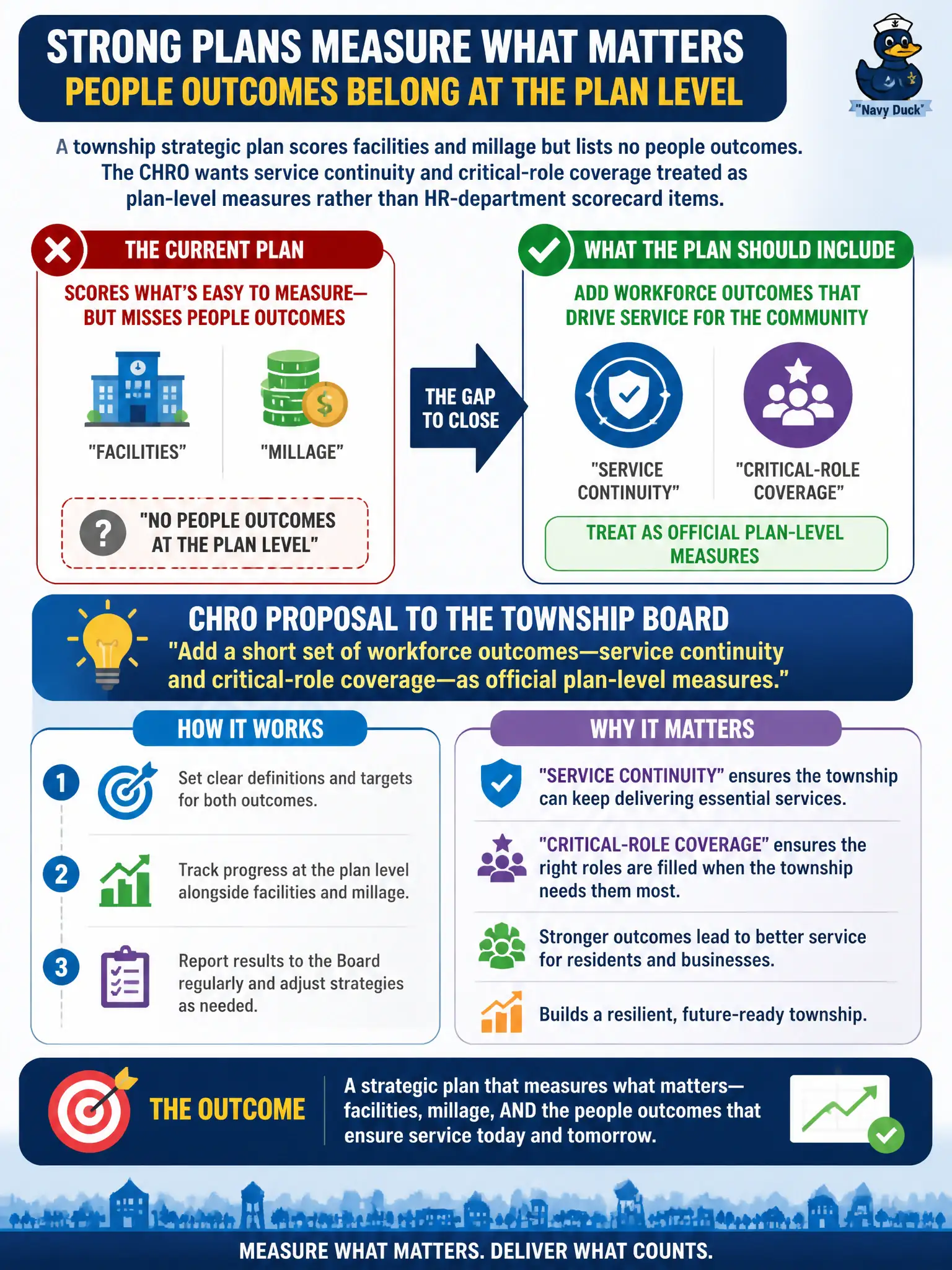
If the township only scores buildings and tax, people disappear from the scoreboard. Service continuity and critical-role coverage are not HR hobbies — they are how residents still get plows and permits. Put a few workforce outcomes on the plan itself, not just in an HR appendix.
Full Explanation
Adding workforce outcomes—service continuity and critical-role coverage—as official plan-level measures is correct because people capacity is how residents still receive plows, permits, and clinics, not an HR-department hobby scorecard. A township plan that scores facilities and millage while omitting people outcomes treats labor as invisible and will underfund coverage until service fails. Elevating a short set of workforce measures to the board scorecard makes continuity a governed strategy result. Keeping people metrics only inside the HR annual report hides them from the same oversight that tracks capital and tax and perpetuates afterthought status. Replacing millage measures with an employee-satisfaction index overcorrects by discarding fiscal measures the board must track and confusing climate surveys with coverage. Delaying people measures until a new HRIS can produce weekly dashboards elevates tooling over strategy and leaves the plan people-blind indefinitely. Exam caveat: SPHR allows workforce outcomes as organizational strategy measures, not only internal HR KPIs. Operational check: propose two to four plan-level people measures tied to service continuity, define owners and data sources using current systems if needed, report them beside facilities and millage, and trigger staffing actions when coverage thresholds fail.