
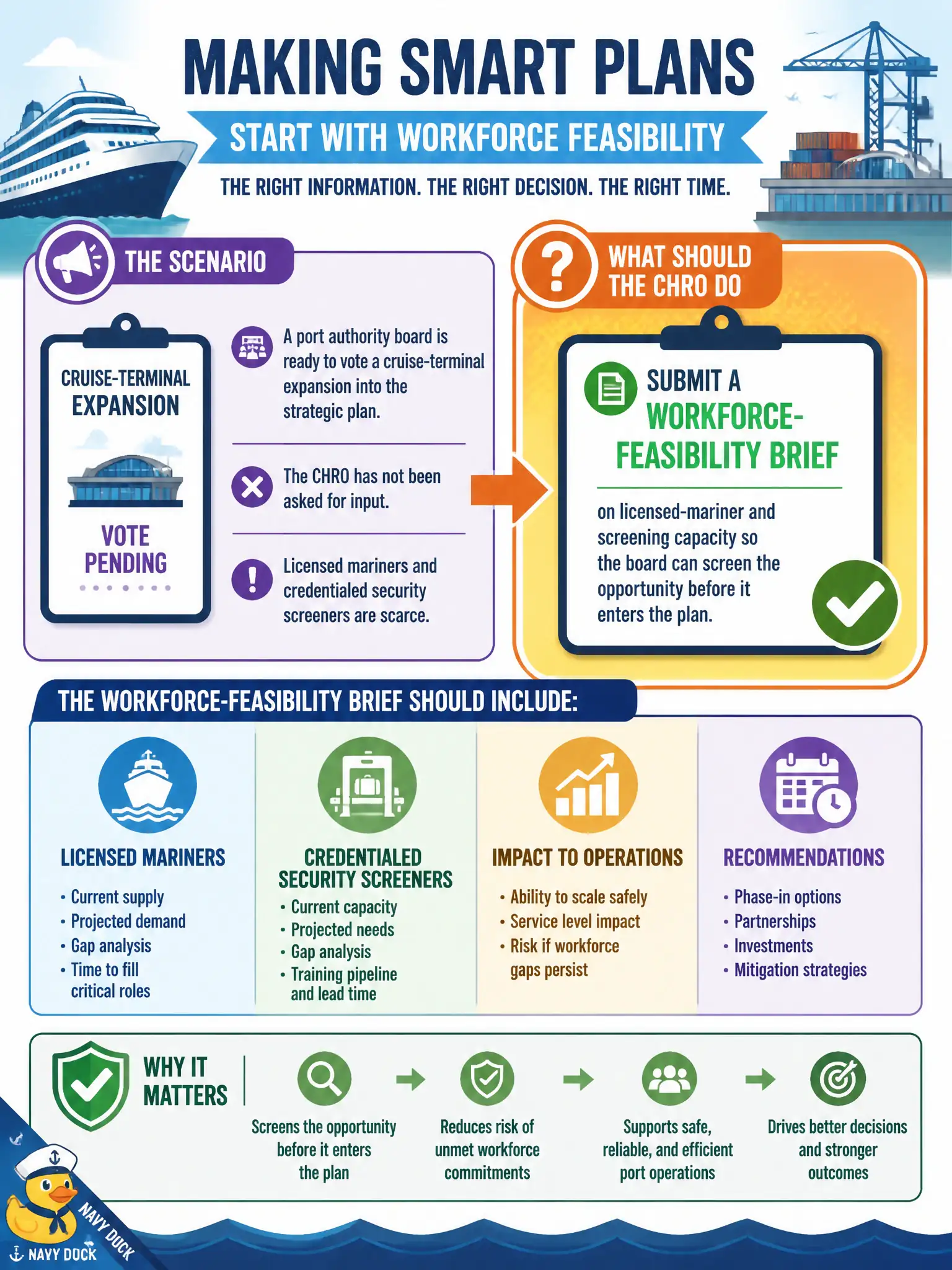
A port authority board is ready to vote a cruise-terminal expansion into the strategic plan. The CHRO has not been asked for input and knows licensed mariners and credentialed security screeners are scarce. What should the CHRO do before the vote?
Select an answer to reveal the explanation.
Short Explanation
Chasing a cruise terminal without checking who can run it is like buying a ferry before anyone has a captain's license. After the vote, staffing is a scramble, not a choice. Put people-capacity on the opportunity screen before the board writes it into the plan.
Full Explanation
Submitting a workforce-feasibility brief on licensed mariners and credentialed security screeners before the cruise-terminal vote is correct because future service opportunities belong in strategy only after people capacity is tested. Scarce licensed labor is a hard constraint; capital enthusiasm does not create mariners or screeners on a political timeline. The CHRO’s pre-vote brief lets the board screen the opportunity with staffing risk visible rather than discovering it as an emergency after commitment. Waiting for the vote and then opening emergency postings converts a strategy choice into a scramble and often yields quality and cost failures. Asking finance to add a recruiting line after capital approval still treats people as a funding footnote rather than a go/no-go input to the strategic plan. An engagement survey of current dock staff measures enthusiasm, not credentialed capacity, and does not answer whether the labor market can staff the terminal. Exam caveat: SPHR strategy contribution includes screening growth opportunities for workforce feasibility before they enter the plan. Operational check: quantify licensed and credentialed headcount needed by phase, compare to regional supply and lead times, state residual risk and mitigation cost, and require the brief in the board packet before the expansion vote.