
A city council is drafting a 10-year community vision that names facilities, millage, and service expansions but never mentions workforce capacity. The CHRO has been told to write an HR plan after the vision is adopted. What should the CHRO do?
Select an answer to reveal the explanation.
Short Explanation
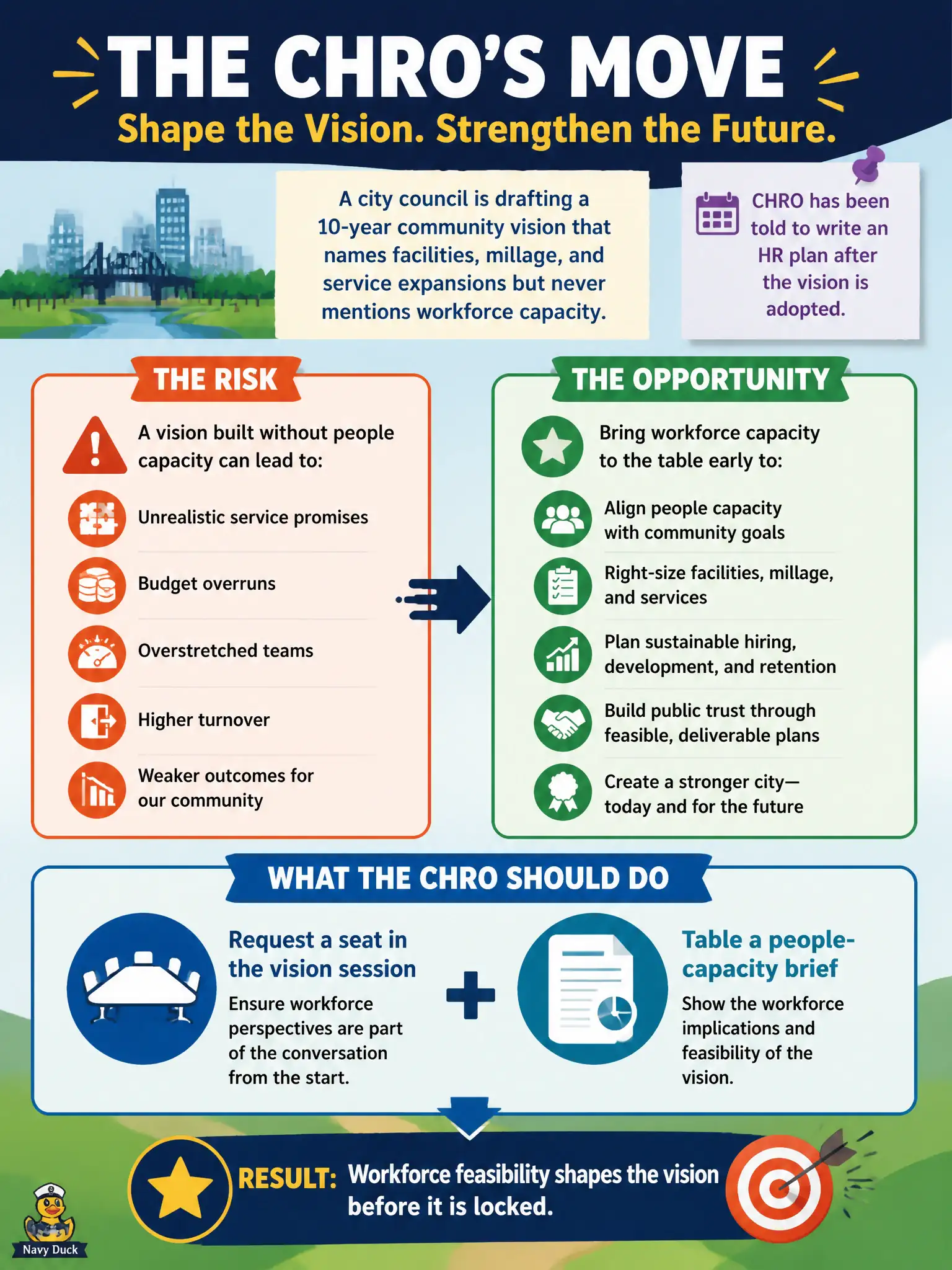
A vision with no people in it is like drawing a parade route without checking whether anyone can walk it. Waiting for a later HR plan means the city already promised services it may not be able to staff. Get in the room now and put workforce capacity on the table while the vision is still clay.
Full Explanation
Requesting a seat in the vision session with a people-capacity brief is the correct SPHR move because workforce feasibility is a strategy input, not a downstream implementation detail. A 10-year community vision that names facilities, millage, and service expansions without labor capacity asks residents to trust promises the city may be unable to staff. The CHRO’s role is to surface critical-role coverage, labor-market constraints, and hiring lead times while the vision is still open, so council can size commitments to what people systems can deliver. Accepting the sequence and drafting an HR plan only after the vote confuses strategy contribution with after-the-fact retrofit; once the vision is locked, people practices can only chase political promises. Surveying department heads after adoption and folding notes into a later civil-service rule revision likewise arrives too late to reshape the vision itself and relegates workforce to rule housekeeping. A standalone people-strategy poster campaign substitutes symbolism for influence and leaves the vision’s omission intact. Exam caveat: SPHR leadership-and-strategy items treat senior HR presence during vision and mission formation as required contribution, not optional courtesy. Operational check: secure agenda time before adoption, bring quantified capacity and scarce-skill risks for each named expansion, document residual staffing risk if council proceeds unchanged, and align subsequent HR strategy only to the revised vision.