
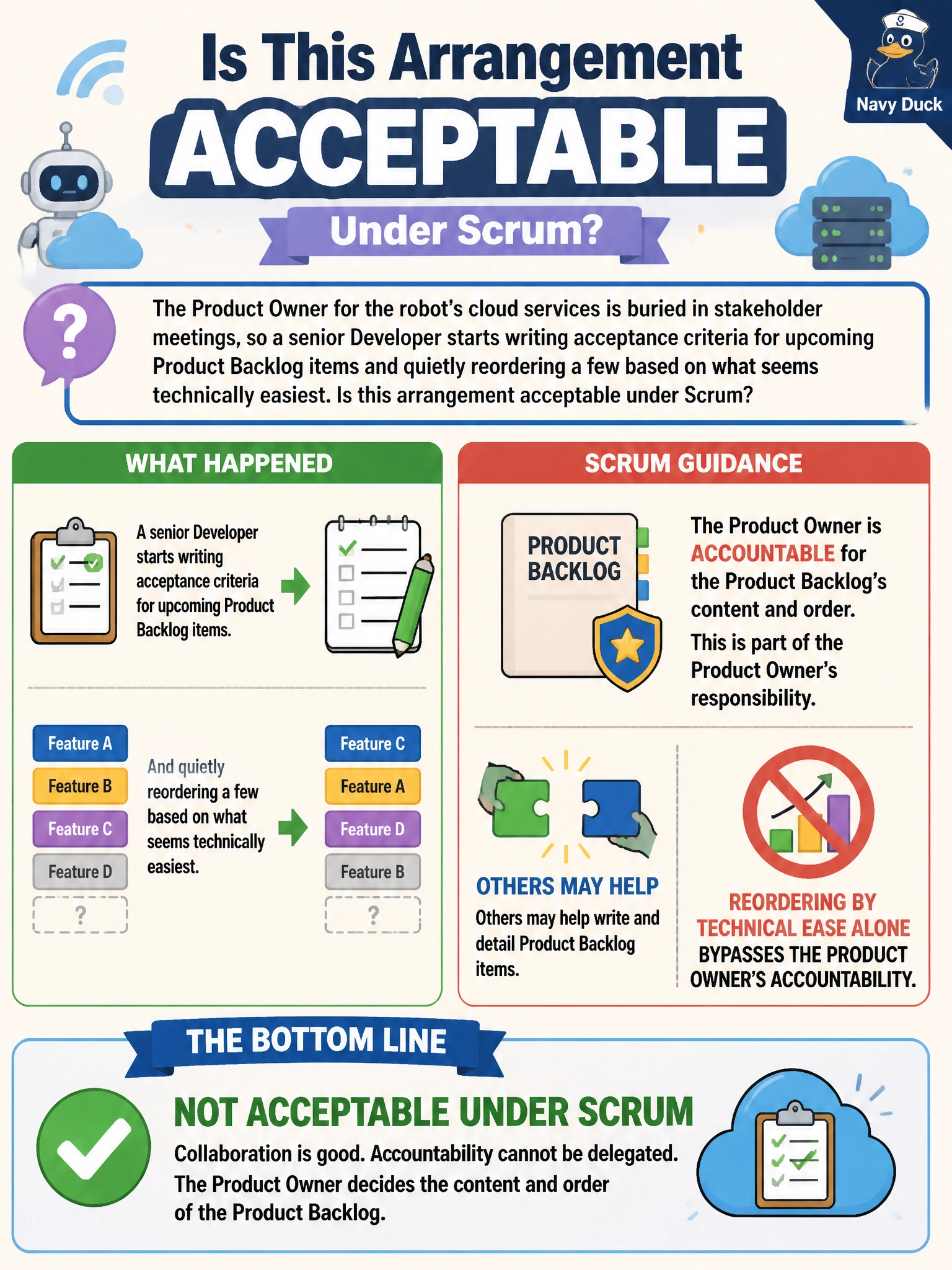
The Product Owner for the robot's cloud services is buried in stakeholder meetings, so a senior Developer starts writing acceptance criteria for upcoming Product Backlog items and quietly reordering a few based on what seems technically easiest. Is this arrangement acceptable under Scrum?
Select an answer to reveal the explanation.
Short Explanation
Getting help writing up items is fine — the Product Owner can absolutely lean on the Developers for that. Reordering by 'what's easiest,' though, quietly swaps value for convenience, and value is the call only the Product Owner gets to make.
Full Explanation
The Scrum Guide is explicit that the Product Owner may delegate the work of detailing Product Backlog items to others, including the Developers, while remaining the single person accountable for Product Backlog management. Having a senior Developer draft acceptance criteria fits comfortably inside that delegation. Reordering items by technical ease, though, is a different act: it substitutes engineering convenience for the value-and-priority judgment the Product Owner is accountable for, and it can quietly starve a higher-value but harder item — say, a cloud-side fix that unblocks retail's certification timeline — in favor of easier work that looks better on a burndown. The two wrong extremes both miss the actual rule: it's not true that only the Product Owner may ever type a word into a backlog item, and it's not true that Developers can independently set order just because they're closest to the code. Nor does a Scrum Master sign-off step exist in the Guide; that invents a governance layer Scrum doesn't have. A concrete check: when the order changes, can someone point to the Product Owner's value judgment behind it, rather than to whichever item the Developers found most convenient that week?