
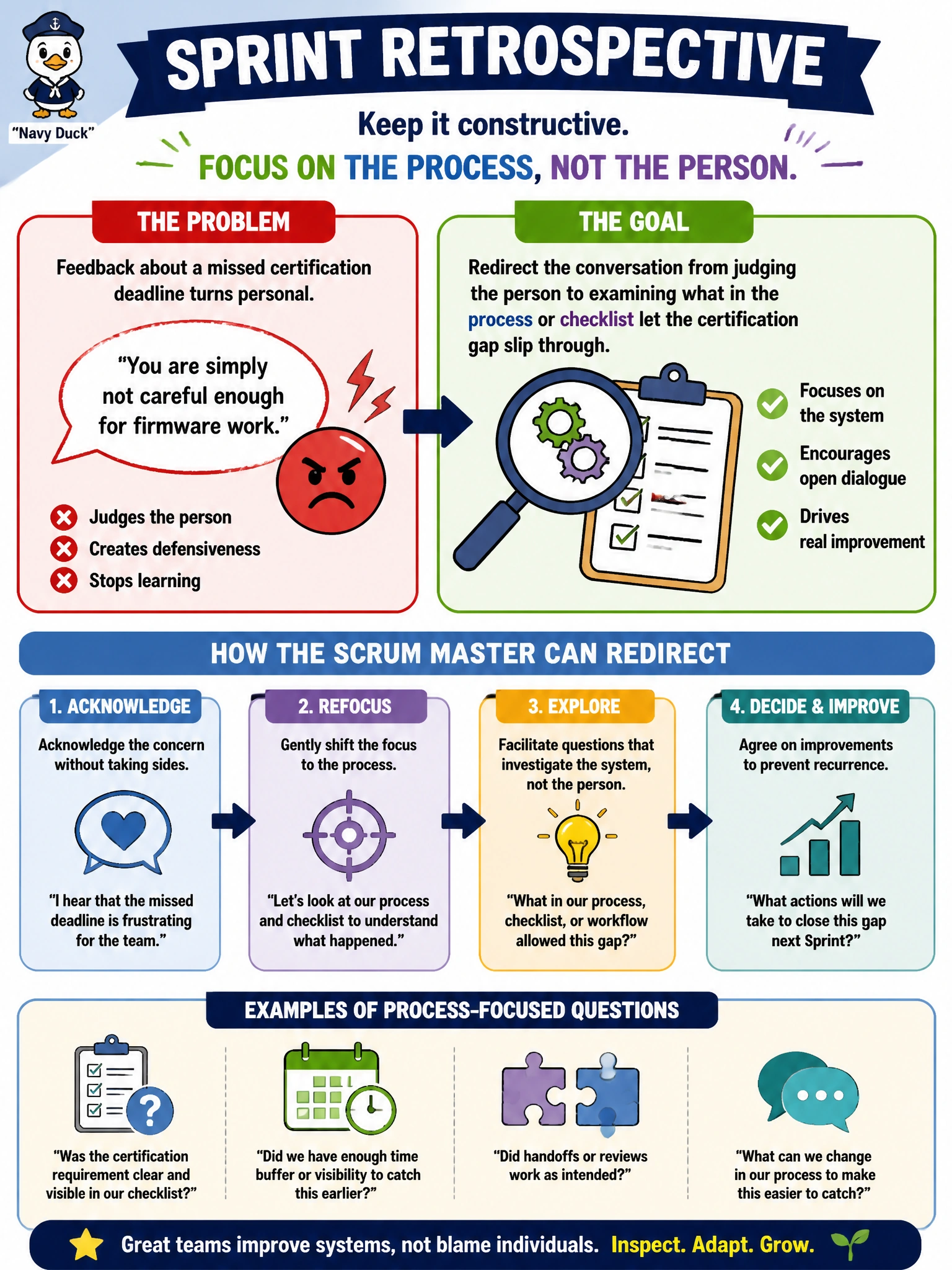
During a Sprint Retrospective, feedback about a missed certification deadline turns personal, with one Developer telling another they are simply "not careful enough" for firmware work. How should the Scrum Master redirect the conversation?
Select an answer to reveal the explanation.
Short Explanation
Blaming a person for being "not careful enough" points at character instead of the actual gap — usually a missing check, a rushed handoff, something the process didn't catch. A Scrum Master earns their keep by steering the room back toward process, where the team can actually fix something.
Full Explanation
Effective Retrospective facilitation redirects personal judgments toward examinable causes — a missing verification step, an unclear Definition of Done item, insufficient time before a deadline — because those are things the team can actually change, unlike someone's character. Letting the personal comment stand normalizes attacking a teammate rather than inspecting the work, which will make people defensive and less forthcoming in future Retrospectives, the opposite of what the event is for. Ending the Retrospective outright abandons the chance to actually learn something from the miss and leaves the personal comment unaddressed, which can linger and damage the relationship further. Involving the Product Owner in a staffing decision confuses accountabilities — the Product Owner doesn't manage who does what work within the Developers, and pulling them in here escalates a facilitation problem into a personnel one it was never meant to be. A useful check afterward: see whether the resulting action item names a change to a process, tool, or checklist rather than a person — that's the signal the redirection actually worked.