
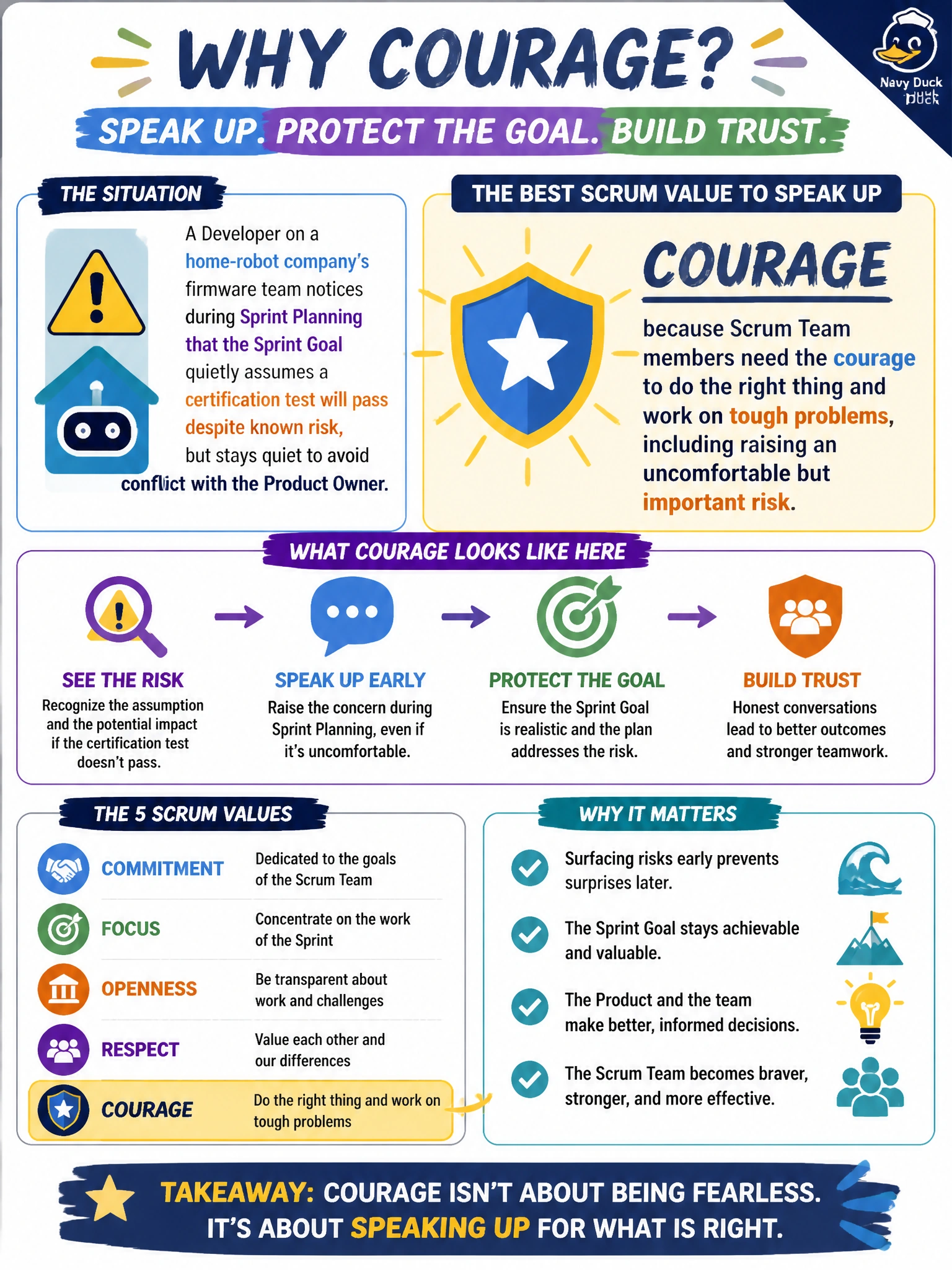
A Developer on a home-robot company's firmware team notices during Sprint Planning that the Sprint Goal quietly assumes a certification test will pass despite known risk, but stays quiet to avoid conflict with the Product Owner. Which Scrum value would most directly call for the Developer to speak up instead?
Select an answer to reveal the explanation.
Short Explanation
Staying quiet to avoid friction is the easy path, but it's not the Scrum one. Courage is the value that covers exactly this moment — naming an uncomfortable risk instead of letting it slide because the conversation might be awkward. Speaking up here is the courageous move, not the confrontational one.
Full Explanation
The Scrum Guide names courage as one of the five Scrum values, describing Scrum Team members as having the courage to do the right thing, to work on tough problems, and to be transparent about risk. A Developer who spots a known certification risk baked quietly into the Sprint Goal is facing exactly this kind of moment, and courage is what calls for surfacing it even though it risks friction with the Product Owner. Focus is a different value — it's about the whole team concentrating on the work of the Sprint and the Sprint Goal, not a justification for silence about risk within that goal. Commitment is misapplied when read as blind agreement; the Guide's Commitment is about personally committing to achieving the team's goals, not about suppressing legitimate concerns before commitment is even made. Respect is likewise mischaracterized as deference to authority — the Guide's Respect means Scrum Team members respect each other to be capable, independent people, which if anything supports raising concerns as an equal rather than staying silent out of hierarchy. A concrete check: in retrospect, ask whether known risks got named before commitment happened — if people routinely stay quiet until problems surface later, that's a sign courage isn't showing up when it's needed.